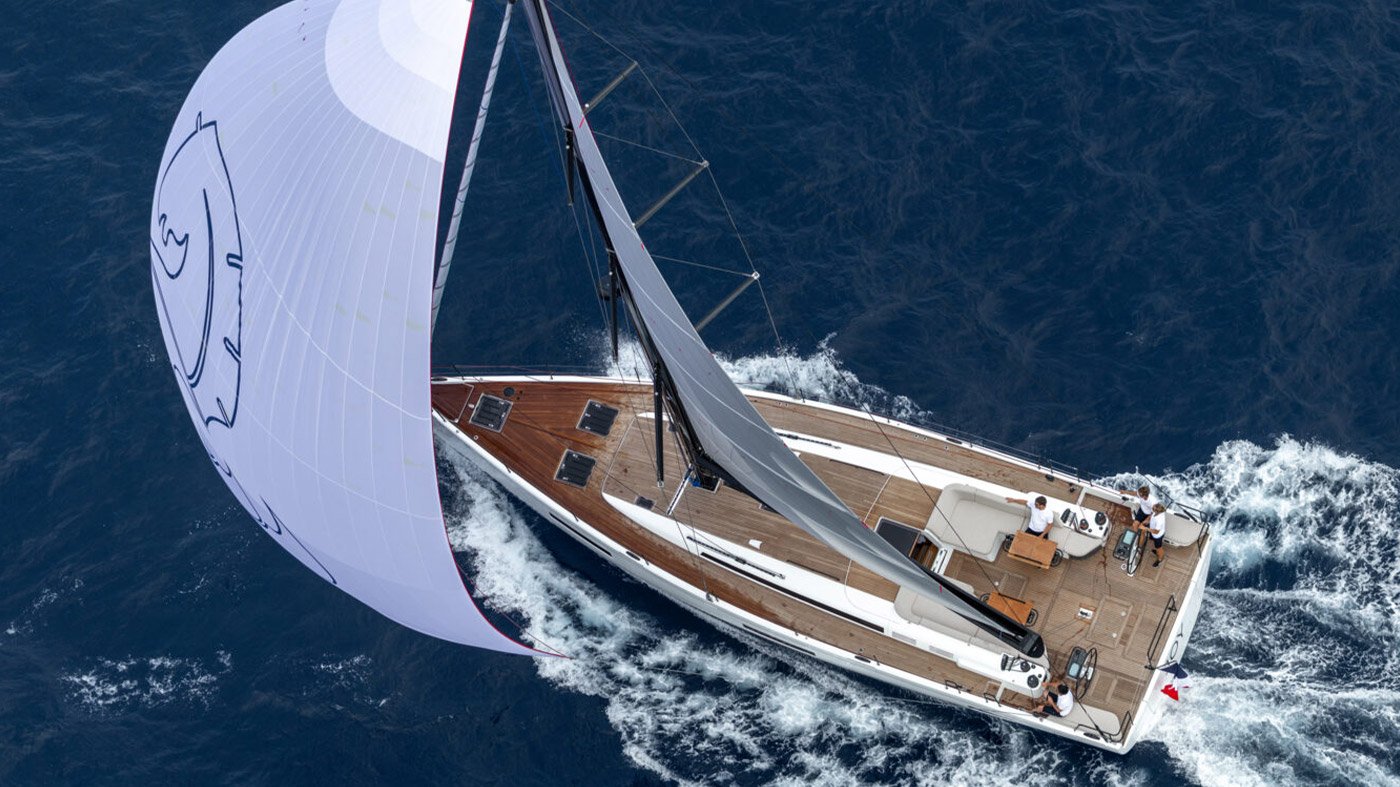
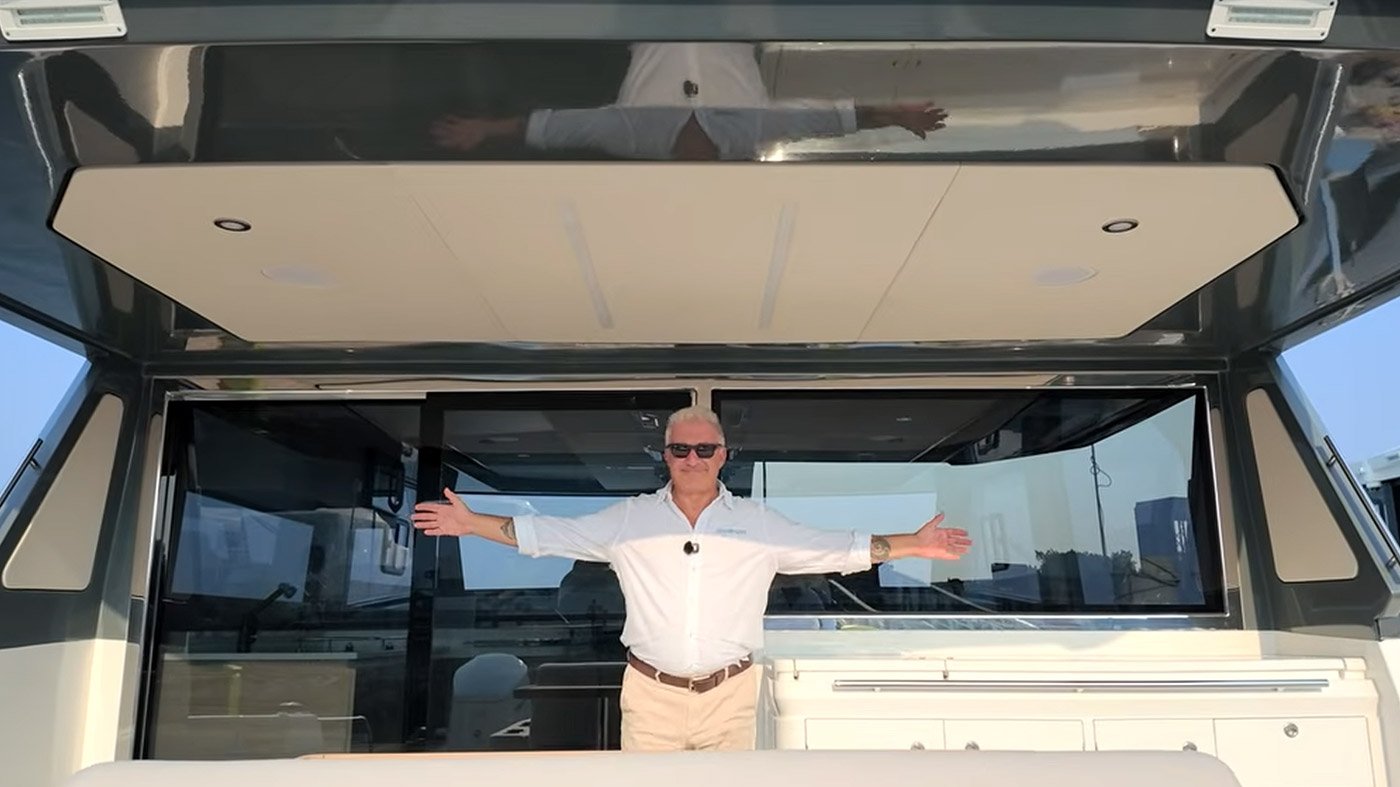
The test of the ICE 80 begins in near-ideal conditions: calm seas and a true wind between 7 and 8 knots. The yacht initially sails on a relatively wide close reach, at about 50 degrees off the apparent wind. It is a perfect condition to start evaluating hull response and the ease with which sail adjustments can be made.
One of the first characteristics that stands out is indeed the simplicity of management. Main-sheet adjustment can be carried out directly from the helm station, without requiring movement across the deck layout. Gradually pinching closer to the wind, the ICE 80 accelerates until reaching a speed between 7.5 and 8 knots—essentially matching the speed of the true wind: a particularly significant figure, considering that we are talking about a 24-meter superyacht also designed for cruising.
The ICE 80 hull turns every gust into speed
Underway, low hull resistance is immediately noticeable. The hull shows minimal drag and reacts quickly to wind changes. With every small gust, the ICE 80 seems able to convert the increased available energy into acceleration. The feeling at the helm is that of a responsive boat that is not demanding to manage.
Tacking also confirms this design ethos. Once the transition to the new tack is complete, the boat regains speed quickly, staying close to pre-maneuver values. With about 8 knots of speed on the previous tack, after tacking the ICE 80 continues sailing around 7 knots, showing minimal speed loss.
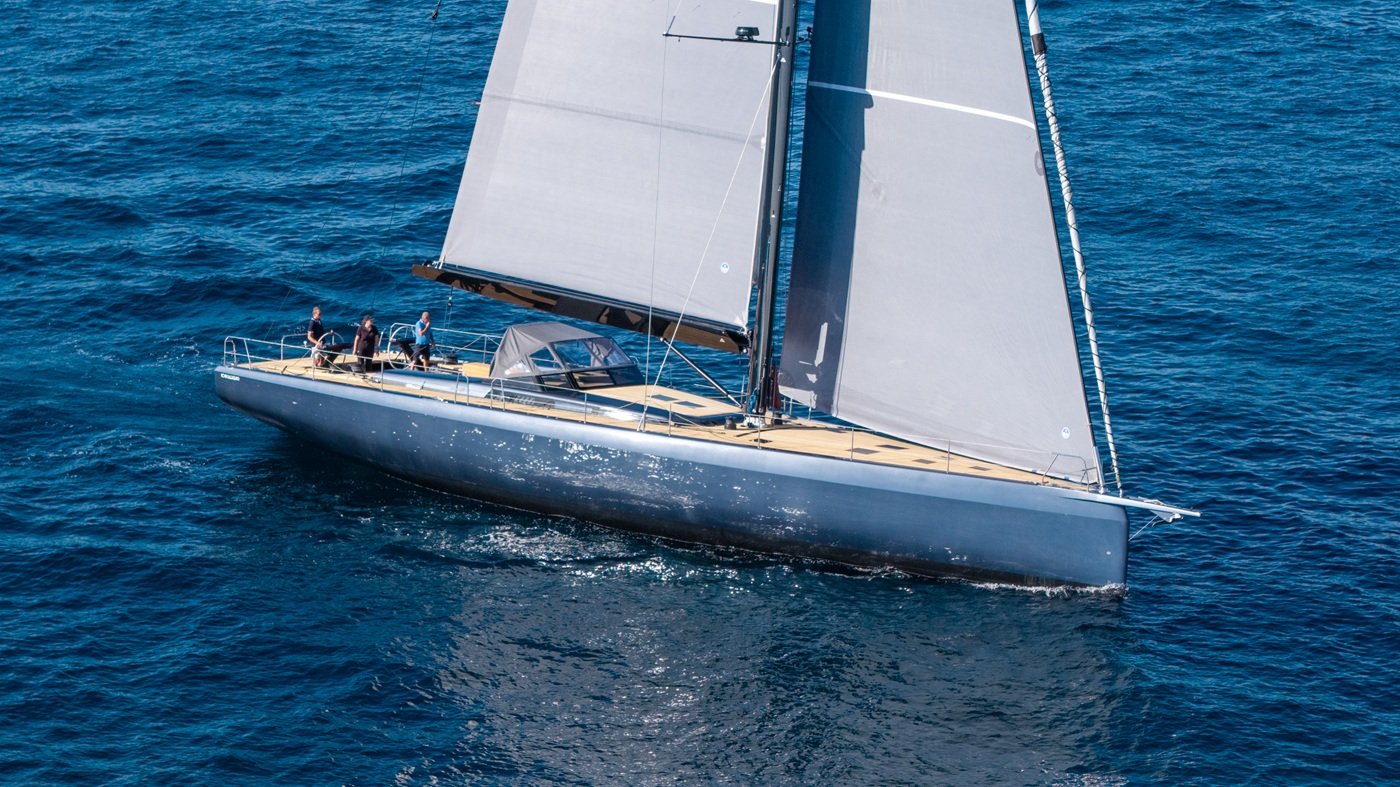
The test continues by trying to point the boat closer to the wind. The ICE 80 maintains high speed even when sailing very tight upwind. The hull response remains progressive, and the helm allows for precise course corrections. The ability to make adjustments without effort further contributes to the sense of simplicity. This is a central aspect of the project: performance does not seem to come at the expense of ease of handling; rather, it is integrated into a system designed to make managing a vessel of this size accessible even to a short-handed crew.
The Code 0 changes the pace once more
The second part of the test comes alive with the unfurling of the Code 0. True wind ranges between 5.5 and 6.5 knots, but the ICE 80 immediately begins to accelerate: first 6.7 knots, then 7 and 7.5 knots. The boat continues to respond to sail adjustments with extreme quickness, and once trim is optimized, it exceeds 8 knots. The steering wheel remains smooth while maintaining precise feedback, while the control system allows for managing key functions without requiring a large crew.
With further sail trim, the numbers become even more impressive: the ICE 80 reaches over 9 knots in about 7 knots of true wind. This is precisely when the dual soul of the project emerges most clearly. On one side is a vessel designed for long-range cruising and guest comfort; on the other is an extremely efficient sailing platform capable of taking full advantage of relatively light wind conditions. The speeds recorded during the trial naturally refer to the specific conditions of the day and configuration used, but they offer a clear indication of the ICE 80’s potential.
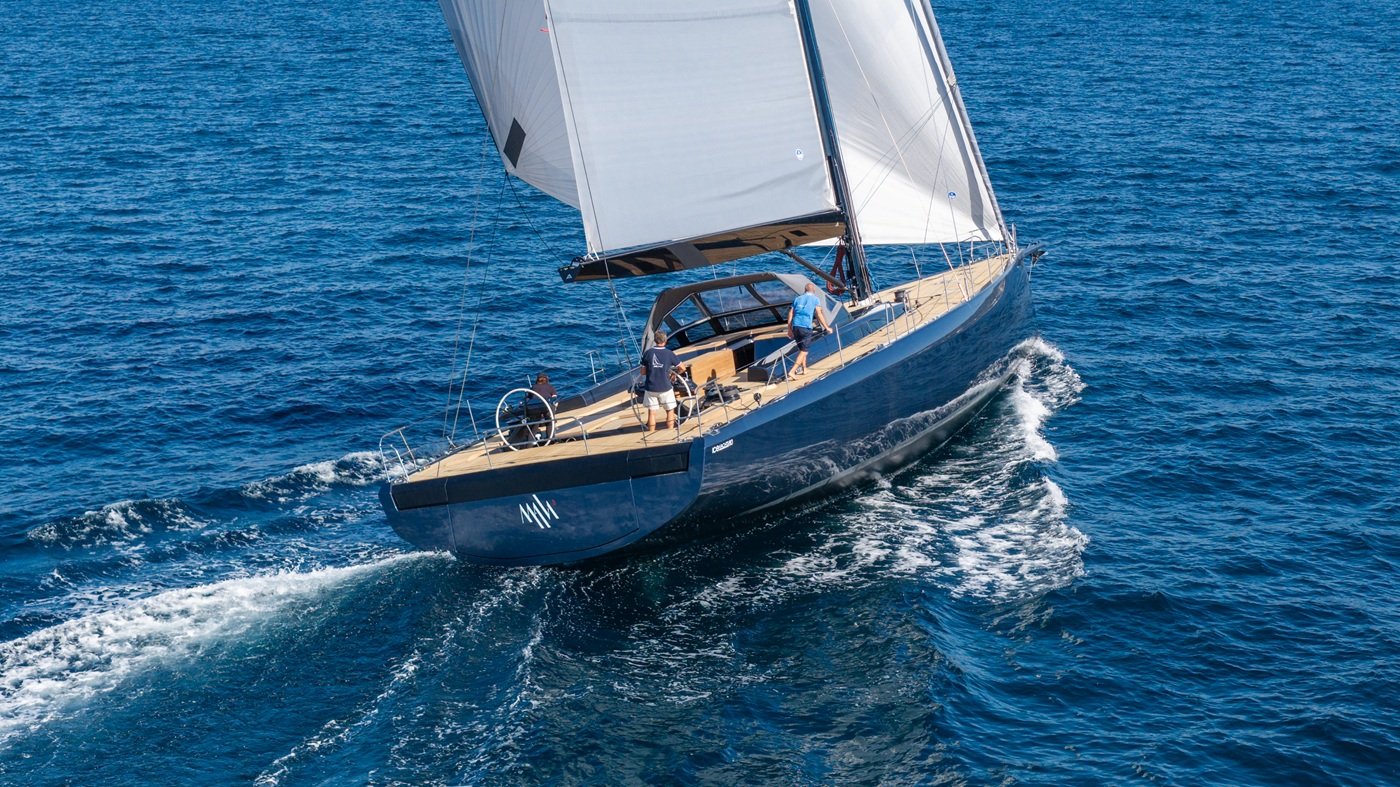
Just as we think the outing is over and begin maneuvers to head back, the wind picks up during our return to the port of Cannes. It’s a perfect opportunity to test the ICE 80 a bit further, and the result is immediate: in 10 knots of true wind, the boat touches 12 knots of speed. This is arguably the most spectacular data point of the entire test, as it perfectly encapsulates the design philosophy: a 24-meter boat conceived for cruising, yet capable of delivering speeds typical of a much more performance-oriented category.
How the ICE 80 is built
A fundamental part of the ICE 80’s performance lies in its construction. The hull, deck, and structural elements are crafted in carbon fiber via vacuum infusion. The goal is to simultaneously achieve structural rigidity and weight reduction. The result is particularly significant: for a 24-meter sailing superyacht, displacement stays at roughly 38 tons. This displacement management is key to the ICE 80’s efficiency. Reducing weight means decreasing the energy required to move the boat, allowing the sail plan to express its full potential.
Another key technical feature is the telescopic keel. Draft can be adjusted from 4.60 to 3.20 meters, offering two advantages that seem hard to reconcile: on one hand, deeper draft provides the necessary hydrodynamic efficiency underway and boosts performance; on the other, reduced draft eases time at anchor and opens access to a wider range of harbors. This solution aligns perfectly with the Blue Water Cruiser concept: performance when needed, combined with the freedom to explore diverse destinations.
Twin helm stations and carbon pods
The deck layout is dominated by twin helm stations featuring carbon pods. The design is refined, but behind the aesthetics lies a clear operational function. From the helms, primary vessel functions can be controlled, from sails to home automation. The result is centralized management that makes steering a yacht with a 330-square-meter sail area surprisingly straightforward.
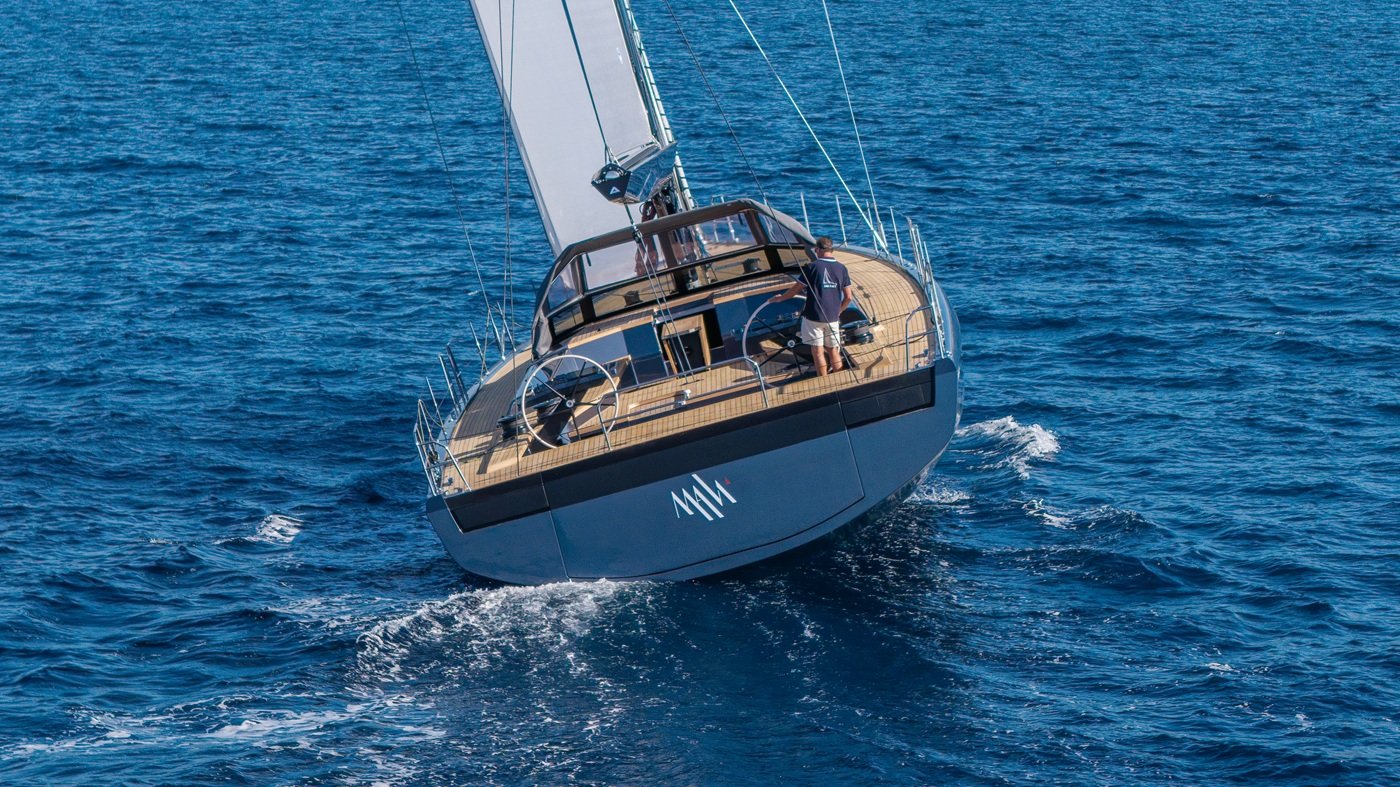
A key highlight of the deck plan is the main-sheet management system utilizing a captive winch. This setup allows trimming and easing the mainsail directly from the helm area without having to physically access the winch. Complementing the system are two large service winches situated on either side near the helm positions. Overall, primary maneuvers can be managed from the deck with minimal crew.
This concept is further emphasized by the option of a self-tacking jib: in this configuration, the ICE 80 can be handled practically single-handed, significantly reducing the need for physical movement and manual intervention.
A 330 m² sail area
The ICE 80 features a total sail area of roughly 330 square meters. The headsail configuration is versatile: options include a self-tacking jib on its track for simplicity and ease of handling, or a traditional genoa with an overlap between 105 and 110%. Forward, a generous bowsprit is designed to accommodate various sail setups.
The bowsprit of the ICE 80 is one of the most defining features of the yacht’s profile. The foresail is rigged on it, while slightly forward sits the furling system for the Code 0. At the extreme bow, a large gennaker can also be set. This variety of setups allows adapting the sail plan to varying weather conditions while maintaining a focus on simple management.
The interior of the ICE 80
The dinette is one of the most impressive spaces inside the ICE 80. A large L-shaped sofa occupies one side of the salon, while another broad seating area sits opposite. The central drop-leaf table can be extended further. With extra seating, the area accommodates 10-12 people with ease, reaching a maximum capacity of up to 14 guests.
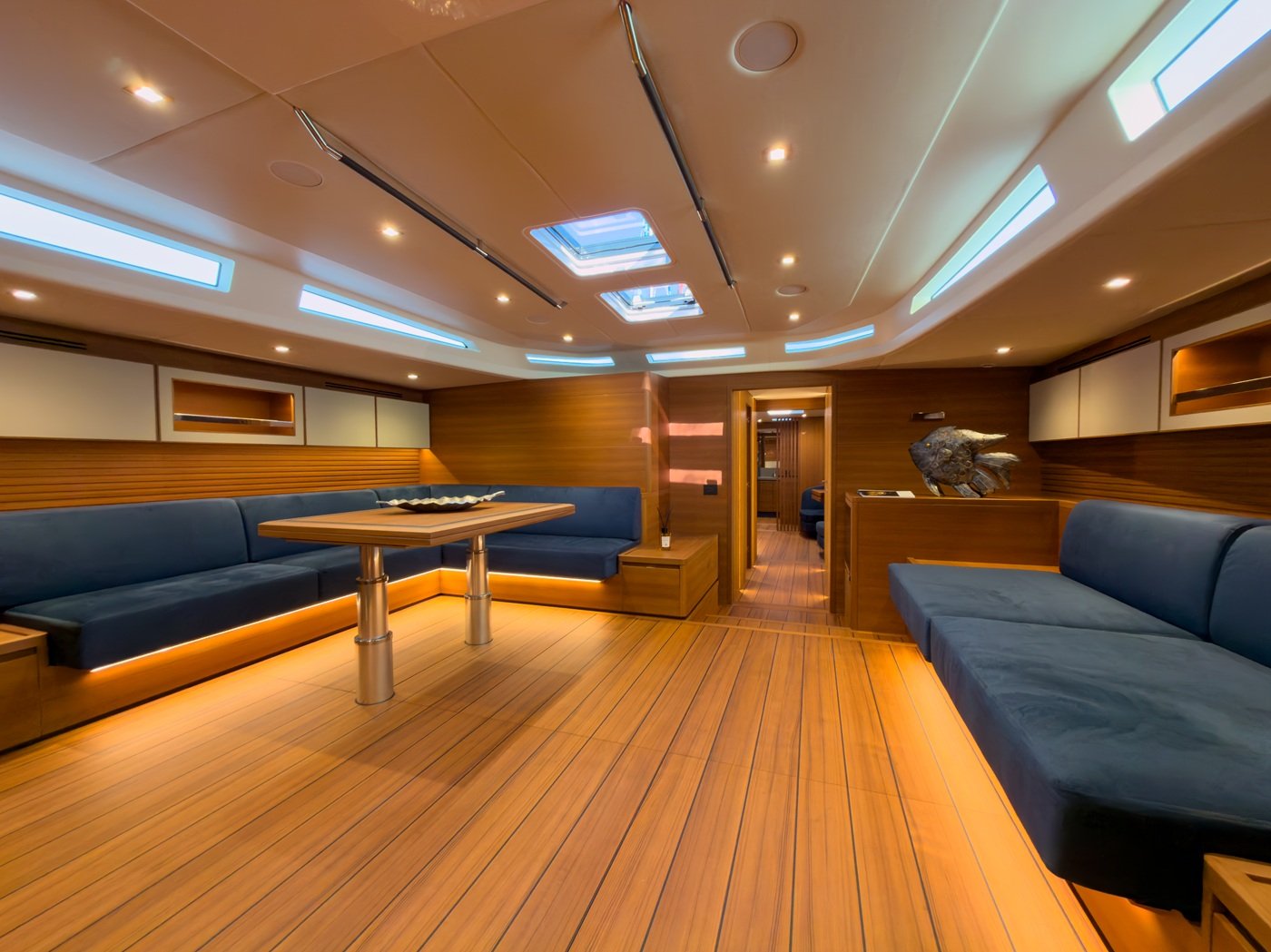
Stepping down from the dinette leads to the owner’s private quarters, which can be closed off from the rest of the yacht via a sliding door. The suite includes two cabins and two heads, both with separate shower stalls. The Master cabin is particularly generous in size, featuring a king-size bed. Opposite are two large armchairs and a area dedicated to a desk or custom millwork. Moving forward leads to a walk-in closet, followed by an equally sizable bathroom with a separate shower enclosure.
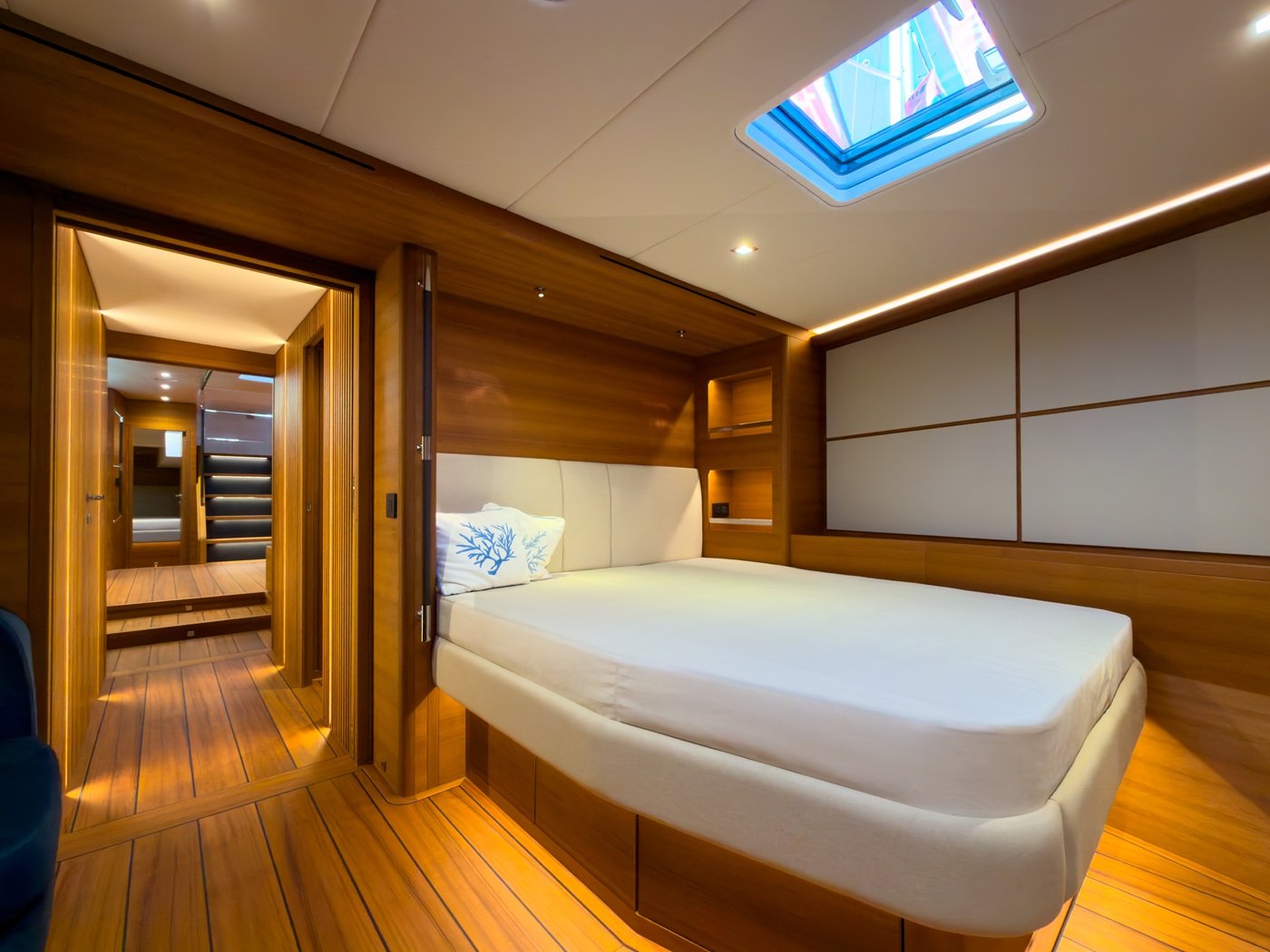
Within the private area sits the VIP cabin, which is also spacious. It features a queen-size bed and storage. The cabin includes its own ensuite bathroom with a separate shower. This layout extends master-suite privacy to a second guest.
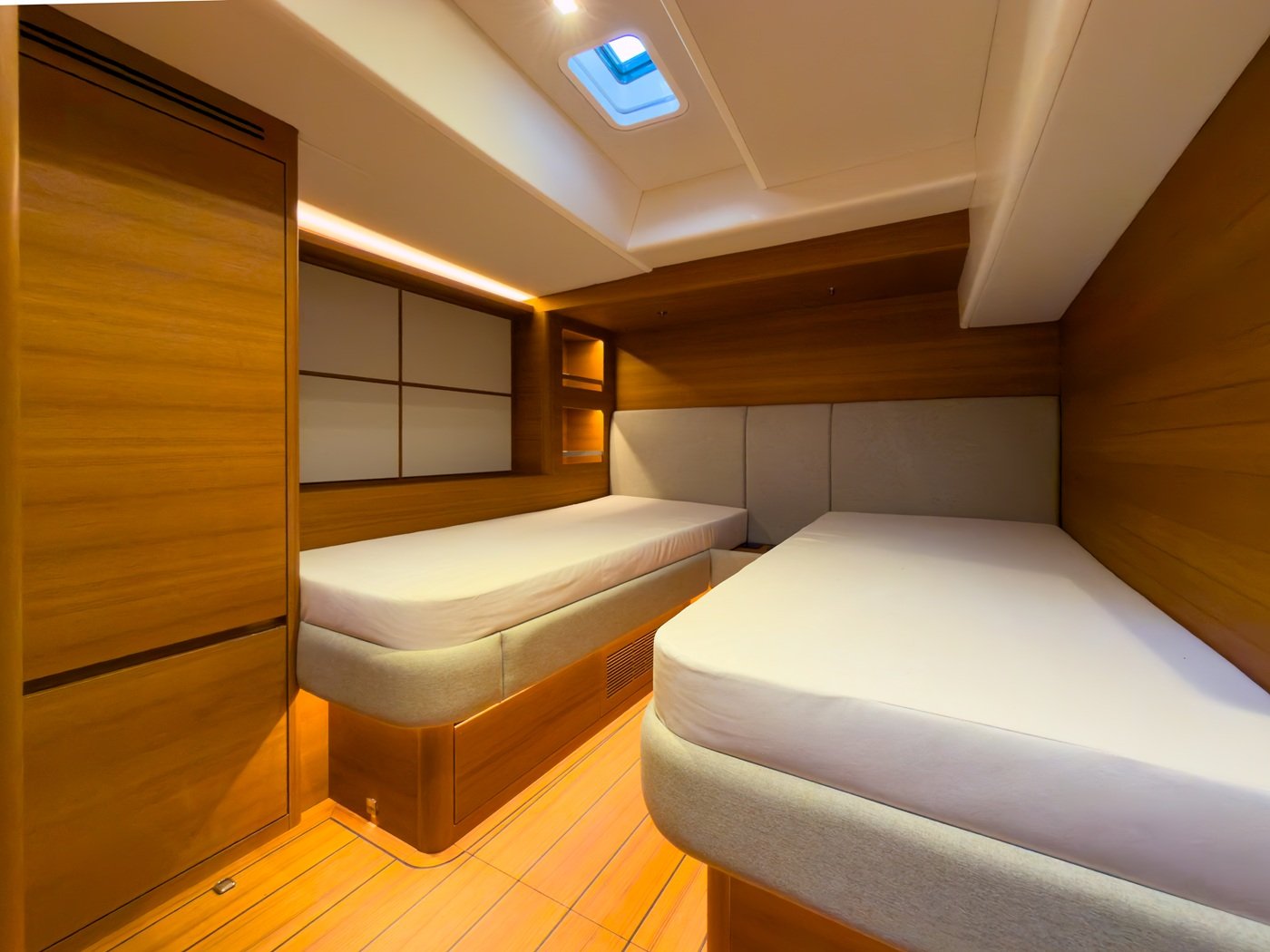
Accommodations continue with a second VIP cabin, also larger than average. The two single beds are wide—over a meter across—and accompanied by ample storage. This cabin also features an ensuite head.
The layout allows the ICE 80 to provide comfortable accommodation for both owner and guests while maintaining separation between living areas. The crew area is separated from the main salon and includes an extra-large galley. It is designed to prepare meals for the owner, guests, and full crew. The physical separation ensures privacy for the master quarters and operational autonomy for the crew. This section also includes a crew mess table, while further forward are the captain’s cabin and an additional twin cabin. Completing the space are dedicated heads and a nav station equipped with full instrumentation for vessel management.
An engine room matching the project’s ambition
To evaluate build quality on a yacht, the engine room is one of the most telling spaces. The ICE 80’s engine room matches the overall scale of the yacht: a spacious area designed for easy access to the engine and systems. Wiring organization is neatly executed—a detail rarely visible during a casual walkthrough, but critical for long-term maintenance and reliability.
Conclusions
The test of the ICE 80 highlights two seemingly distinct souls. On one hand is the Blue Water Cruiser, featuring expansive interior spaces, a master suite layout, guest cabins, crew quarters, and equipment designed for long-range sailing. On the other hand is the racer soul, expressed through carbon construction, light weight, a telescopic keel, 330 m² of sail area, and a hull capable of accelerating quickly even in light air.
The true surprise, however, lies in how easily this performance can be managed. Line organization, captive winches, a self-tacking jib, furling systems, and twin helm stations allow a 24-meter vessel to be handled with low effort. Ultimately, the ICE 80 bridges the gap between performance and comfort: a sailing superyacht where cruising capability does not compromise sporting spirit. On the contrary, it is the integration of these two dimensions that defines the character of the ICE 80.
Sources and references
| Source | Content |
| The International Yachting Media – ICE 80 Video Test | Official YouTube channel where the video of the sea trial and onboard tour of the ICE 80 was published |
| Luca D’Ambrosio | Sea trial and technical measurements by the specialized marine journalist, author of the sea trial video |