During my sailing courses, I usually love repeating this phrase: the most annoying noise on board is that one of the engine when it doesn’t start. I don’t remember the person who said this pearl of wisdom for the first time, but it is true.
And if the engine ditches us? To this rhetorical question we answer with the most obvious information: we can steer by using sails. The possibilities of success depend on our skills and experience, that is how many times we trained and enjoyed this.
Considering that, although the navigation code doesn’t forbid it, in most harbours there are some ordinances forbidding the sail manoeuvres, a sail mooring is a good occasion to train.
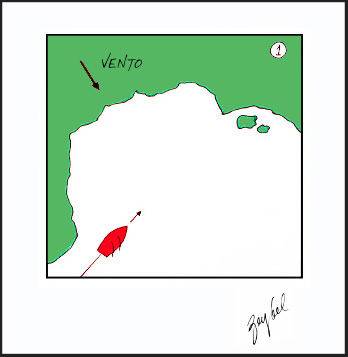
The most traditional method is to anchor with the head to the wind. The manoeuvre is rather easy but it requires much precision.
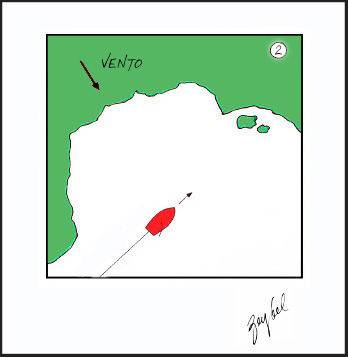
After individuating the area where to anchor, we must approach to this point by sailing close to the wind. We can regulate our speed by blanketing one or both the sails. It is important to maintain a good safety distance in order to have the necessary space to bear away and leave.
When we are on the last side, before putting the head to the wind, we will have already instructed a person who will go to the bow for the mooring operations, after checking and preparing everything necessary to anchor.
When we are sure to be on the right side to sail close to the wind, we can furl or lower the jib.
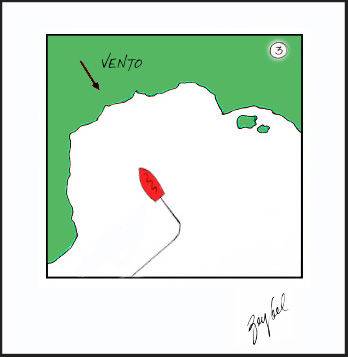
This manoeuvre has a double significance: it frees the angle on the bow, it creates more space and it removes the risks for the bowman represented by a sail beating to the wind. After freeing the bow from the jib, the bowman reaches the anchor fast. We can reduce the listing by slacking the mainsail a little. This way, we will reduce our speed, too, and the bowman will be able to back the anchor, that is to lower it.
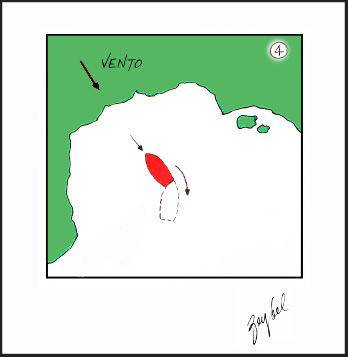
After obtaining the right alignment between the point where we want to anchor and the wind direction, we can head up and slack the mainsail until the fresh way is finished. When the boat stops, we can anchor fast.
The boat, stressed by the wind, will start to retreat and the bowman will give so much chain as necessary, but always from 3 to 5 times than the bottom. If the bow lists, there is no problem; actually, it is a fair manoeuvre if the wind is very light because, this way, the boats will be able to retreat faster.
By stopping the chain descent, the anchor will hold on the bottom and the bow will be to the wind again. If necessary, we will ease out more until the manoeuvre is completed. Then, we will have the possibility to lower the mainsail.
Solemar SX27 Sea Trial: Flying at 50 Knots with the Honda V8 350 Good morning,…
Six New Models in a Single Year, an Increasingly Global Distribution Network, Growing Power Catamaran…
Majesty 72 stems from the experience of a builder specialized in superyachts up to 55…
SilverCat introduces the second generation of its power catamaran range and entrusts the new SilverCat…
New electric thrusters, innovative control systems, and a revolutionary digital architecture to integrate onboard technologies.…
A level of comfort rarely seen in a sailboat, perfect balance while sailing, and an…