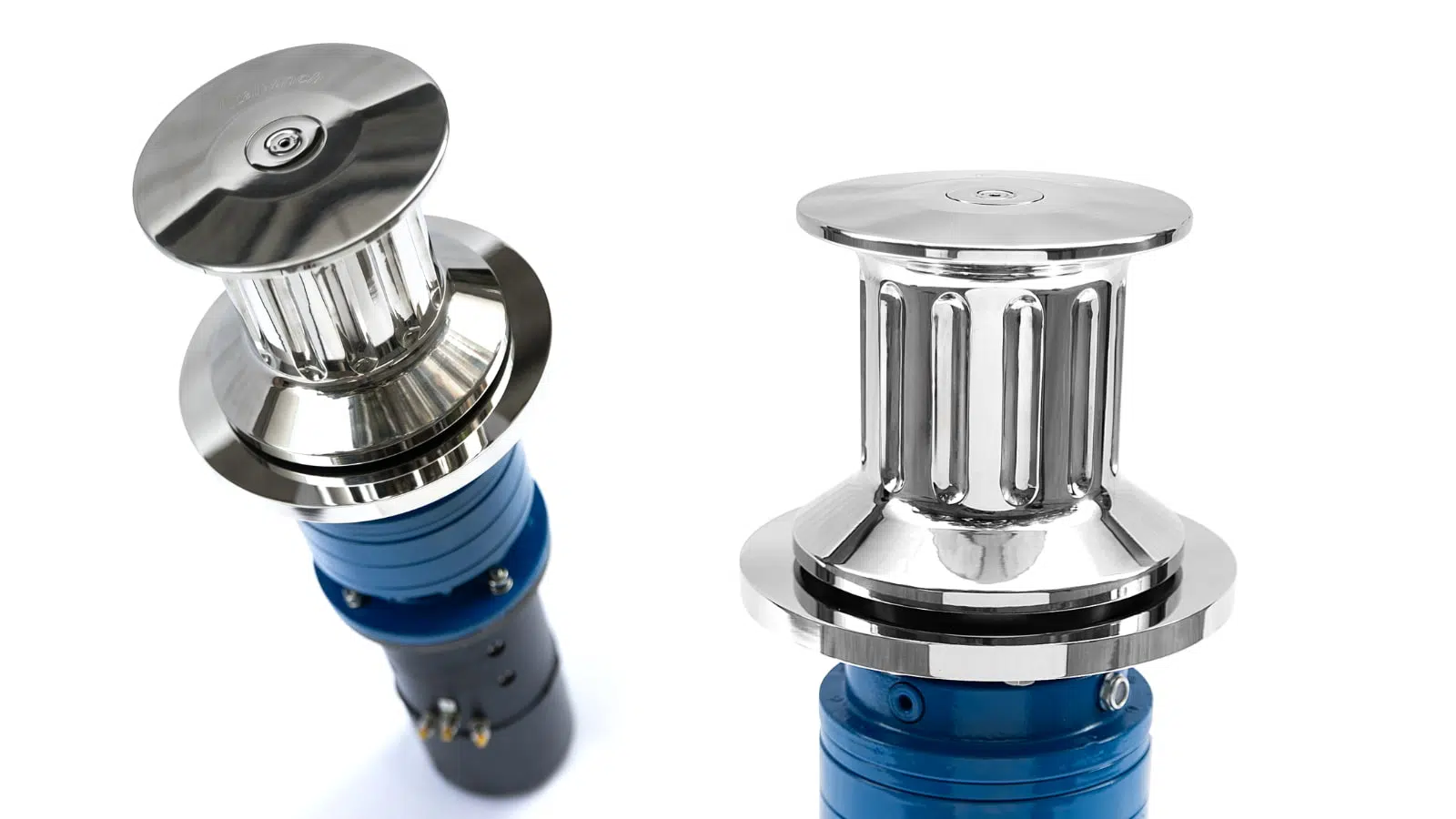
No longer just an anchor windlass that lowers and retrieves the chain through a simple command, but a system capable of using the boat’s data to assist the owner during every phase of the maneuver. That is the philosophy behind the Intelligent Anchoring System, the new technology from Quick Group that will be officially unveiled on November 17 at Metstrade 2026, held at the RAI Amsterdam exhibition center.
The solution, for which a patent application has been filed, represents an important step forward in the technological integration path undertaken by the Italian group. The goal is to transform anchoring from a largely manual operation into a process assisted by an advanced electronic system, capable of monitoring in real time what is happening on board and adapting the windlass’s operation to operating conditions.
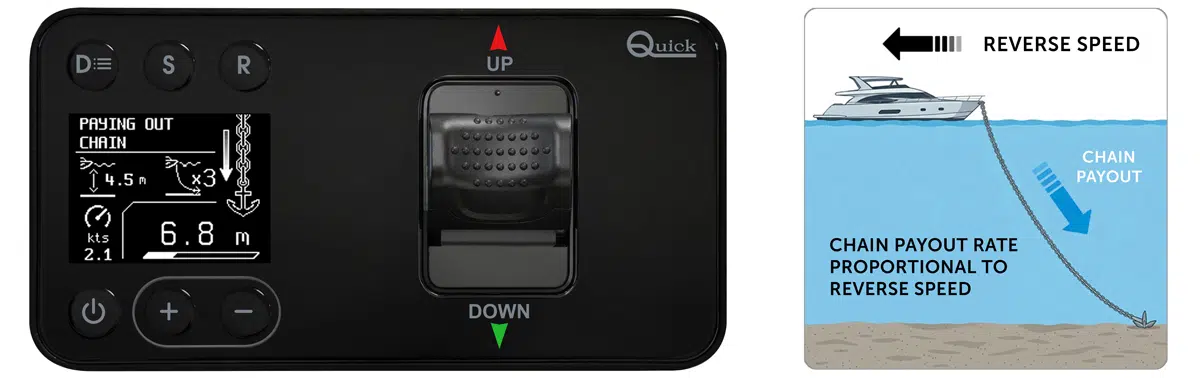
The new system combines three key elements: proportional-control motors, navigation data, and intelligent diagnostics. Thanks to this integration, the Intelligent Anchoring System can manage the speed at which the chain is deployed and retrieved, calculate the scope ratio, and verify the conditions required to carry out the maneuver safely. It is an evolution that fits within Quick Group’s strategy of developing increasingly connected onboard systems capable of communicating with one another through a single digital infrastructure.
From traditional on/off windlasses to proportional control
To understand the importance of the Intelligent Anchoring System, it helps to start with how traditional windlasses work. In most installations, the windlass is operated through an on/off electrical command: the operator can choose whether to lower or retrieve the anchor, but has limited ability to adjust the speed of the movement.
Quick Group has developed a different solution, based on proportional-control motors that make it possible to modulate the windlass speed according to the needs of the maneuver. But the truly innovative element is not just speed regulation. The Intelligent Anchoring System uses information from the boat’s onboard systems to adapt the windlass’s operation to the vessel’s actual conditions.
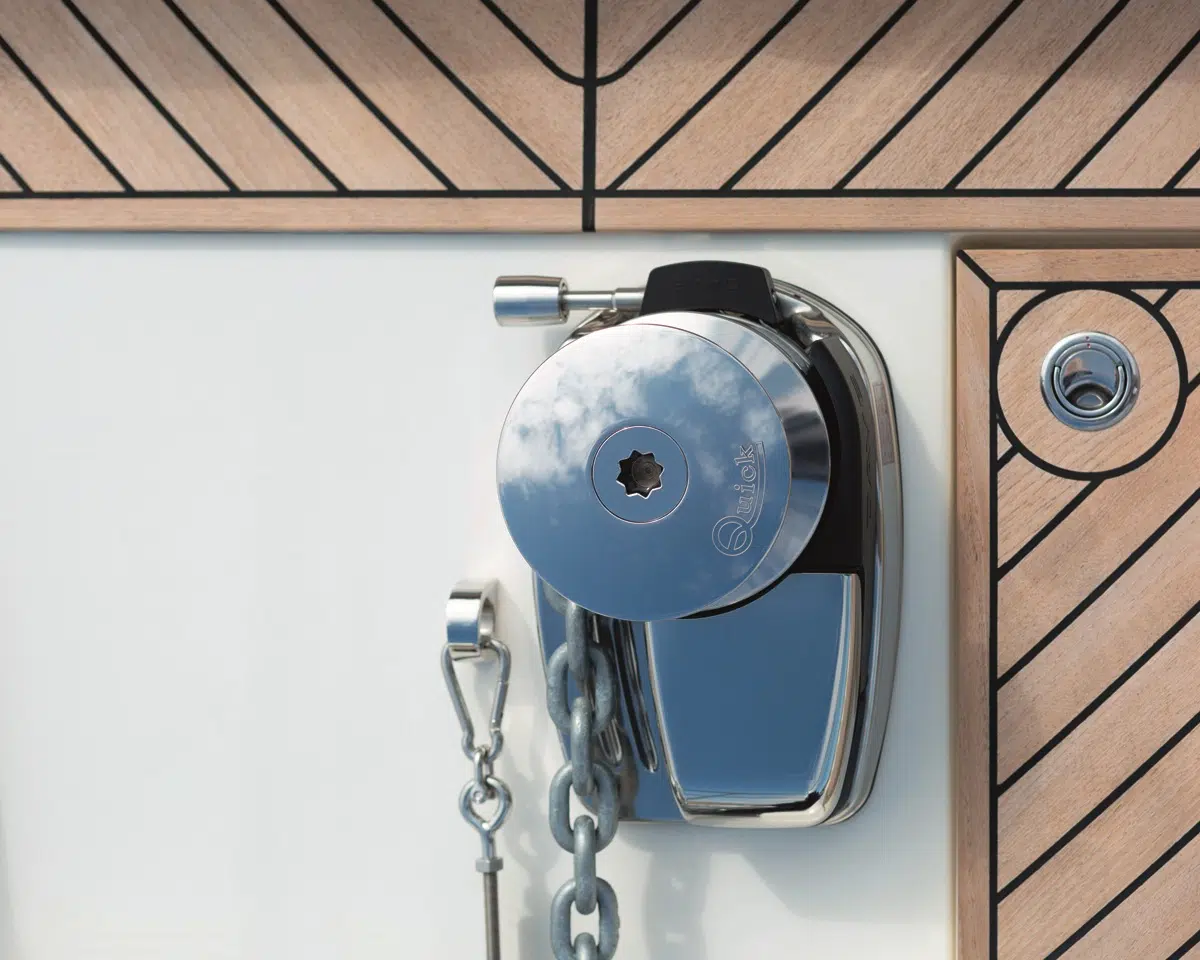
“We are world leaders in the production and supply of anchor windlasses, with about 30,000 units delivered to OEM builders every year,” says Stefano Lenarduzzi, CEO of Quick Group. “While much of the market still offers windlasses driven by a simple on/off relay, we have developed proportional-control motors and a management system that draws on data from the QCentric ecosystem and NMEA 2000 networks to deliver greater control during anchoring operations. This is the solution we have named the Intelligent Anchoring System.” The system thus grows out of the experience Quick Group has built in the windlass sector, but it introduces a more advanced approach to anchoring management.
How Quick Group’s Intelligent Anchoring System works
One of the most interesting aspects of the new technology is its ability to assist the operator throughout the entire anchoring sequence. The system works in several phases, each characterized by specific monitoring and control functions.
Before dropping the anchor, the system checks the status of the windlass, the chain counter, and the retaining devices. The aim is to confirm that the conditions required to begin the maneuver are met. This preliminary check makes it possible to identify any anomalies or incorrect operating conditions before the windlass is activated.
While the chain is being deployed, the Intelligent Anchoring System constantly monitors a series of parameters, including:
- Length of chain deployed.
- Position of the boat.
- Speed and direction of movement.
- Water depth.
- Status of sensors and connected devices.
Based on this information, the system automatically adjusts the windlass speed, using progressive acceleration and deceleration profiles. This makes the movement of the chain more controlled and predictable, avoiding sudden changes in speed.
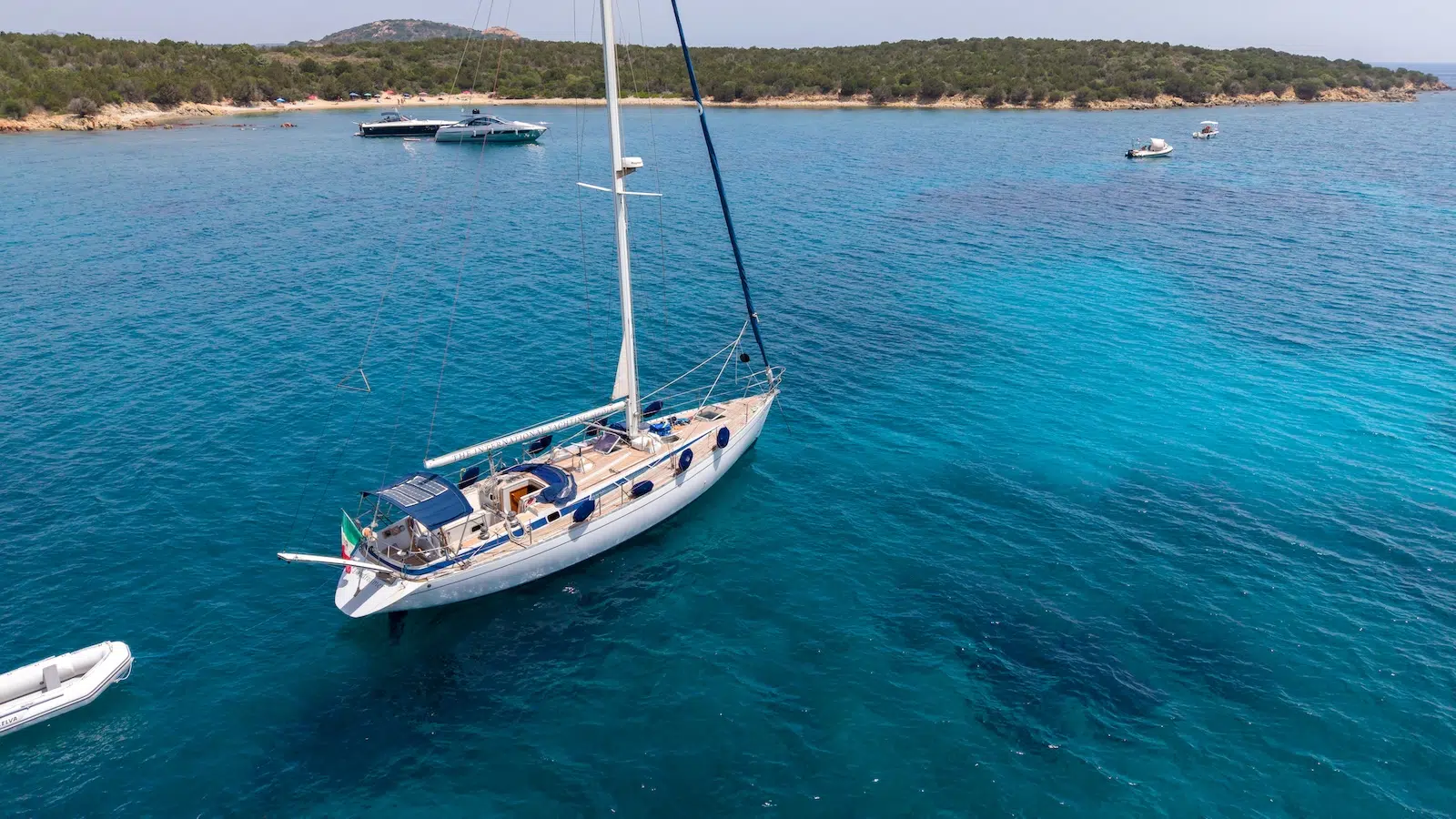
Another particularly important function is the scope ratio calculation, that is, the ratio between the length of the anchor rode and the depth considered for the maneuver. The system determines the optimal value based on depth and on parameters set by the user, providing useful guidance for more precise anchoring. Throughout the entire operation, the operator receives real-time information and can step in at any time. The integrated safety logic is also designed to recognize anomalies, unavailable sensors, and incorrect operating conditions.
Safer anchor retrieval: speed automatically decreases near the bow
The intelligent functions are not limited to the deployment phase. During anchor retrieval as well, the system uses proportional control to improve how the movement is managed. One of the most delicate moments of the maneuver occurs when the anchor approaches the bow of the boat: with a traditional windlass, retrieving too quickly can cause impacts against the bow roller or excessive stress on the equipment. The Intelligent Anchoring System addresses this problem through a progressive reduction in retrieval speed. As the anchor nears its final position, the system automatically slows the movement, making the last phase of the maneuver more controlled.
The benefit applies both to operational safety and to the protection of mechanical components. Reducing impacts and stress helps limit equipment wear and improves the overall quality of the operation. It is a concrete example of how the integration of electronics and mechanics can make one of the most frequent maneuvers in recreational boating simpler.
QCentric, the digital ecosystem that connects all onboard systems
The Intelligent Anchoring System is one of the first applications of the digital strategy Quick Group has developed through QCentric. Introduced in 2026, this platform forms the technological core of an open, scalable ecosystem designed to enable different systems installed on the boat to communicate with one another. The architecture is based on the CAN bus protocol, a communication technology that allows different electronic devices to exchange information over a shared network.
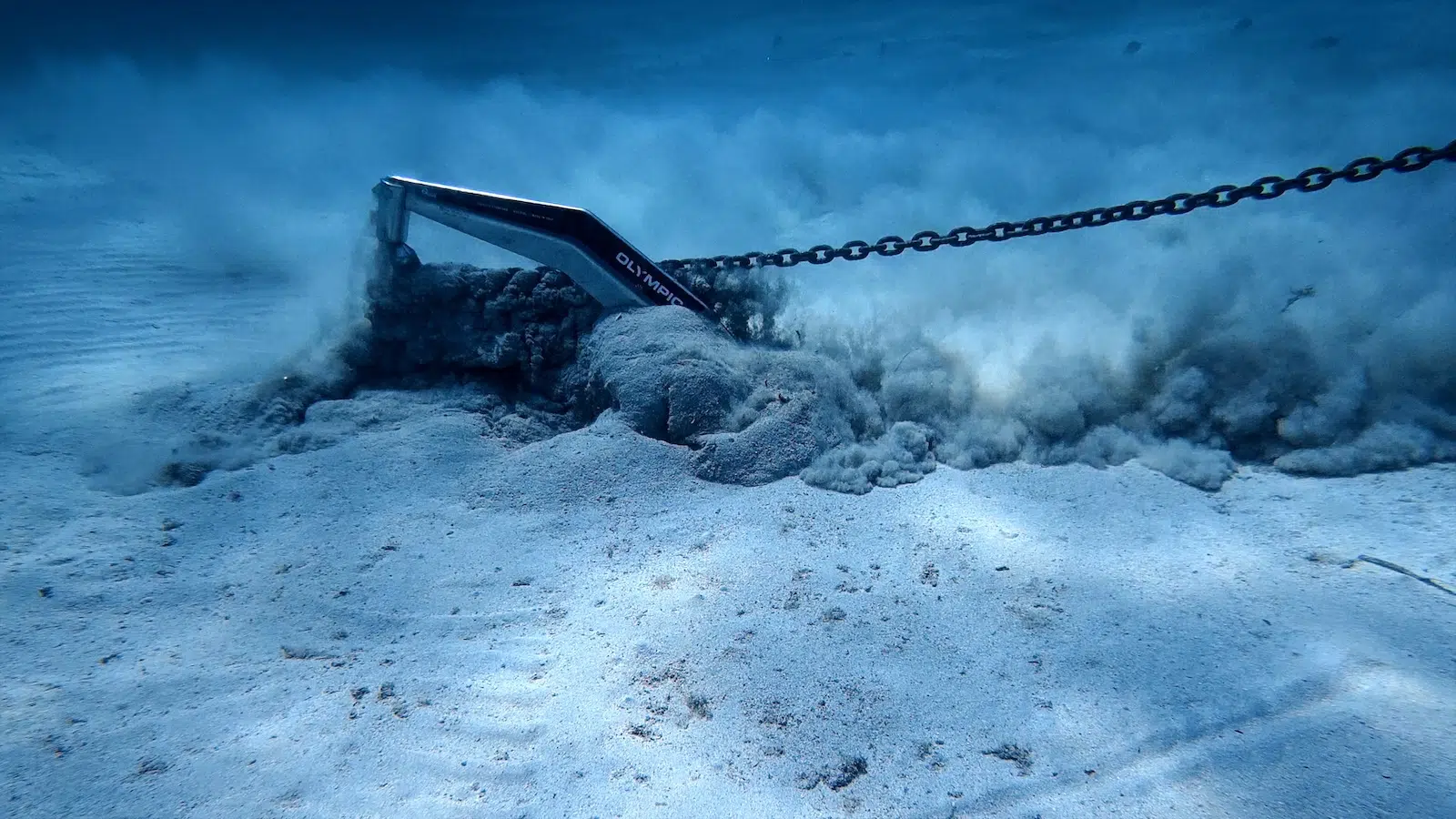
QCentric was designed to progressively integrate a growing number of Quick Group products, including windlasses, thrusters, and their associated control systems. A key aspect, however, is the ability to connect devices from other manufacturers as well. Compatibility with the NMEA 2000 standard makes it possible to use information from the boat’s electronic network, facilitating integration with navigation instruments. In this way, the windlass no longer operates as an isolated device but becomes part of a broader digital system.
The architecture also paves the way for greater integration among propulsion, thruster, steering, and anchoring systems. The result is potentially more coordinated management of onboard operations, in which the different devices can share information and functionality.
New Pacific W1XL and W2XL controls: intuitive operation and simplified installation
To take advantage of the Intelligent Anchoring System’s features, Quick Group has developed the new Pacific W1XL and Pacific W2XL controllers, dedicated to windlass management. The devices are the latest additions to the Pacific family and have been designed to support proportional control and advanced monitoring functions. The goal is to provide an intuitive interface through which the operator can manage maneuvers and view the necessary information.

One of the most interesting aspects is the ease of installation. Thanks to the CAN bus architecture, it is possible to reduce the wiring to a single cable for each control station, simplifying device connections. The system also uses a plug-and-play approach, intended to make installation and configuration faster. Handheld control devices can also be easily integrated.
Information from the Intelligent Anchoring System can be displayed directly on the standard multifunction displays (MFDs) at the helm. This makes it possible to view anchoring data without necessarily adding a dedicated screen. The architecture is also scalable and can be used both on boats equipped with a single windlass and on configurations with dual windlasses.
Lorenzo Mongiardo: “More intelligence and predictability in a critical maneuver”
Safety and ease of use were two of the main priorities in developing the new system. That is explained by Lorenzo Mongiardo, Chief Technical Officer of Quick Group, who underscores the importance of integrating control algorithms with information coming from the boat: “Our goal was to bring greater intelligence and predictability to one of the most critical operations on board,” says Mongiardo. “By combining advanced control algorithms with real-time data about the boat and the anchoring, we have developed a system that supports the crew throughout the entire anchoring process, improving safety, operational awareness, and the user’s overall experience.”
The approach adopted by Quick Group thus aims to support the operator without removing their decision-making role. The ability to step in at any time remains one of the system’s fundamental features. Automation is used to make operations more controllable and predictable, providing useful information and reducing the risk of errors.
Quick Gyro, more efficient stabilizers and warranty extended to four years
The Intelligent Anchoring System is the main announcement planned for Metstrade, but it is part of an innovation path that has touched several Quick Group product lines during 2026. These include the Quick Gyro gyroscopic stabilizers, which have been the subject of steady updates in recent years. The work has involved optimizing the mechanical components, the electronics, and the control algorithms. The goal is to improve stabilization performance, increasing efficiency while reducing footprint.

In early 2026, Quick Group also introduced a new extended warranty program that doubles coverage from two to four years. The move strengthens the range’s positioning and underscores the group’s focus on the reliability and longevity of its systems.
QSY brushless thrusters and Pacific controls: new products unveiled in Cannes
Another important innovation introduced during the year concerns the thruster range. At the Cannes Yachting Festival 2026, Quick Group presented the new QSY proportional brushless thrusters, expanding the family with additional models and introducing a 215 millimeters tunnel. The range has been developed to cover different applications, from the smallest boats to large yachts. Brushless technology and proportional control make it possible to modulate thrust more precisely than traditional systems with exclusively on/off control.
At the same time, the group presented the new generation of Pacific controls, designed to take full advantage of the QSY thrusters’ features. The devices focus on an intuitive interface and greater ease of installation, thanks to the plug-and-play approach.
These innovations share the same philosophy behind the Intelligent Anchoring System: making onboard operations more precise and easier to manage through the integration of mechanical components, electronics, and software.
Quick Group at Metstrade 2026 with three booths and new Nemo and Sanguineti products
The presentation of the Intelligent Anchoring System will be one of the centerpieces of Quick Group’s participation in Metstrade 2026, scheduled for November 17–19 at the RAI Amsterdam. The group will be exhibiting with three separate booths dedicated to its various product families and the technologies developed over the course of the year.
Booths 01.153 and 01.251, located in Hall 1, will showcase a broad selection of Quick Group solutions. Products on display will include the new additions to the lighting range, the QSY proportional thrusters, the new Pacific controls, and the doors, hatches, and portholes of the Nemo range.
A third exhibition space, booth 07.120, will be located in the area dedicated to superyachts. Here Quick Group will present several products from the Sanguineti and Nemo ranges, aimed at applications on larger vessels. Among the solutions on display will be the XR8 windlass, already installed on several recent new builds, including the Azimut 44M.
Having a presence across three booths will allow the group to showcase both its individual innovations and the progressive integration of its different ranges within a shared technology ecosystem.
Intelligent Anchoring System – technical specifications
Manufacturer | Quick Group |
System name | Intelligent Anchoring System |
Type | Intelligent anchoring management system |
Official presentation | Metstrade, November 17, 2026 |
Patent status | Patent pending |
Digital architecture | QCentric |
Communication protocol | CAN bus |
Integration with onboard systems | NMEA 2000 |
Windlass control | Proportional |
Dedicated controllers | Pacific W1XL and Pacific W2XL |
Preliminary checks | Status of the windlass, chain counter, and retaining devices |
Monitored parameters | Chain length, position, speed, direction, and water depth |
Anchor deployment management | Automatic speed control with progressive acceleration and deceleration |
Scope calculation | Automatic, based on depth and user-set parameters |
Anchor retrieval management | Progressive slowdown near the bow |
Diagnostics | Detection of anomalies, unavailable sensors, and incorrect operating conditions |
Manual intervention | Available at any time |
Information display | Onboard MFD multifunction display |
Installation | Plug-and-play |
Wiring | One cable per control station |
Handheld controls | Can be integrated into the system |
Supported configurations | Single or dual windlass |
Compatibility | Quick Group ecosystem and third-party systems via NMEA 2000 |
Conclusions
With the Intelligent Anchoring System, Quick Group introduces a significant evolution in how one of the most important maneuvers in boating is managed. The shift from traditional on/off control to a proportional system integrated with the boat’s data makes anchoring more precise and predictable. The preliminary check functions, continuous monitoring, scope calculation, and automatic slowdown during retrieval are concrete solutions for improving operational safety and protecting equipment.
But the most important innovation is probably digital integration. Thanks to the QCentric platform, the windlass becomes part of an ecosystem capable of connecting different onboard systems, opening the door to new possibilities for automation and coordinated management.
The Intelligent Anchoring System therefore represents not just a new product, but a milestone in the strategy with which Quick Group aims to develop increasingly connected marine technologies. It is a path that will find in Metstrade 2026 an important opportunity for dialogue with shipyards, designers, and international operators.
Sources and references
Source | Reference |
|---|---|
Official press release from the manufacturing company on the presentation of the Intelligent Anchoring System at Metstrade 2026, the QCentric platform, and the Group’s technological innovations. | |
International trade show for marine accessories and technologies, Amsterdam, November 17–19, 2026. |