A sailboat that delivers real thrills at the helm yet also serves as a comfortable home during long passages. That is the idea around which Cantiere del Pardo developed the new Grand Soleil 60, an offshore cruiser that combines the brand’s sporting DNA with an especially high level of livability. The design is the result of a collaboration between two leading names in Italian yachting: Matteo Polli, head of naval architecture, and Nauta, which designed the interiors and exteriors. Cantiere del Pardo, of course, also contributed its own building expertise to create this magnificent 19.68-meter (overall) yacht, which features a sleek profile, a plumb bow, and a low-profile coachroof that give it a dynamic, elegant look.
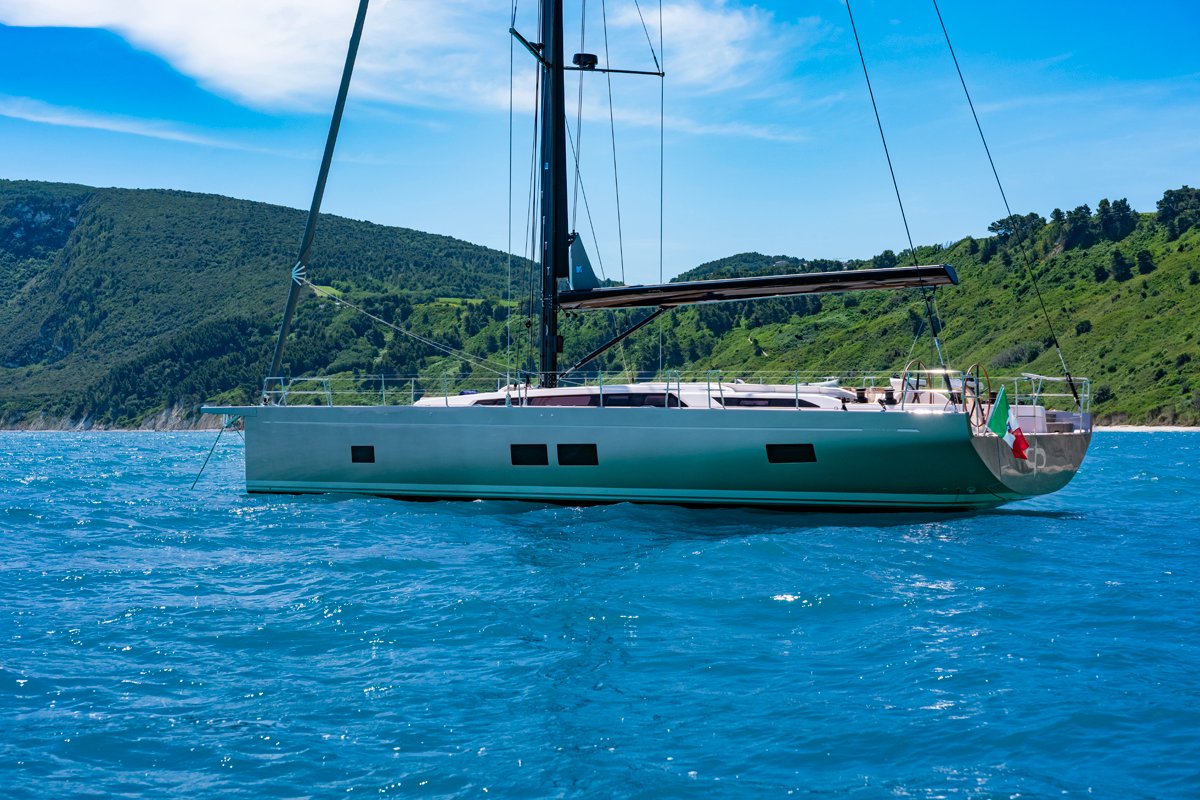
Behind the aesthetics of the Grand Soleil 60 lies a design developed above all to sail well. The hull has been engineered to deliver efficiency in light wind and stability when conditions become more demanding. The sail plan, powerful yet set up to be easily manageable, makes it possible to take full advantage of the hull’s characteristics without necessarily requiring a large crew. At the same time, the interiors offer spaces and amenities designed for extended periods on board.
“We are extremely proud of our new model,” says Marcello Veronesi, CEO of Cantiere del Pardo. “We are excited to share our vision of a cruising boat designed to offer maximum comfort while also being capable of high performance, thanks to fast, efficient hull lines. A boat designed to make every mile under sail a pleasure.”
A hull by Matteo Polli, efficient even in light wind
At the heart of the new Grand Soleil 60 is the naval architecture developed by Matteo Polli, who brought to this cruiser the experience he has gained optimizing racing boats. The challenge was to achieve high performance without giving up the volume needed to ensure excellent livability.
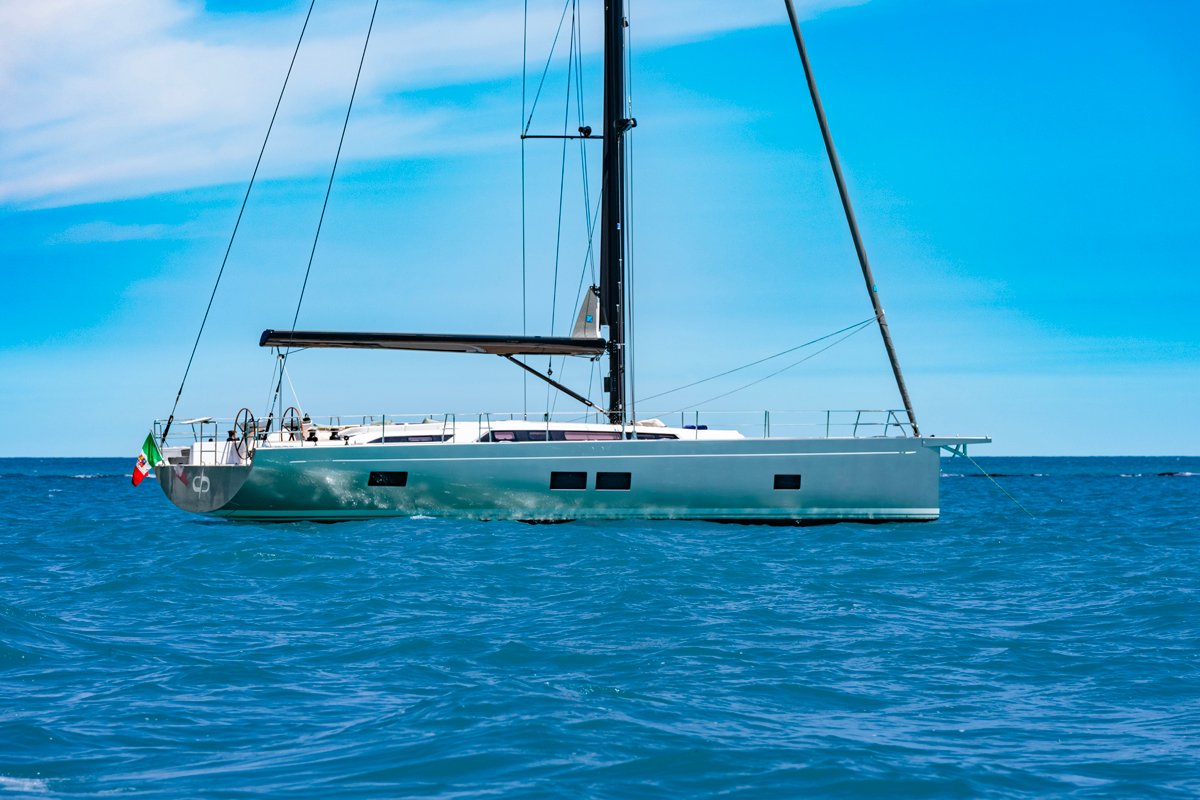
Polli’s solution is a hull with tapered underwater sections, designed to reduce drag, especially when the wind is light. This is a particularly important feature in the Mediterranean, where light breezes are not uncommon in summer. As a result, the Grand Soleil 60 can maintain sailing speeds of around 6-7 knots even in winds of less than 10 knots. When the wind builds, the sail plan easily delivers speeds on the order of 10 knots.
The design features a bulb keel with a draft of 2.80 meters and a single rudder, chosen to strike a good balance of stability, control, and helm feel. The hull is built with a sandwich structure using vinylester resin, selected for its structural stiffness and low weight. Displacement is 27 metric tons, a figure that should be read in light of the boat’s size and substantial onboard equipment.
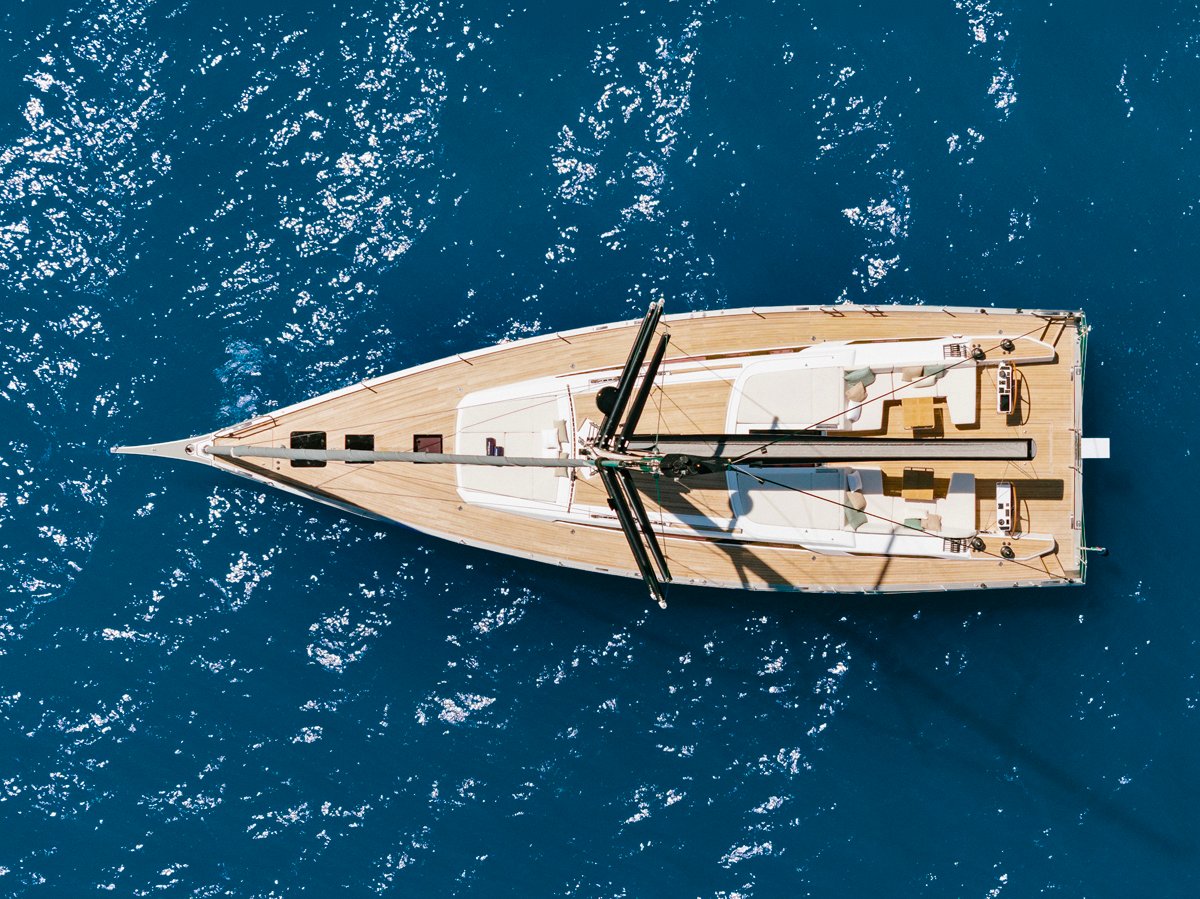
“The shape of the hull delivers stability in strong wind and low drag in light wind, while also providing considerable volume below deck,” explains Polli. “One of the main goals of the project was to create generous living spaces without compromising the performance that has made the brand famous. If you’re going to spend a lot of time on board, the environment has to be as refined and welcoming as your own home.”
Grand Soleil 60, a spacious cockpit free of control lines
One of the most successful aspects of the new Grand Soleil 60 is the cockpit layout, designed to balance the demands of sailing with those of outdoor living. The maximum beam of 5.80 meters and the generous hull sections aft make it possible to create an especially large space, in which the guest areas are clearly separated from those used for sail handling. This arrangement makes it possible to enjoy the cockpit even while under way, without interfering with the activities of those sailing the boat.
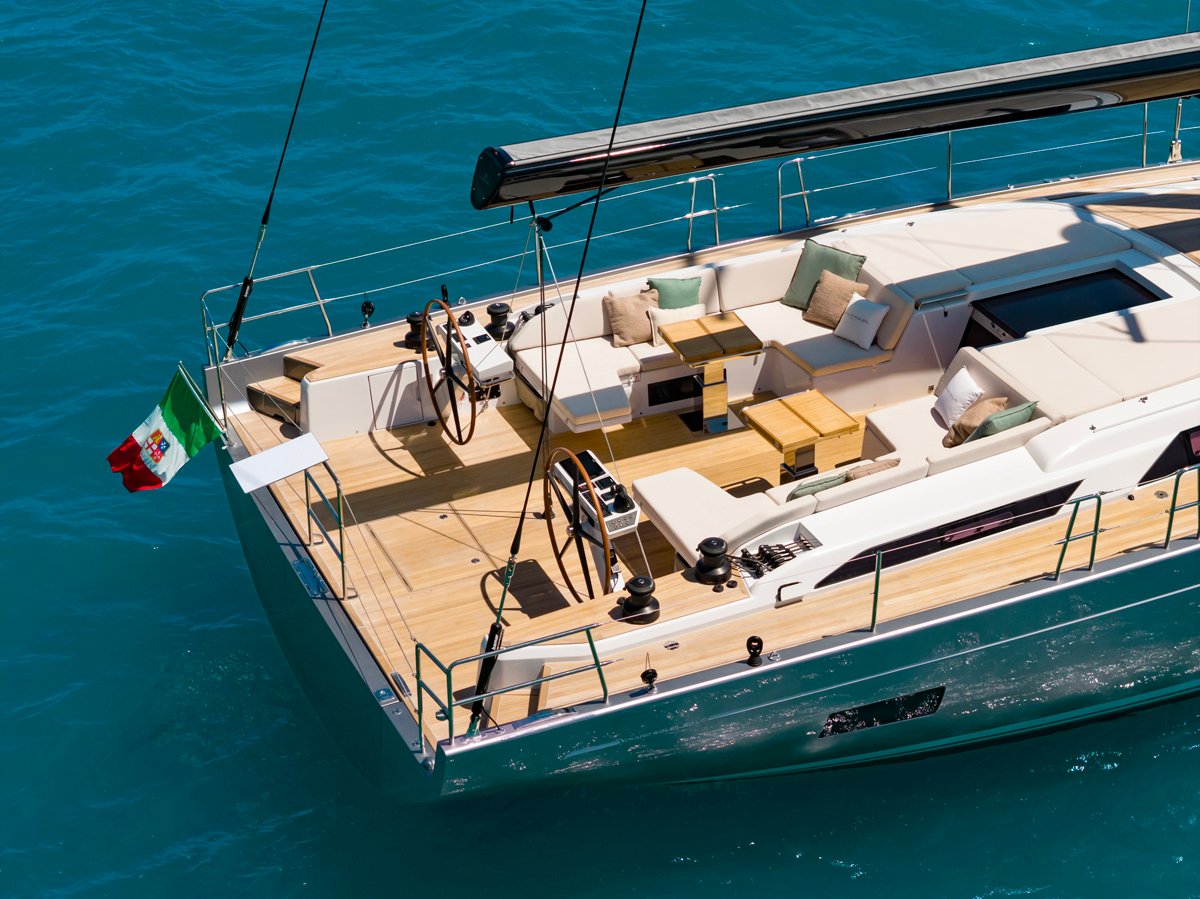
At the center are two height-adjustable tables, which together can seat up to eight people. When at anchor, the tables can be lowered to turn the area into a large sunbathing surface. The option of installing a sprayhood or a bimini also provides better protection from sun and spray.
Aft, the fold-down transom platform makes it easier to get to the water and further expands the usable space when stopped. The result is an outdoor area that fully embodies the philosophy of the Grand Soleil 60: offering the comfort of a cruising yacht without compromising the functionality needed for sailing.
Harken electric winches and control lines led aft
Easy sail handling is a fundamental element of the design. The Grand Soleil 60 was conceived to be managed even by an experienced owner without a large crew, thanks to a rational arrangement of deck hardware.
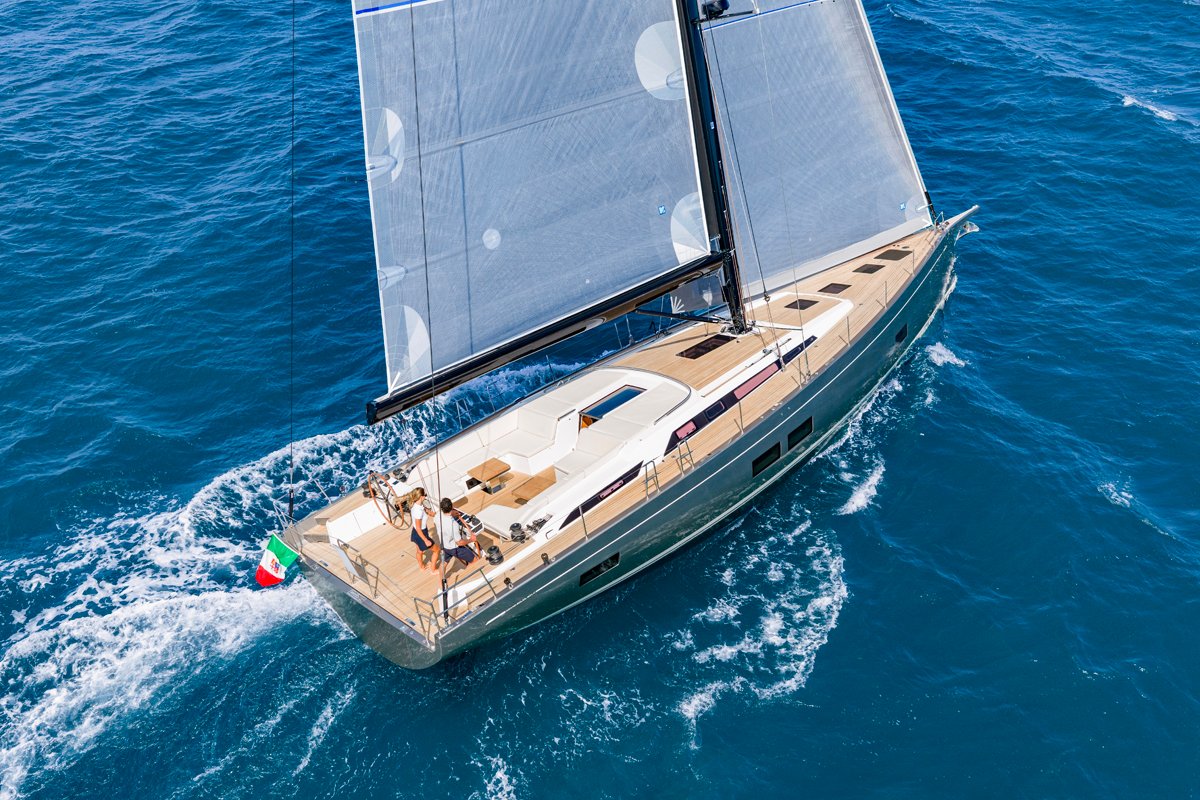
The running rigging is led aft to the helm stations at the stern end of the cockpit. The lines run inside the bulwarks, helping keep the deck tidy and free of clutter. The handling area houses the line stoppers, the Harken Performa electric winches, and low-profile buttons for controlling the electric and hydraulic functions.
In the standard configuration, the mainsheet is led to a fixed point located between the two helm stations. This arrangement concentrates the main controls in an area that is easily accessible to the helmsman, leaving guests free to move around the cockpit without interfering with the sailing. Simple operation does not, however, mean giving up adjustability. On the contrary, the Grand Soleil 60 offers sophisticated sailing gear, capable of meeting the needs of the most experienced owners.
A powerful sail plan with a 25.7-meter mast and a 170 m² gennaker
The sail plan of the new Grand Soleil 60 was developed to take full advantage of the hull’s efficiency. The mast reaches 25.7 meters in height and, in the standard configuration, is made of high-strength extruded aluminum alloy. For those who want rigging that is even more performance-oriented, a high-modulus carbon mast is available as an option. The boom can also be customized, with a choice between a solution with a furling system and a Park Avenue configuration.
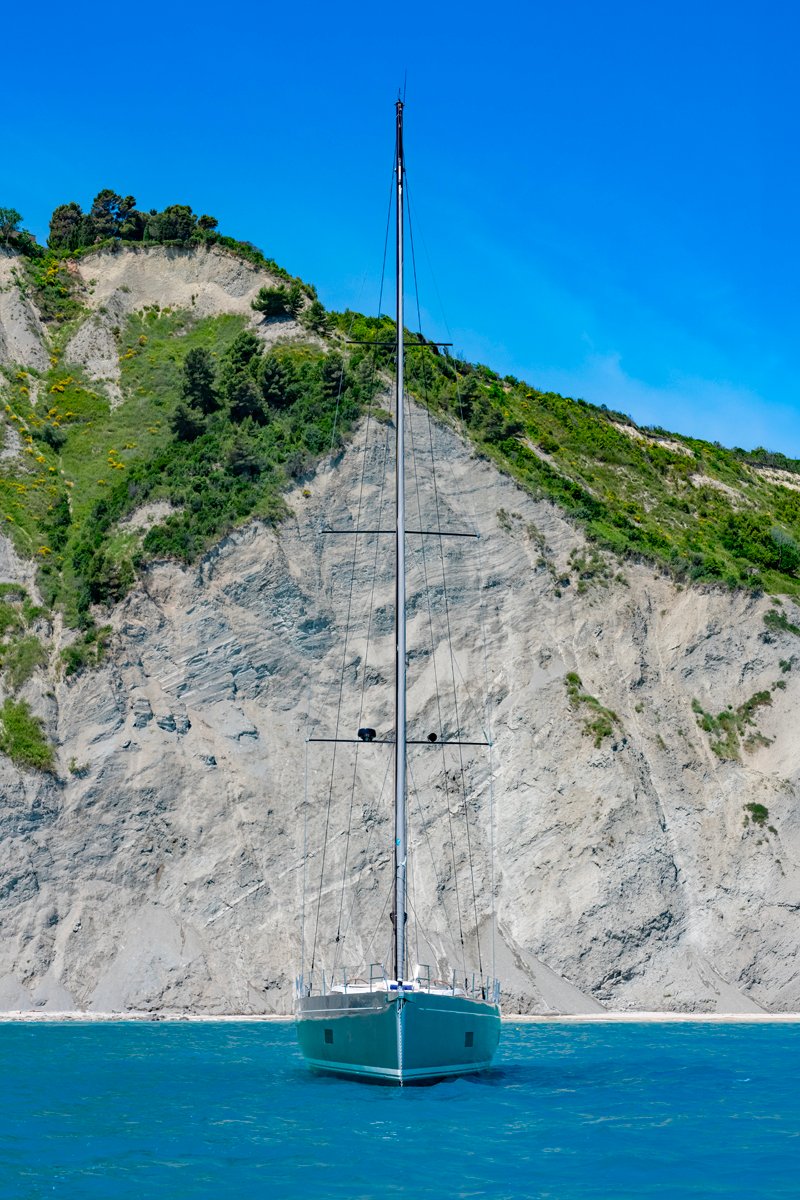
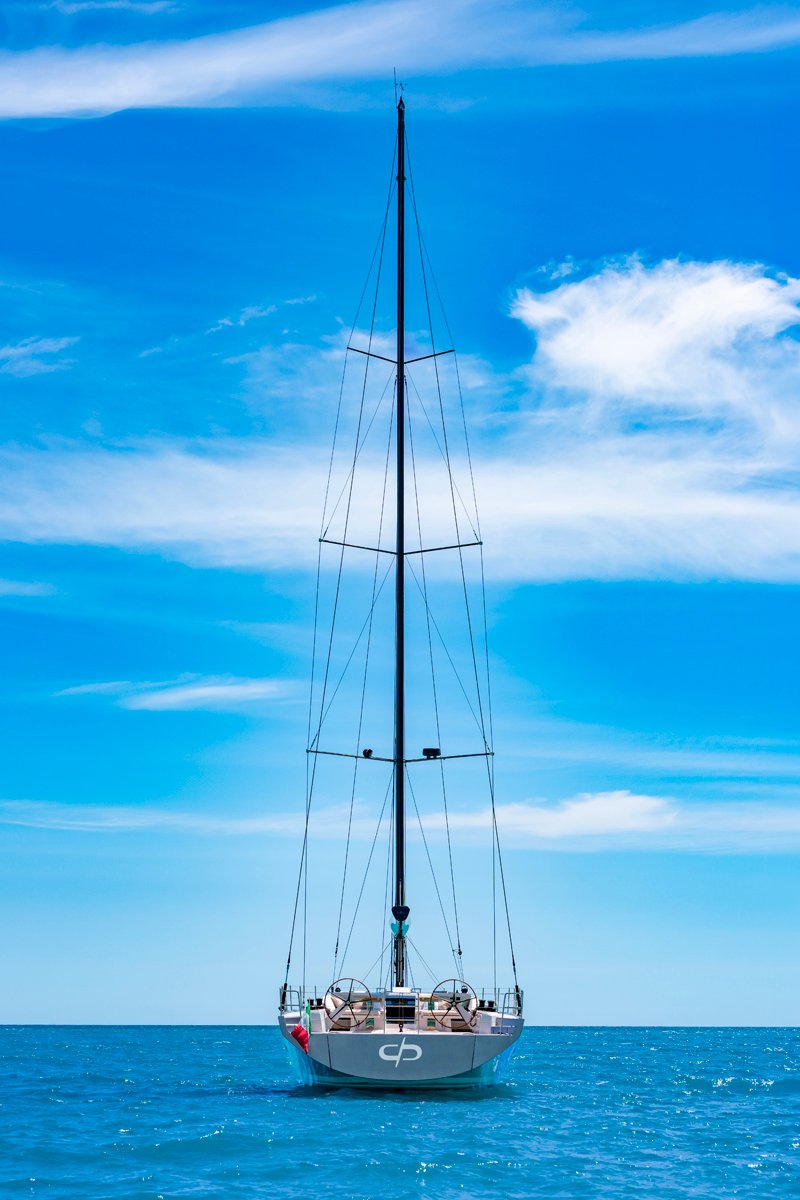
The sail plan includes a high-roach mainsail and a jib that the shipyard lists at 102 square meters. The adjustment options are particularly broad: the shape of the mainsail can be changed using the outhaul, halyard tension, and hydraulic backstay, while the adjustable running backstays make it possible to control mast bend and ensure the correct tension on the staysail stay.
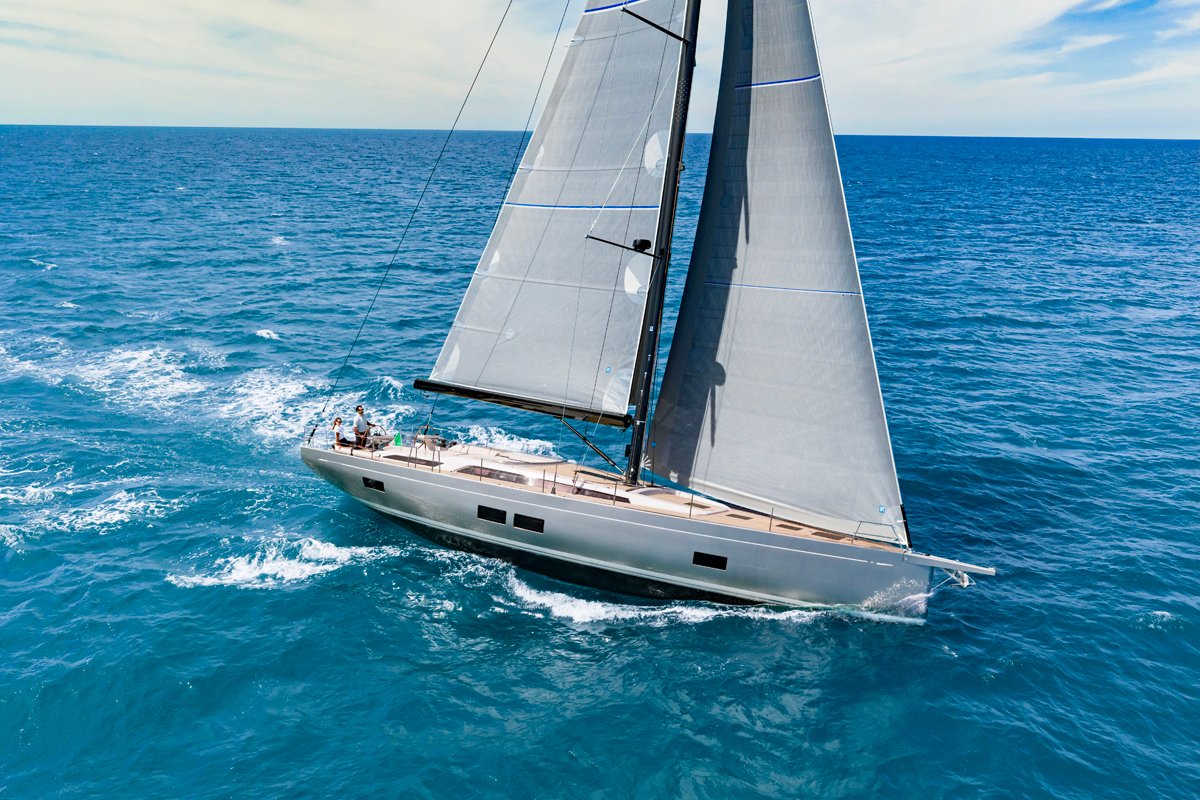
The system is set up to use a variety of headsail configurations, including a self-tacking jib, staysail, and overlapping genoa. At the bow, the bowsprit integrates two electric furlers and two additional tack points, making it possible to use furling Code sails and gennakers. For the performance configuration, a gennaker area of 170 m² is stated. Overall, this is equipment designed to offer versatility across a wide range of conditions, while keeping the ability to tailor the boat to the owner’s preferences.
The interiors: a bright saloon that makes full use of the 5.80-meter beam
If the deck highlights the sporting vocation of the Grand Soleil 60, below deck it is the work done by Nauta that stands out, creating elegant, functional, and comfortable spaces. The main saloon takes advantage of the hull’s width and benefits from natural light coming through the side windows, portholes, and overhead hatches. The feeling is one of an open, bright space designed to be enjoyed throughout the day.
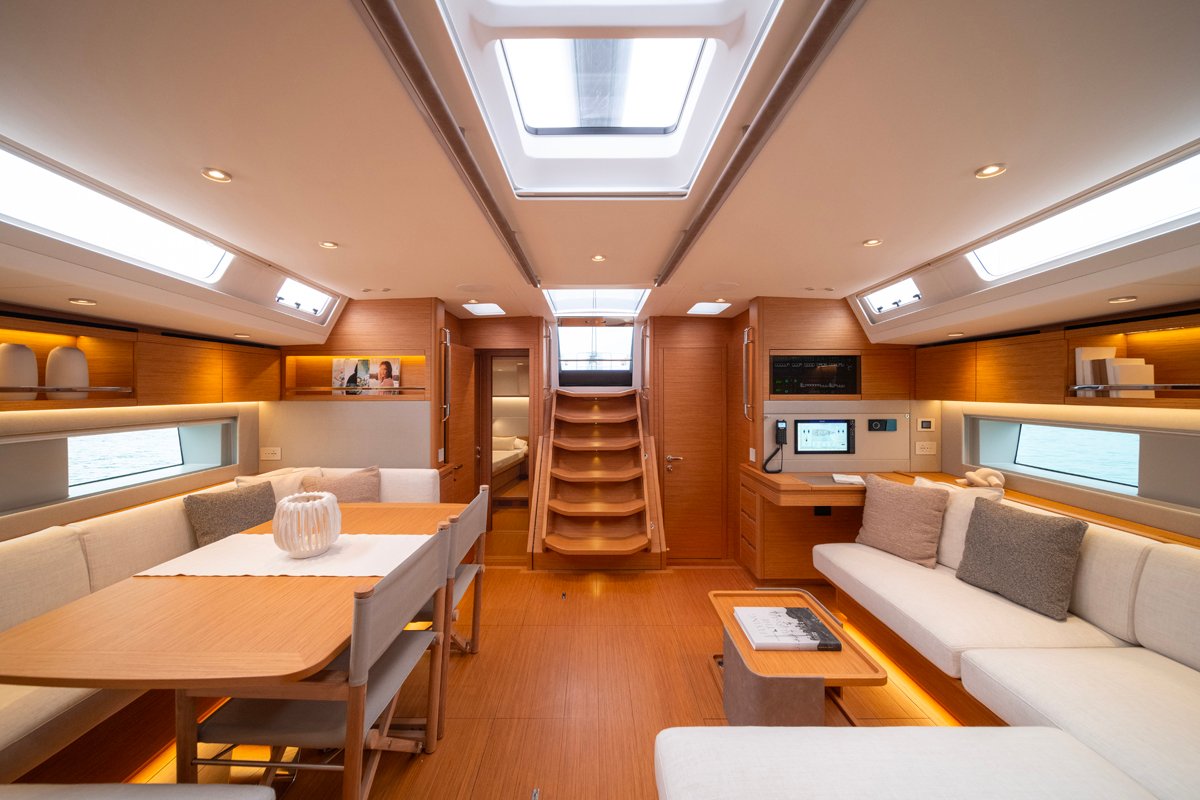
The living area includes a large sofa and a table that can seat up to six people. The table can be converted into a large seating area, creating a more informal configuration suited to relaxing. The saloon is thus designed to adapt to a variety of moments in life on board, from lunch to reading to watching a movie.
Particular attention has also been paid to the navigation area. The chart table is flanked by a large integrated touchscreen display, positioned so that it can be used even while seated at the end of the sofa. This solution makes it possible to consult instruments and plan routes without being cut off from the rest of the crew. It is a detail that reflects the general philosophy of the design: integrating technical functions into daily life and avoiding rigidly separated areas.
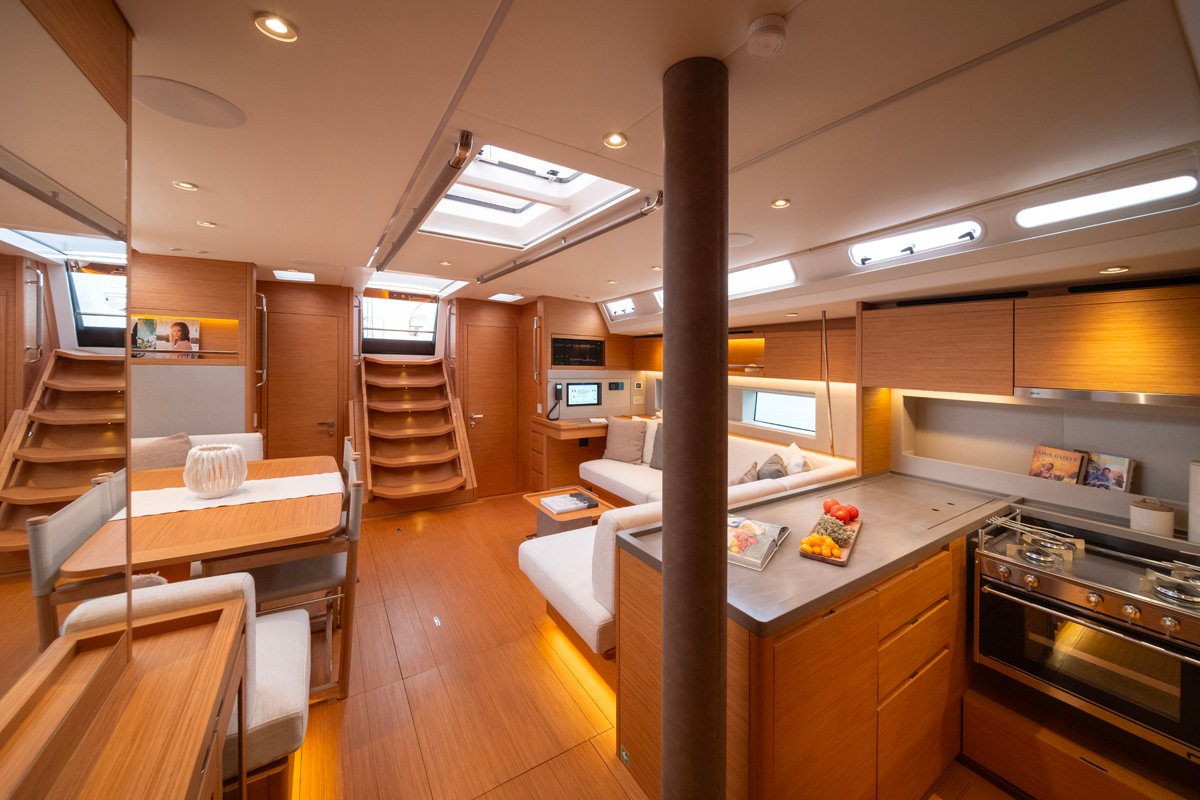
The open-plan galley on a lowered level
Another interesting design choice concerns the position of the galley. On the Grand Soleil 60, it is located forward, close to the forward bulkhead of the saloon, on a slightly lowered level. The U-shaped layout makes it possible to organize work surfaces and stowage space functionally.
The difference in height relative to the living area was designed to maintain visual continuity between the two spaces. The countertop sits just below the height of the sofa back, allowing whoever is cooking to keep taking part in the conversation.
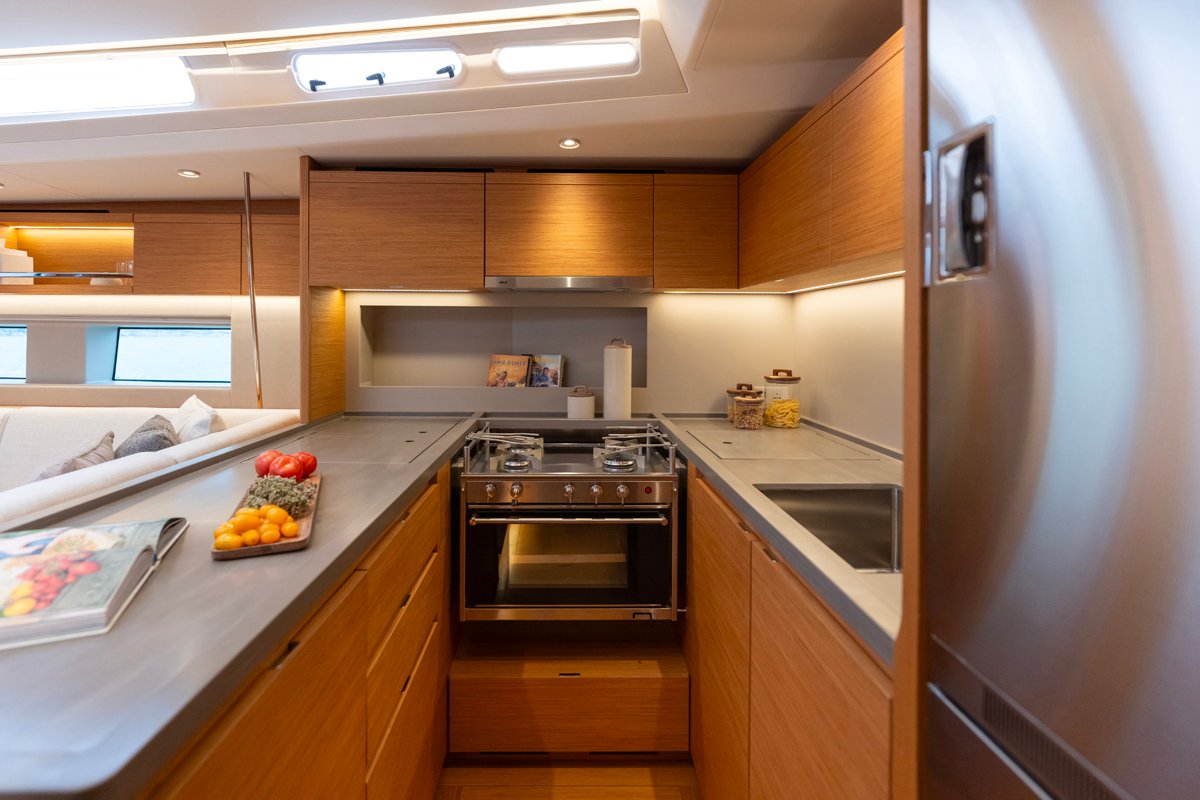
The equipment is designed for extended use of the boat. Options include an induction cooktop, an electric oven, a full-height refrigerator-freezer, a dishwasher, and a wine cooler.
Great attention has been given to stowage, with numerous cabinets, overhead lockers, and compartments built in beneath the floorboards. In the standard configuration, opposite the galley on the starboard side is a pantry that offers additional work surface and stowage capacity. This space can, however, be converted into a fourth cabin with two berths, a solution also chosen by the owner of the first boat built. This possibility expands the versatility of the Grand Soleil 60, making it suitable for different cruising programs.
The forward owner’s cabin, designed for maximum comfort
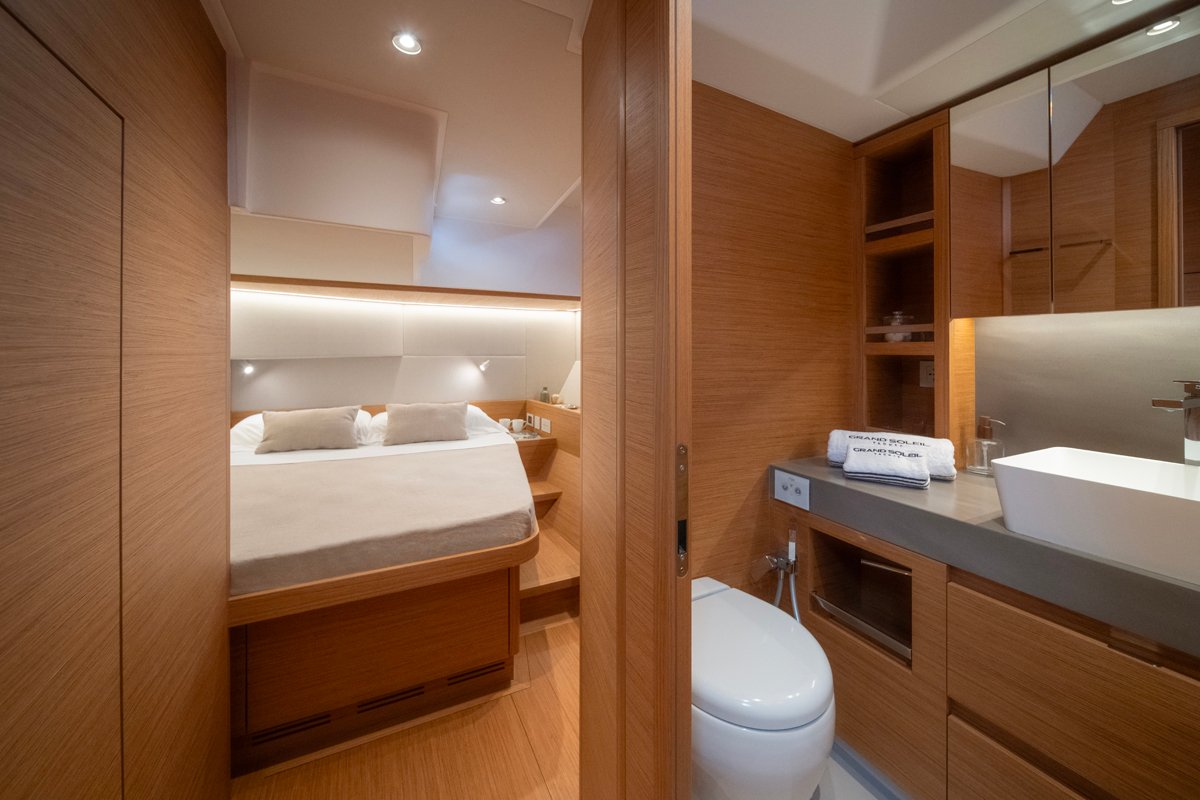
The main sleeping area is in the bow, where Nauta has created an especially refined owner’s cabin. The large double bed is oriented fore-and-aft and sits slightly off-center toward port. Its position, close to the boat’s center of gravity, was chosen to limit the effects of hull motion while under way.
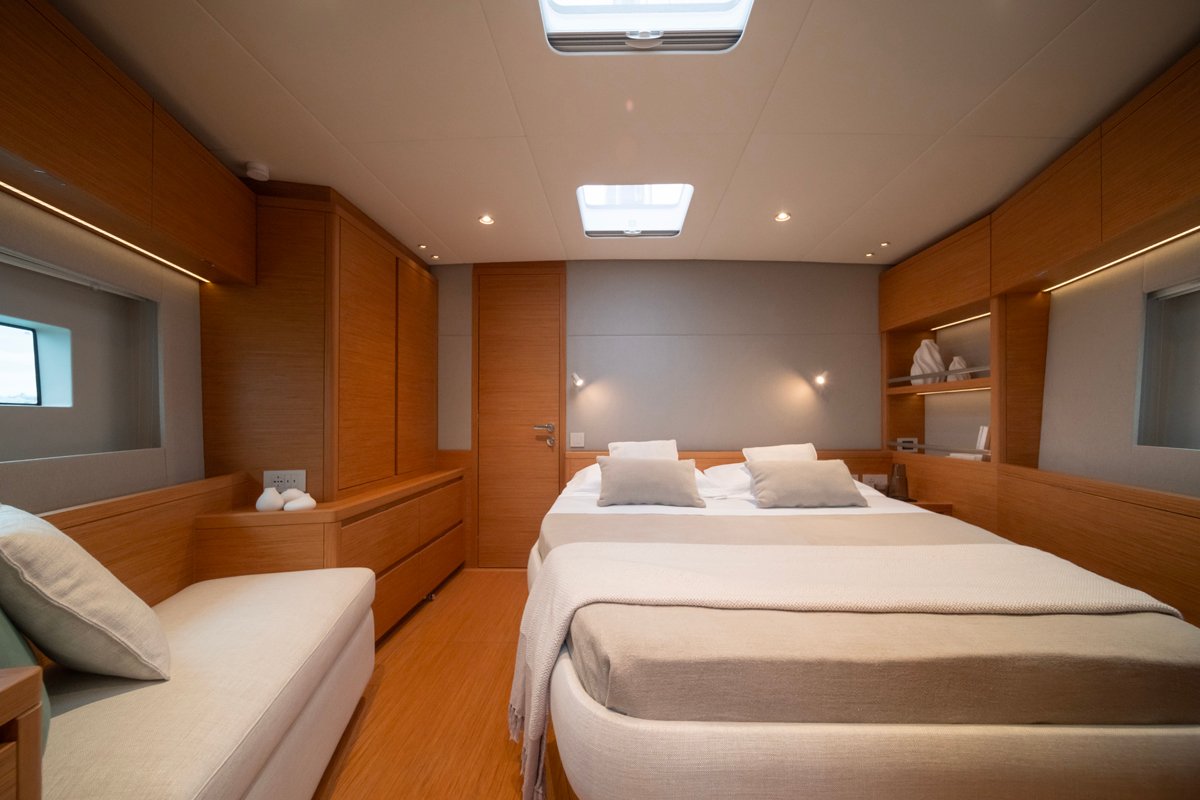
The cabin offers numerous stowage spaces, including hanging lockers for clothes, drawers, and compartments for personal items. At the extreme bow is the owner’s private head, which has a separate shower with a seat. The craftsmanship of the woodwork and the linings reflects great attention to the quality of the finishes and care for detail. It is worth remembering, after all, that Grand Soleil craftsmen work by hand in building and finishing the interiors.
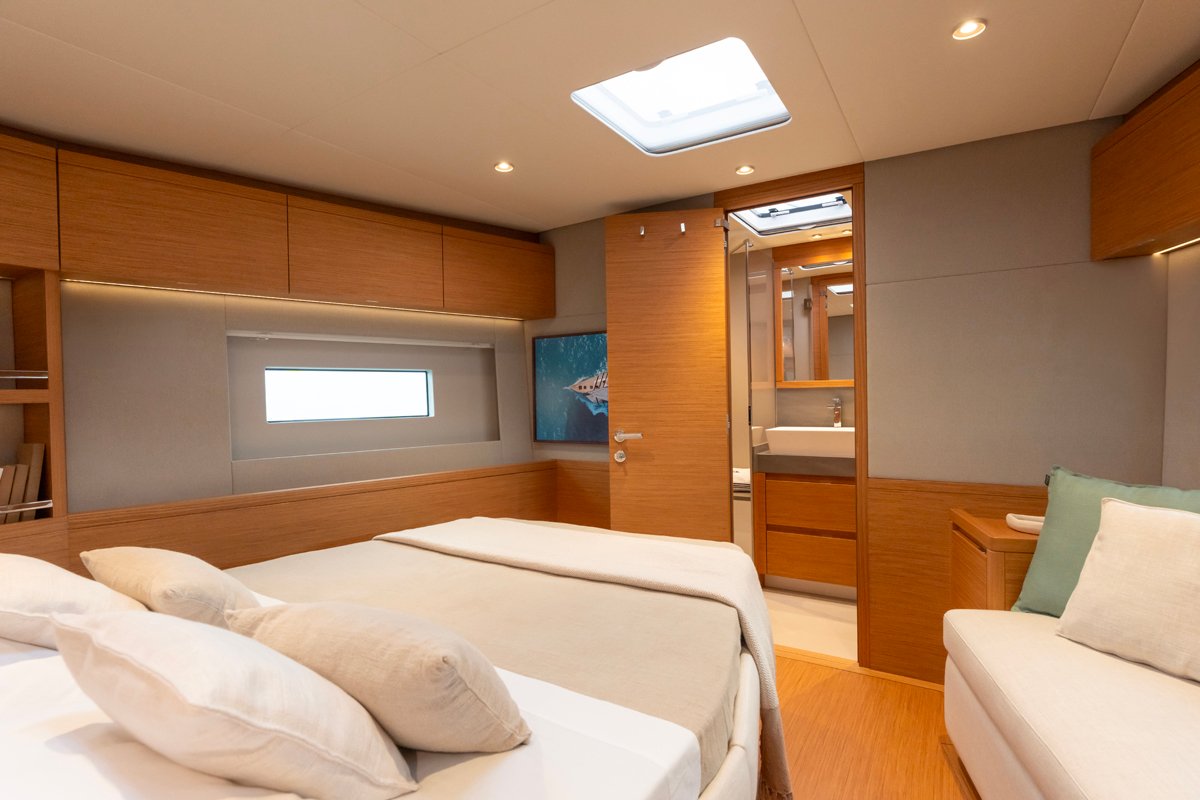
Two guest cabins with private heads and an optional fourth cabin
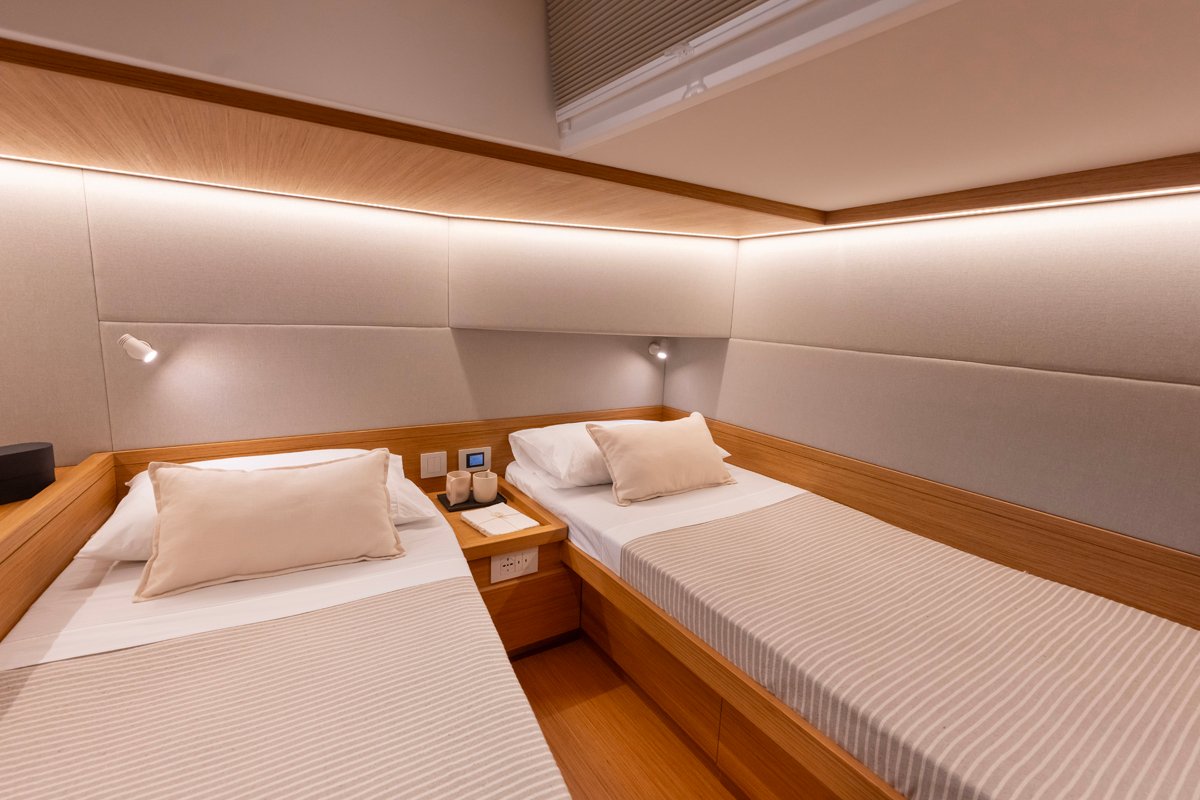
Aft of the saloon are two more cabins, both with a private head with shower. The port cabin has a double bed, while the starboard cabin can be configured with two single berths or, on request, with a second double. Both benefit from good natural light and have stowage spaces designed for extended stays.
Comfort is completed by the ability to adjust air conditioning and heating individually. The opening hatches also provide natural ventilation.
In the standard configuration, the Grand Soleil 60 therefore has three cabins and three private heads. The ability to convert the pantry into a fourth cabin increases guest capacity, allowing the layout to be adapted to the owner’s needs.
A further option concerns the forepeak, which can house a compact crew berth. On the first boat built, this space was instead allocated to a large sail locker.
Massimo Gino: “A true sailor’s boat with the comfort of a home”
Finding the balance between performance and livability was one of the main challenges Nauta faced. Massimo Gino, CEO and cofounder of the studio, explains how the project grew out of a desire to preserve the brand’s sporting identity while introducing a more contemporary conception of space: “We had to reconcile the demand for more space and comfort with the DNA of Grand Soleil. In other words, we always kept in mind that this had to remain a true sailor’s boat. The result is a careful balance between a contemporary approach to open spaces and practical solutions, such as handholds and generous stowage compartments. It really is the best of both worlds.”
This philosophy emerges in the layout of the spaces, the choice of finishes, and the attention to functional aspects. The Grand Soleil 60 is in fact not meant to be merely an elegant yacht for use at anchor, but a vessel capable of tackling long passages while offering safety, practicality, and comfort.
Grand Soleil 60, range and equipment for offshore cruising
The Grand Soleil 60’s vocation for long passages also emerges from its tank capacities and technical equipment. The shipyard states a capacity of 1,140 liters of fuel and 1,000 liters of freshwater, designed to support extended stays on board. In addition, the standard engine is 175 horsepower, adequate for handling the motoring needs of a boat with a displacement of 27 metric tons.
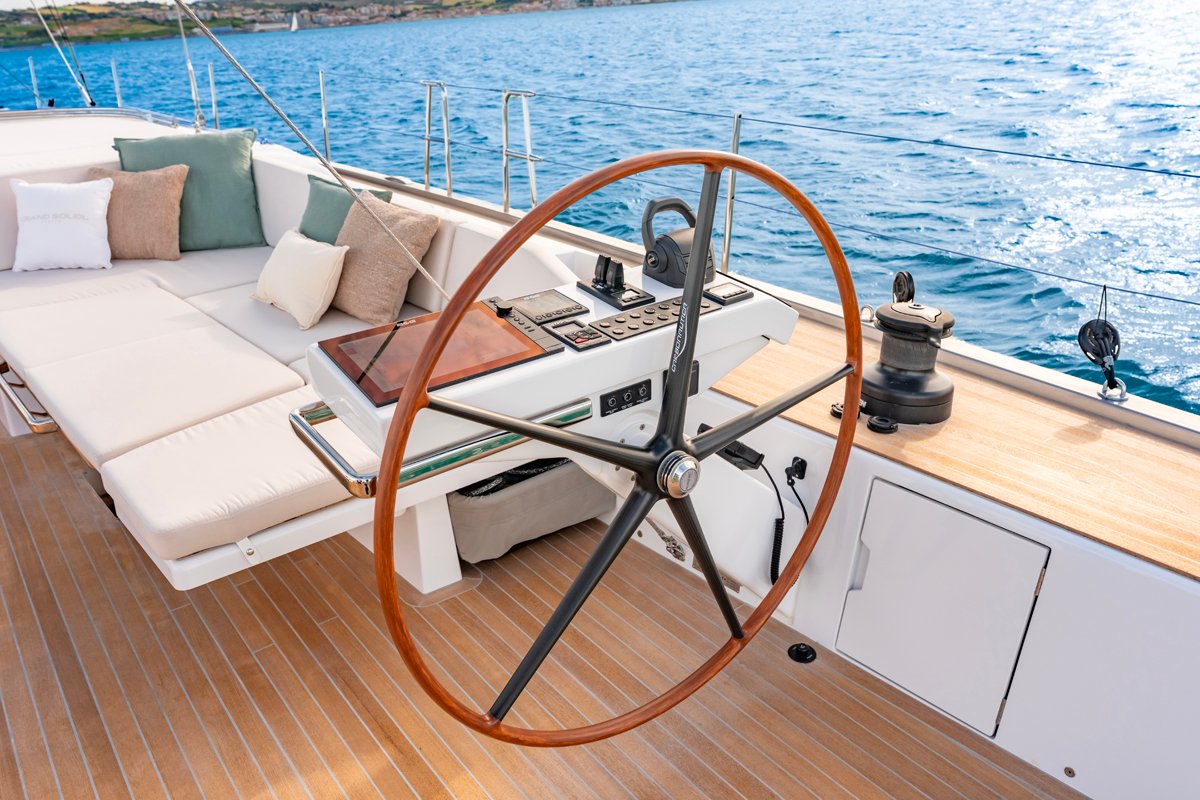
The focus on ease of handling is also reflected in the organization of the running rigging, the presence of electric winches, and the possibility of using different sail plan configurations.
Grand Soleil 60 – Technical specifications
Shipyard | Cantiere del Pardo |
Model | Grand Soleil 60 |
Type | High-performance offshore cruiser |
Naval architecture | Matteo Polli |
Interior and exterior design | Nauta |
Length overall | 19.68 m |
Hull length | 18.30 m |
Maximum beam | 5.80 m |
Draft | 2.80 m |
Displacement | 27 t |
Standard engine | 175 hp |
Fuel tank capacity | 1,140 liters |
Freshwater tank capacity | 1,000 liters |
Stated guest capacity | 6-9 people |
Standard cabins | 3 |
Fourth cabin | Optional |
Heads | 3, private |
Crew berth | Optional, forward |
Mast height | 25.7 m |
Standard mast | High-strength extruded aluminum |
Optional mast | High-modulus carbon |
Performance gennaker area | 170 m² |
Keel | Bulb |
Rudder | Single blade |
Hull construction | Sandwich with vinylester resin |
Winches | Harken Performa electric |
Bowsprit | With two electric furlers and two additional tack points |
Transom platform | Fold-down |
Conclusion
The new Grand Soleil 60 represents an important evolution in the design philosophy of Cantiere del Pardo, which continues to focus on boats that combine sailing performance and comfort. Matteo Polli’s design puts hull efficiency at the center, with the aim of delivering good speeds even in the light-wind conditions typical of the Mediterranean. At the same time, Nauta’s work on the interiors and exteriors has created spacious, bright, and functional spaces well suited to long-duration cruises.
Particularly interesting are the arrangement of the control lines, which leaves the cockpit clear, the versatility of the sail plan, and the ability to customize the layout below deck. The Grand Soleil 60 is therefore aimed at an owner who wants an elegant, comfortable boat but who still regards the pleasure of sailing as the central element of the nautical experience. A proposal that effectively sums up the Grand Soleil philosophy: sail far, sail well, and experience the sea without compromise.
Sources and references
Source | Reference |
|---|---|
Official presentation of the Grand Soleil 60, technical specifications, equipment, layout, and stated performance. | |
Builder of the Grand Soleil 60 and statements from CEO Marcello Veronesi. | |
Studio responsible for the interior and exterior design of the Grand Soleil 60. |