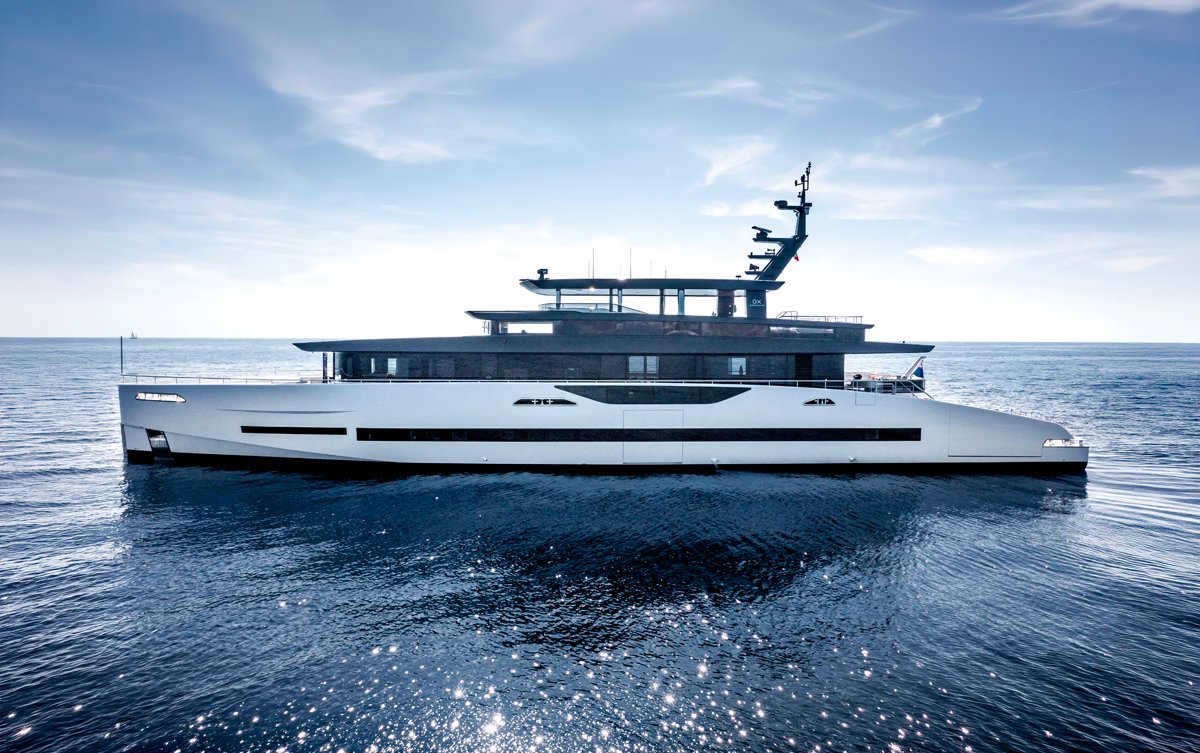
The future of superyachts does not necessarily lie in increasingly powerful engines or ever-larger dimensions. Sometimes the most compelling innovation consists of rethinking how a boat uses energy by integrating different technologies into a single smart system. This is precisely the philosophy behind the new GX42, the first model in the 42-meter series from GX Superyachts, presented at the Monaco Yacht Show 2026.
Developed by the shipyard with design by Marco Casali and contributions from NAMES for naval architecture and engineering, the GX42 was born around a clear concept: efficiency must not be an afterthought, but a foundational characteristic of the entire project. Indeed, the distinctiveness of this superyacht lies not in a single revolutionary technology, but in the integration of hybrid propulsion, energy storage, photovoltaic generation, intelligent load management, and a hull engineered to require less power while underway. The result is a vessel that promises to combine remarkable transatlantic range with a quieter, more comfortable life on board.
“The GX42 is the result of a very clear philosophy: efficiency must be integrated into the yacht’s design from the very beginning, rather than added later through standalone technologies,” states Vladimir Zinchenko, CEO and founder of GX Superyachts. “By integrating a parallel hybrid propulsion system, substantial battery storage capacity, solar energy production, a hull engineered for efficiency, and intelligent energy management, we have created an energy architecture in which every element works in harmony with the others. Marco Casali’s design completes this vision, translating technical efficiency into an extraordinarily spacious, quiet, and comfortable onboard living environment. For us, this is the true innovation of the GX42: technology that enhances the experience without becoming the center of the experience itself.”
GX42, True Parallel Diesel-Electric Hybrid Propulsion
The technological heart of the GX42 is represented by a parallel diesel-electric hybrid propulsion system, a configuration offering operational flexibility that is particularly attractive for a long-range cruising yacht. Unlike series hybrid systems, where diesel engines primarily generate electricity while propulsion is handled by electric motors, the GX42 retains a direct mechanical connection between the main diesel engines and the shaft lines.
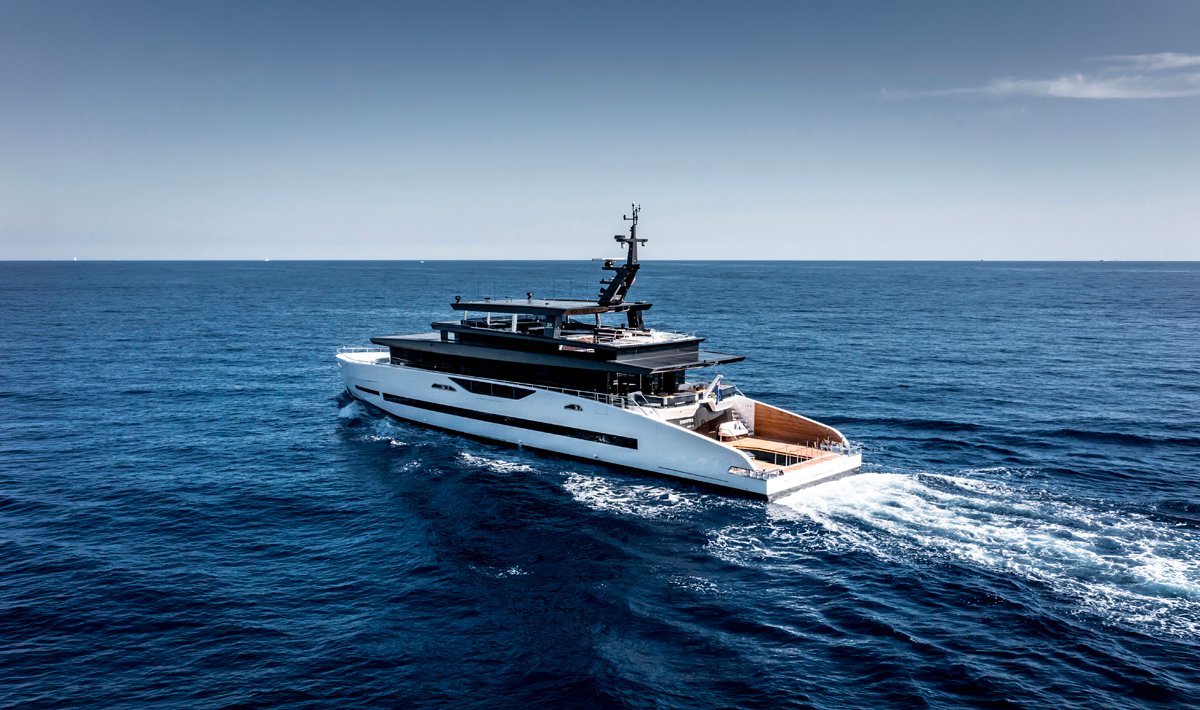
The system utilizes two MAN engines integrated with electric machines installed in the driveline. This architecture enables mechanical and electric power to be leveraged separately or in combination, depending on operating conditions. During extended passages or when high power is required, the GX42 can utilize conventional diesel propulsion. Conversely, under light load conditions, the electric system can contribute to propulsion and overall energy management.
The electric machines can also participate in onboard energy generation and management according to the system’s operational modes. This represents a distinct approach from an all-electric yacht relying on diesel generators solely to extend range. The GX42 was designed to harness the advantages of both technologies, preserving the versatility required of a superyacht built for ocean passages.
Nearly 1 MWh of Batteries to Experience the Sea in Silence
One of the most significant elements of the project is its energy storage system. The GX42 features 24 lithium iron phosphate (LFP) battery modules, each with a nominal capacity of approximately 39.1 kWh, totaling 938 kWh. This represents a substantial storage capacity—close to one megawatt-hour—intended not only for propulsion-related functions, but also for powering hotel loads. It is precisely at anchor where this solution makes a profound difference.
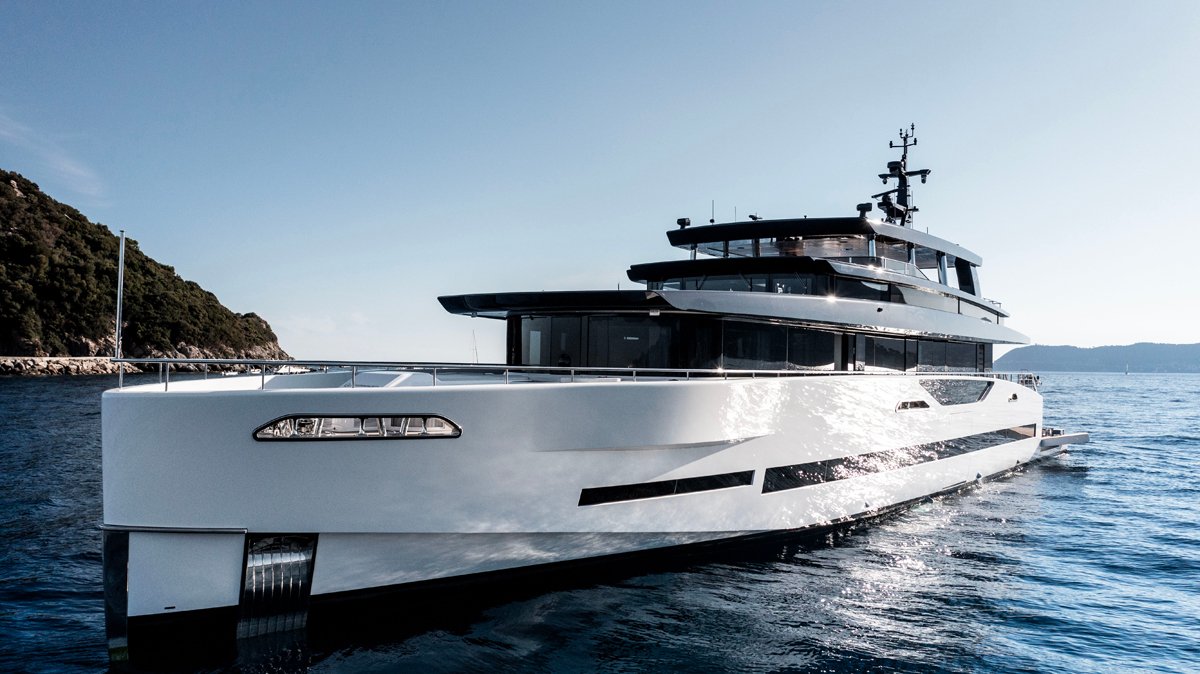
On a traditional superyacht, operating air conditioning, lighting, galley equipment, and other hotel services frequently requires continuous generator operation. On the GX42, however, a significant portion of these requirements can be supplied by energy stored in the battery bank.
The shipyard states the capability to achieve up to 48 hours of zero-emission operation at anchor, along with a potential reduction in onboard electrical consumption of up to 45%. These figures represent manufacturer-stated performance goals that will depend on actual operating conditions, system demand, air conditioning usage, battery state of charge, and solar panel output.
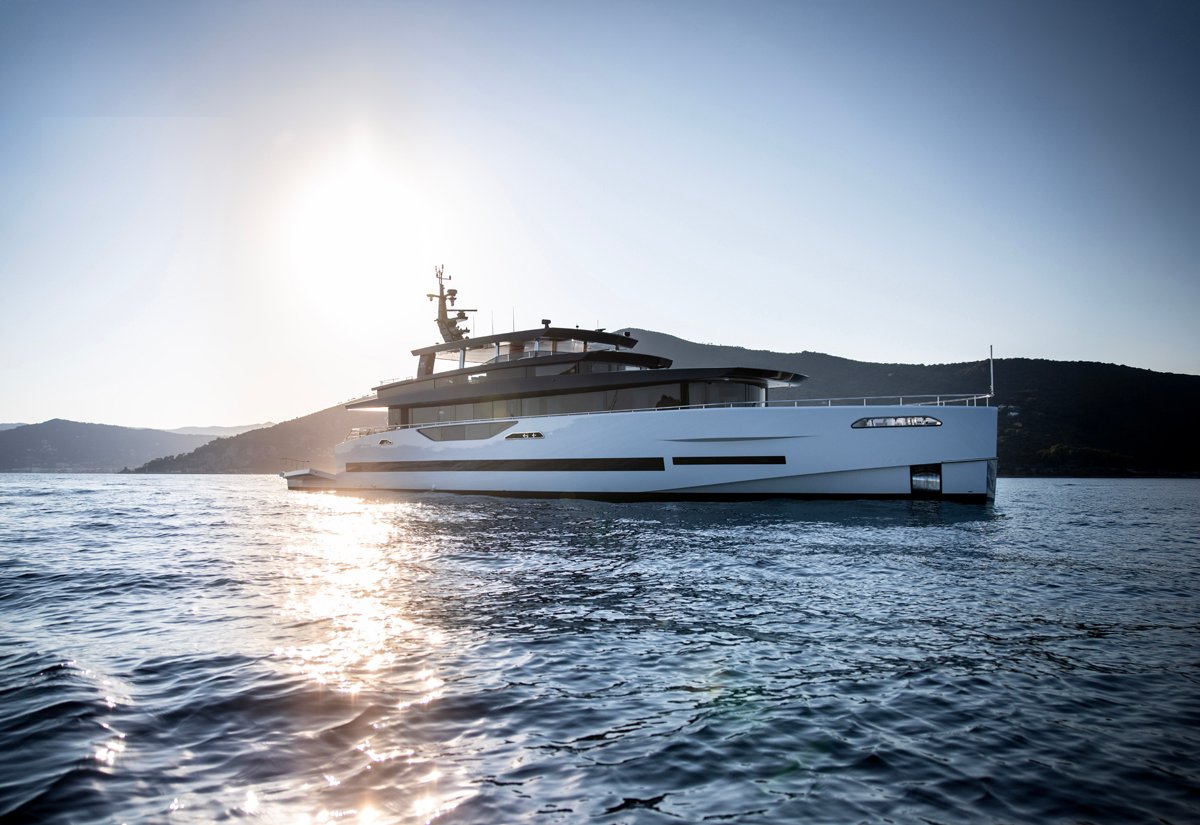
The most immediate benefit, however, concerns comfort. Reducing generator runtime means decreasing noise, vibration, and localized emissions, creating a significantly more enjoyable environment, particularly during overnight stays.
27 kWp Solar Panels Integrated into the Superyacht
The GX42 energy architecture also features a photovoltaic surface integrated into the superstructure, with an installed capacity of approximately 27 kWp. The solar panels are distributed across available surfaces, including elements associated with the unique fold-out wing configuration on the sundeck.
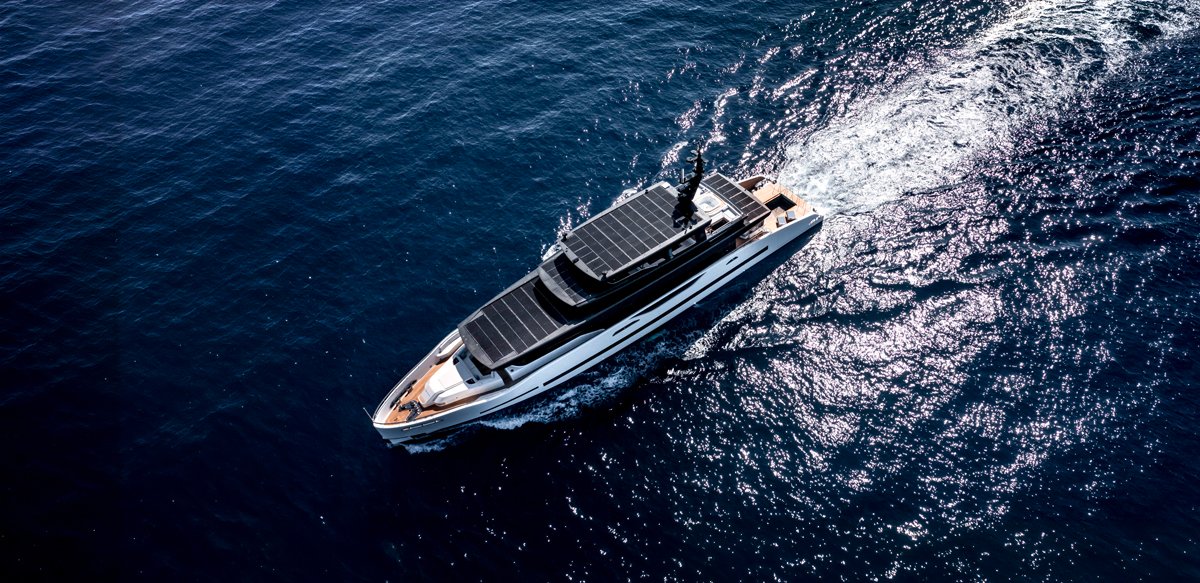
Solar generation was not designed as a mere cosmetic addition or a solution intended solely to bolster the yacht’s eco-friendly image. The power generated is actively integrated into the overall electrical system, contributing directly to hotel loads or battery charging.
Naturally, on a 42-meter yacht, a 27 kWp photovoltaic system cannot replace the main engines or independently power all systems under all conditions. However, its contribution is vital to the overall energy balance: every kilowatt-hour produced by the sun reduces fuel consumption or battery drain. It is precisely this integration across diverse energy sources that represents one of the project’s most compelling aspects.
Efficient Hull and Over 5,000 Nautical Miles of Range
The efficiency of the GX42 does not rely on the propulsion system alone. The design features a relatively slender hull form, developed to minimize hydrodynamic drag and support long-range passage-making. According to preliminary data released by the shipyard, economic cruising speed is around 9 knots, with a stated range exceeding 5,000 nautical miles. Conventional diesel power nevertheless allows higher cruising speeds when required.
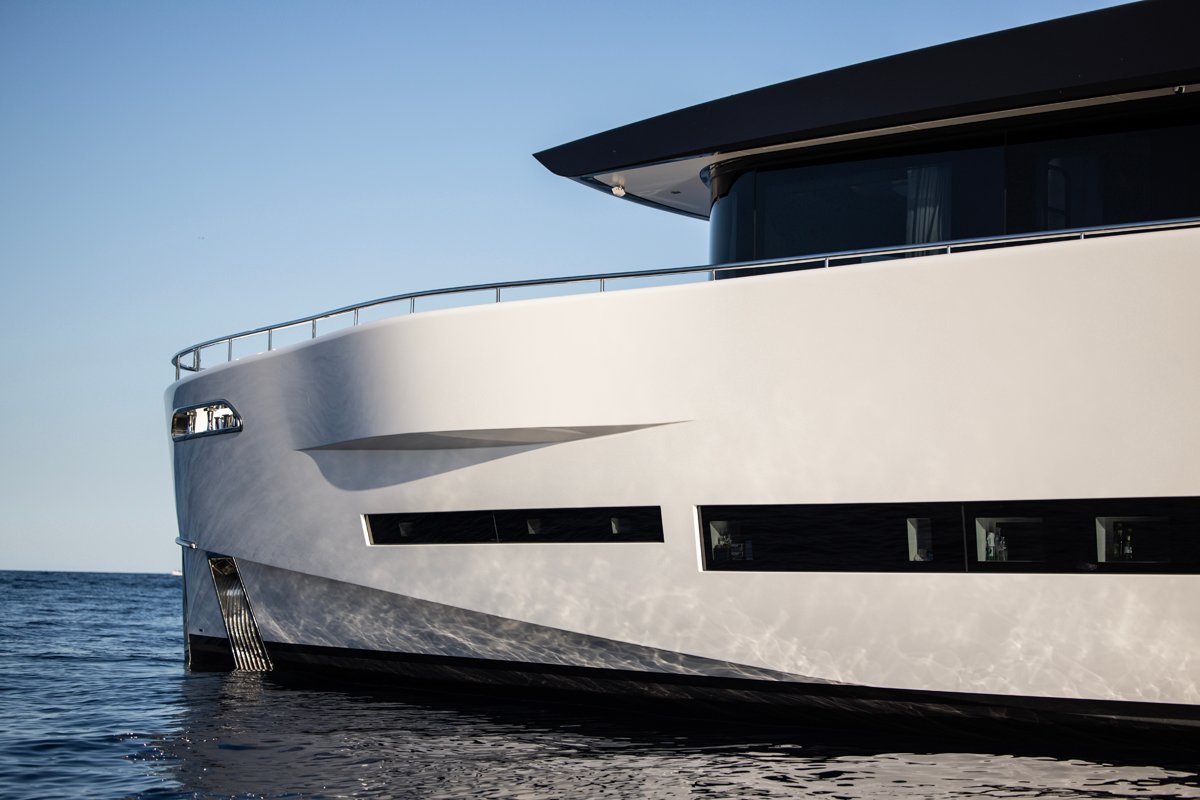
The interplay between hull design and the energy system is fundamental. Lower drag requires less power, allowing the hybrid system to operate in more efficient parameters. The batteries, in turn, enable reduced generator runtime or allow thermal engines to run under more efficient load profiles, while solar production further supplements the energy balance. The GX42 thus employs a design philosophy where efficiency originates in the hull line and progressively encompasses all onboard systems.
Marco Casali Signs the Interior and Exterior Design of the GX42
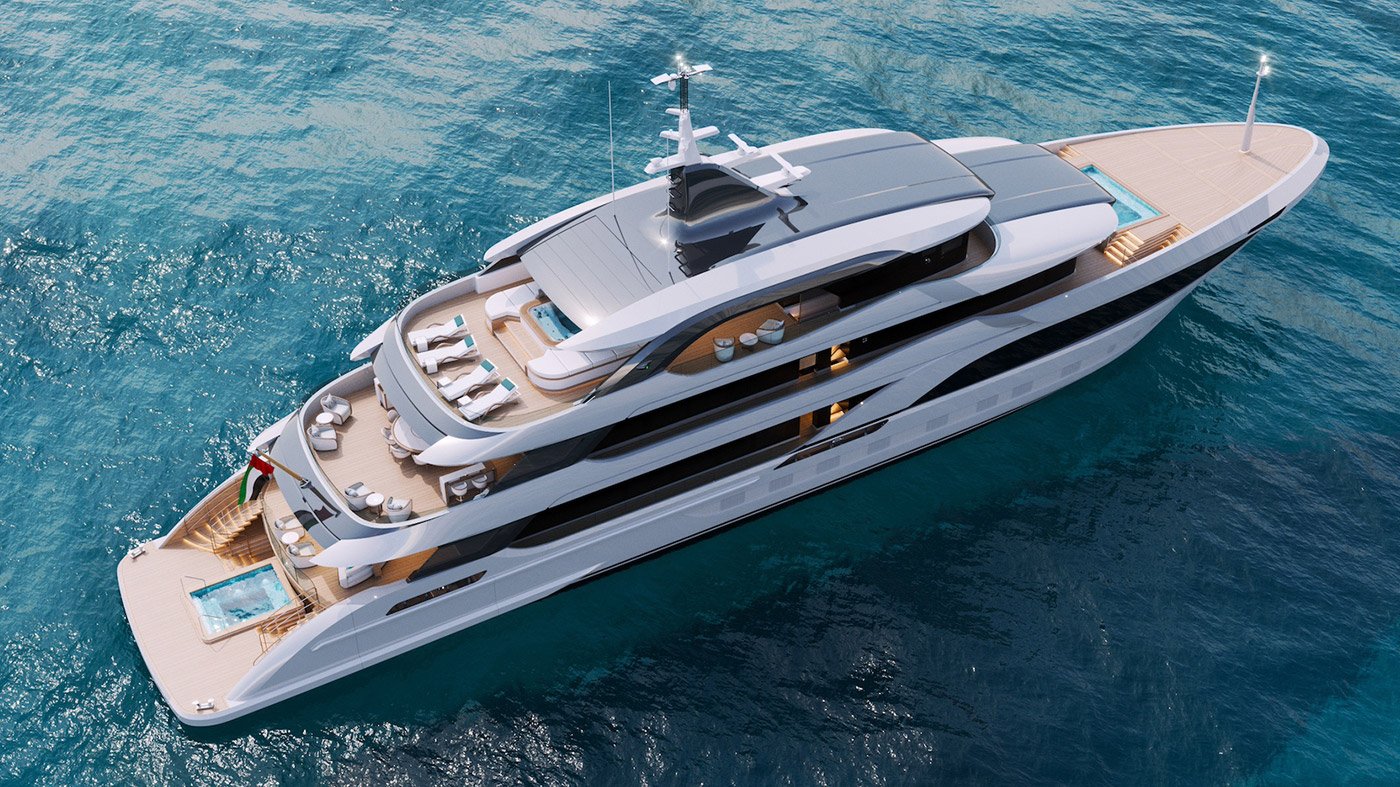
While technology forms the core of the project, the design signed by Marco Casali represents its most visible expression. The first GX42 is configured in a Raised Pilot House version, featuring an elevated helm position, flowing superstructure lines, and a low-profile upper deck. This layout optimizes internal volumes, creating remarkably generous living areas for a 42-meter yacht.
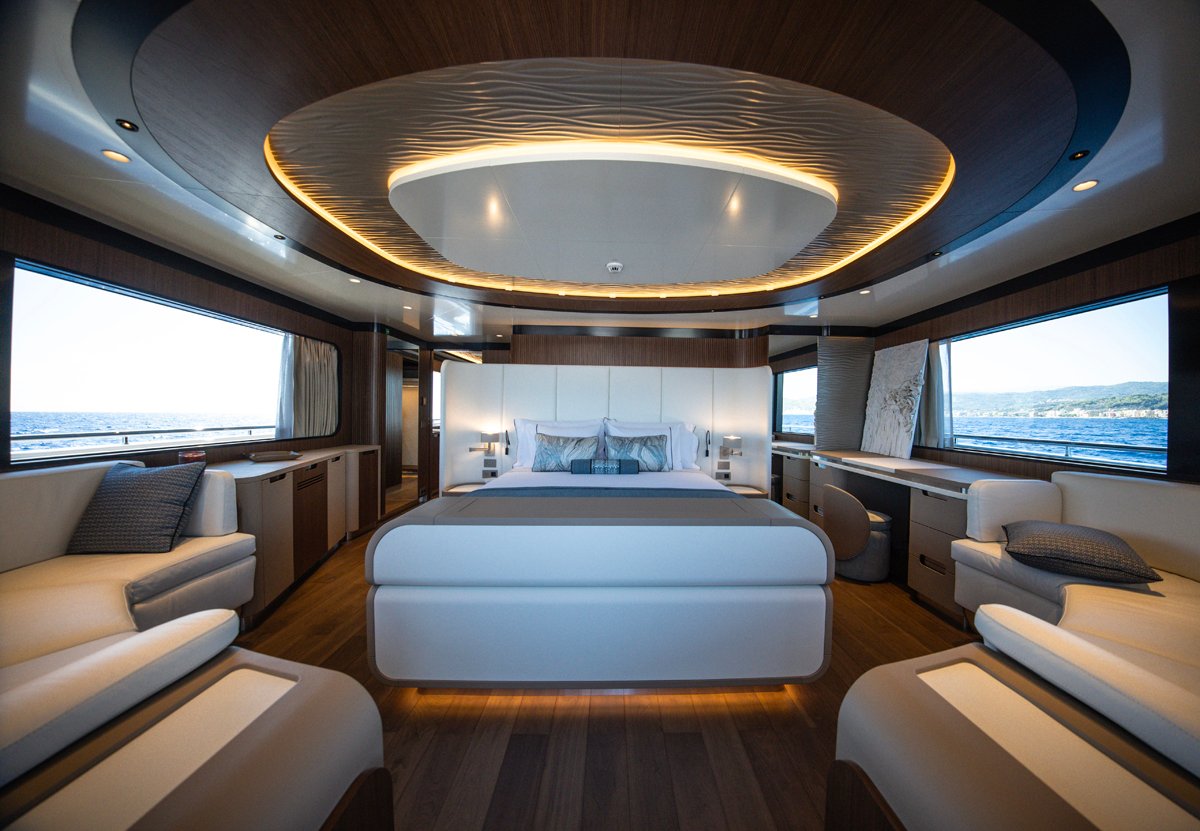
The main deck accommodates a full-beam owner’s suite featuring a private forward terrace. The lower deck houses a spacious VIP suite with a fold-down balcony, alongside three additional guest cabins. The layout was conceived to support extended stays on board, with an emphasis on family living and a seamless balance between social spaces and privacy.
Natural Materials and Floor-to-Ceiling Windows for a Refined Ambience
The interiors reflect the sense of tranquility and well-being that defines the GX42. Marco Casali prioritized natural materials and neutral tones, incorporating walnut wood, Italian leather, stone, and softly textured fabrics.
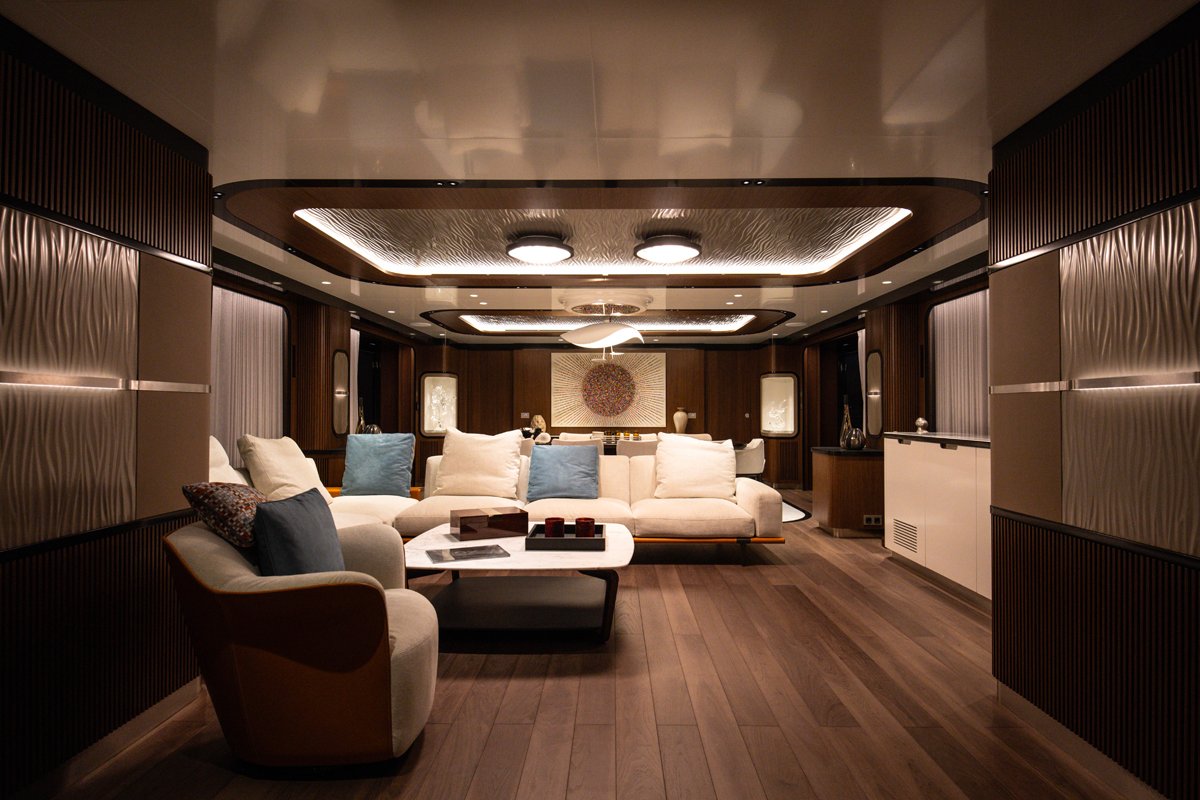
Curved forms are a recurring design motif throughout, shaping ceilings, furnishings, mirrors, joinery, and architectural openings. Highlights include backlit Turkish marble surfaces, liquid metal finished panels, and curated artwork selected to enhance the spaces.
Expansive floor-to-ceiling windows allow natural light to flood interior spaces while strengthening the visual connection to the surrounding sea. Careful attention was also devoted to artificial lighting, developed in collaboration with Ultra Luce using a combination of direct and indirect sources to tailor ambient atmospheres. The resulting aesthetic is elegant yet deliberately understated, designed to evoke serenity rather than ostentation.
Five Cabins, Jacuzzi, and Expansive Outdoor Spaces
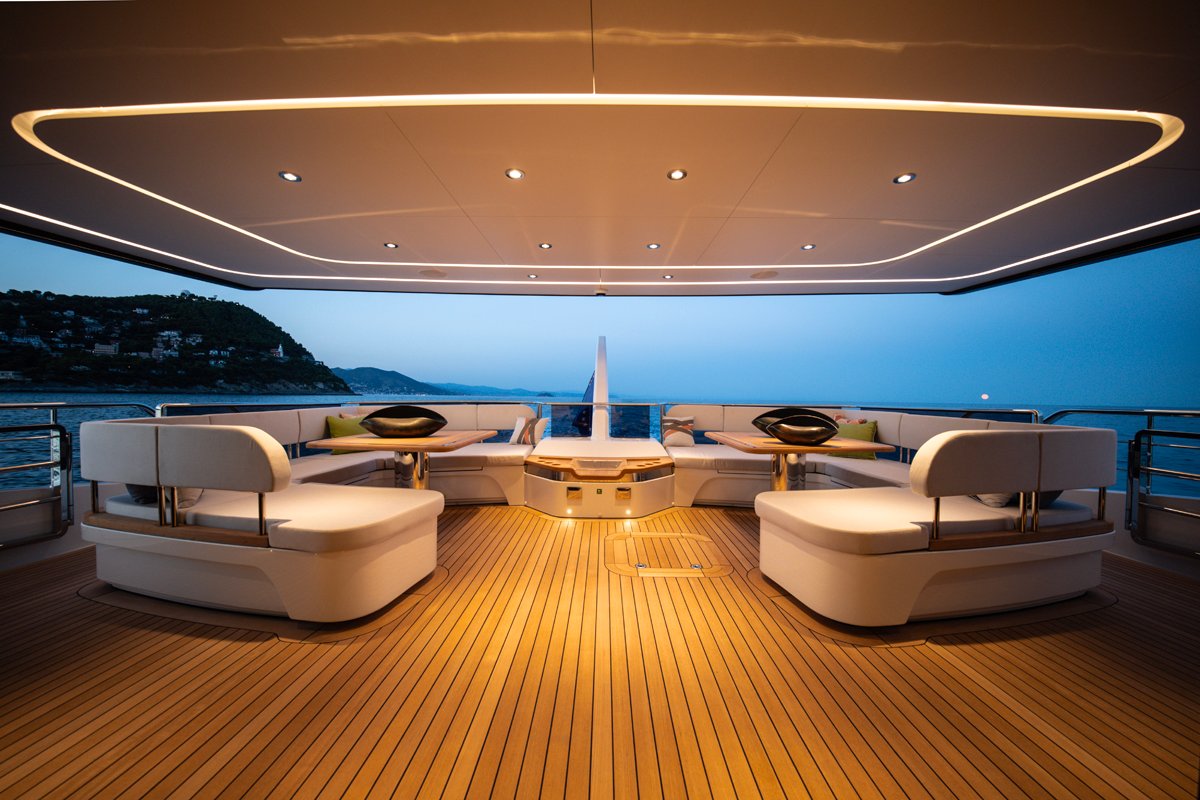
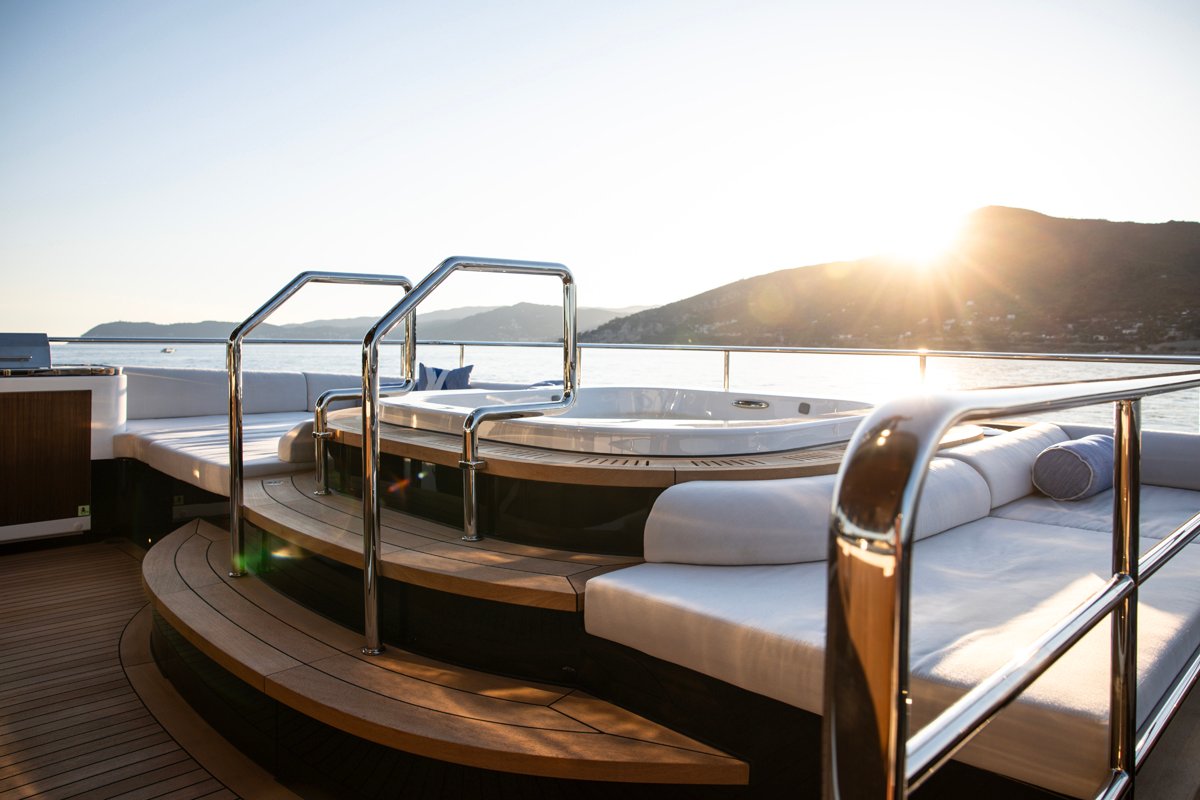
The spatial arrangement reinforces the GX42’s suitability for long-term, comfortable living afloat. The main salon features a welcoming lounge and a dining area for ten guests, while the upper deck offers ample room for relaxation and entertaining. Here, guests will find lounges, sunbeds, a bar, and a Jacuzzi, seamlessly integrated to maximize outdoor usability.
The five guest cabins comprise the main-deck owner’s suite, the lower-deck VIP suite, and three guest staterooms. The layout was developed in close collaboration with the owners to ensure the yacht is suited for extended periods on board rather than brief getaways.
“This is not a yacht designed to flex its muscle. We worked closely with the owners to realize their priorities, creating a design tailored to family life and built for long periods on board. By using natural materials like Italian leather, stone, and wood, we created interiors that are deeply relaxing, yet entirely aligned with GX Superyachts’ principles of Responsible Yachting,” explains Marco Casali.
Technology in the Service of Comfort
One of the most intriguing aspects of the GX42 is how technological complexity is concealed behind a effortless onboard experience. The energy management system is engineered to seamlessly coordinate available power sources, selecting the optimal mix based on operating conditions and demand. The objective is to ensure guests and crew need not constantly manage the complexity of the hybrid system.
In this sense, diesel-electric propulsion becomes a technology dedicated to well-being: spending extended hours at anchor without generator noise represents a benefit that far exceeds mere fuel savings. It reflects a vision of yachting where technical innovation works quietly in the background to refine the living experience.
Conclusion
With the GX42, GX Superyachts presents a compelling interpretation of the contemporary superyacht, where technology, efficiency, and quality of life are developed as unified components of a single vision. The parallel hybrid propulsion, 938 kWh battery bank, 27 kWp solar array, and optimized hull form an integrated architecture aimed at reducing fuel consumption and emissions while preserving full ocean-crossing capability.
The stated metrics—from up to 48 hours of zero-emission anchoring to a range exceeding 5,000 nautical miles—are noteworthy. Yet the overarching design philosophy is even more significant: rather than relying on isolated technologies to boost efficiency, the project rethinks the energy dynamics of the entire vessel. Marco Casali’s design complements this technical foundation with luminous interiors, natural materials, and family-focused space planning. The result is a superyacht engineered not only to cruise more efficiently, but to offer a more serene and comfortable way of living at sea.
GX42 – Sources and References
Source | Reference |
|---|---|
Official information on the GX42, hybrid system specifications, battery capacity, solar output, and preliminary range data. | |
Designer responsible for the interior and exterior design of the GX42. |
GX42 – Technical Specifications
Length | 42 m |
Exterior and Interior Design | Marco Casali |
Naval Architecture and Engineering | NAMES |
Propulsion | Parallel diesel-electric hybrid |
Main Engines | 2 x MAN |
Transmission | Conventional shaft lines with integrated electric machines |
Battery Type | Lithium iron phosphate (LFP) |
Number of Battery Modules | 24 |
Single Module Capacity | Approx. 39.1 kWh |
Total Battery Capacity | Approx. 938 kWh |
Photovoltaic System Output | Approx. 27 kWp |
Economic Cruising Speed | Approx. 9 knots |
Stated Range | Over 5,000 nautical miles |
Zero-Emission Anchoring | Up to 48 hours |
Stated Electrical Demand Reduction | Up to 45% |
Guest Cabins | 5 |
Dining Seating Capacity | 10 |
Key Features | Full-beam owner’s suite, private terrace, VIP suite with fold-down balcony, Jacuzzi, bar, and sundeck |