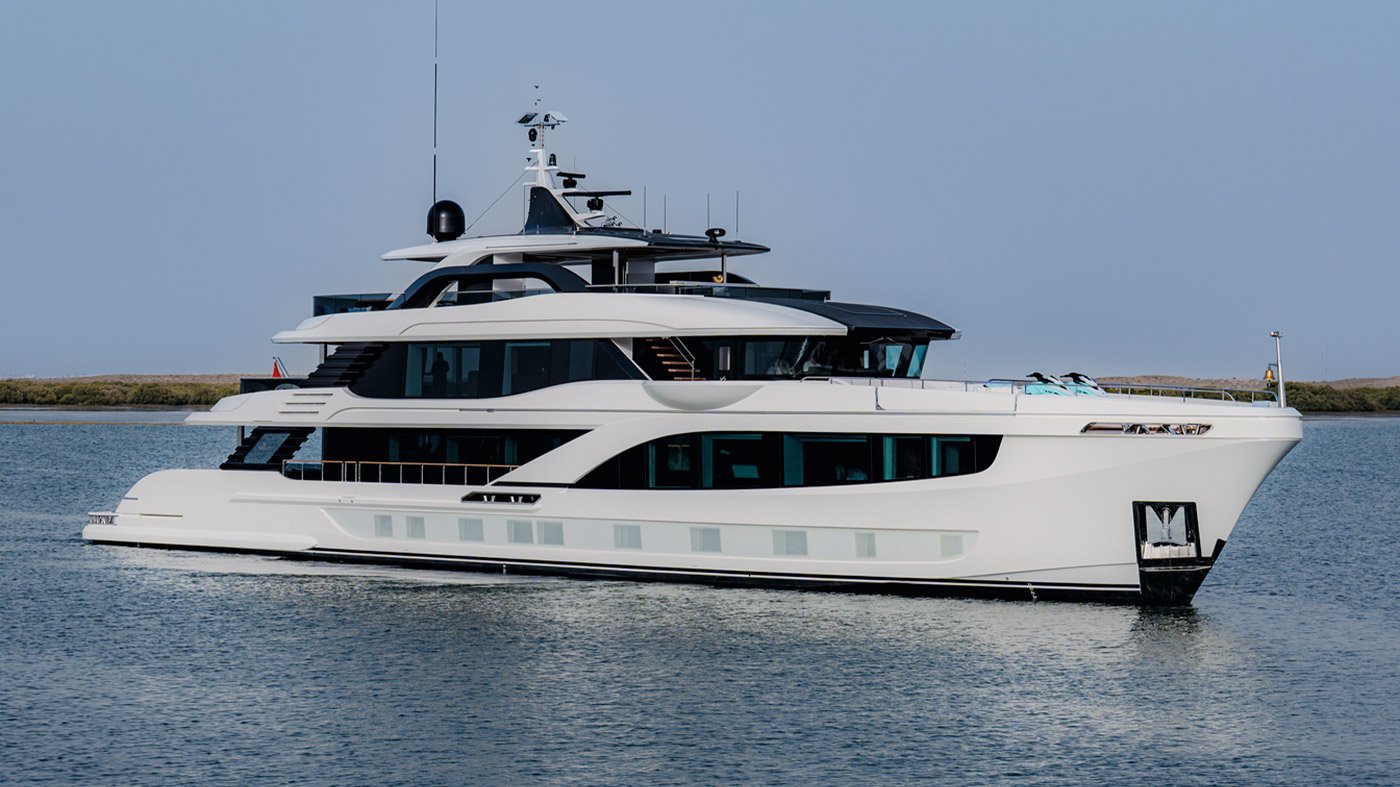
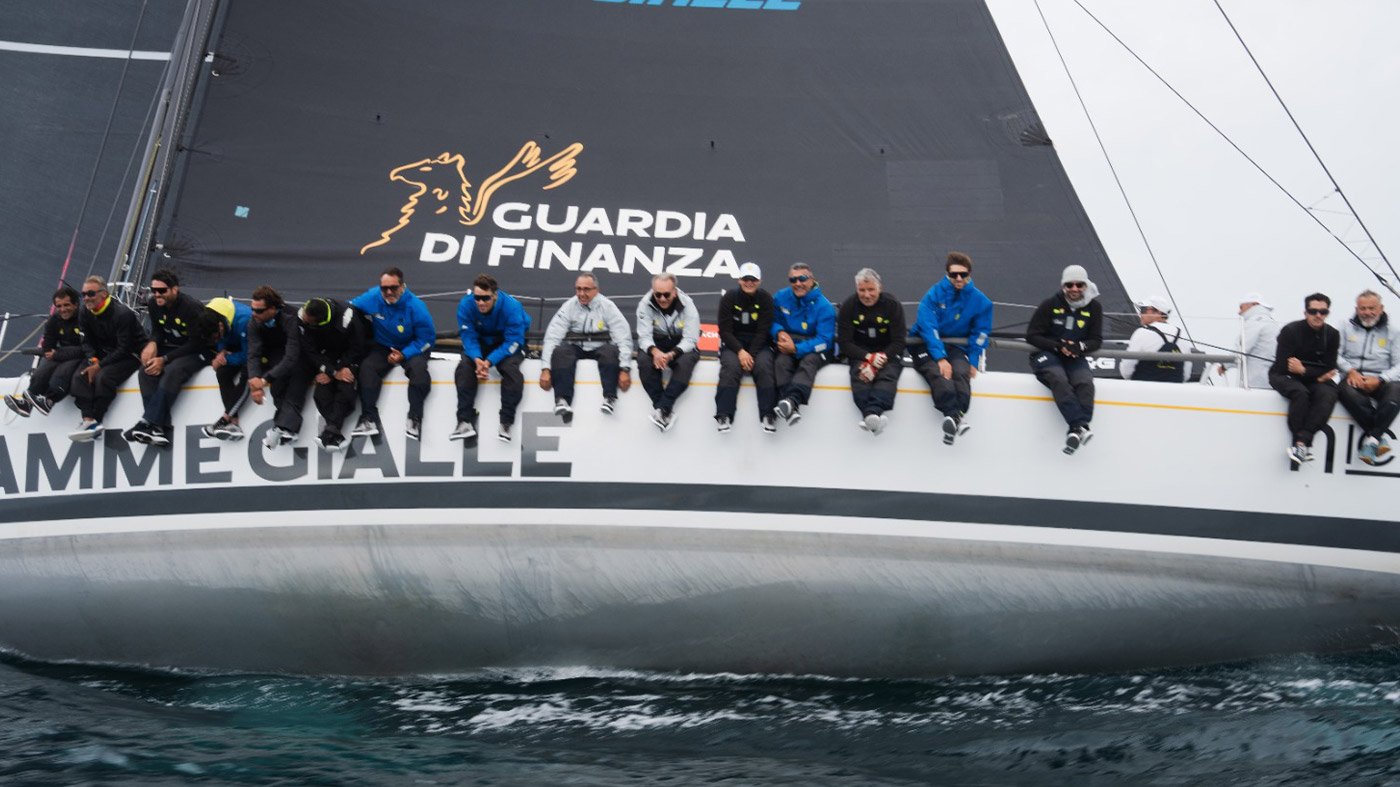
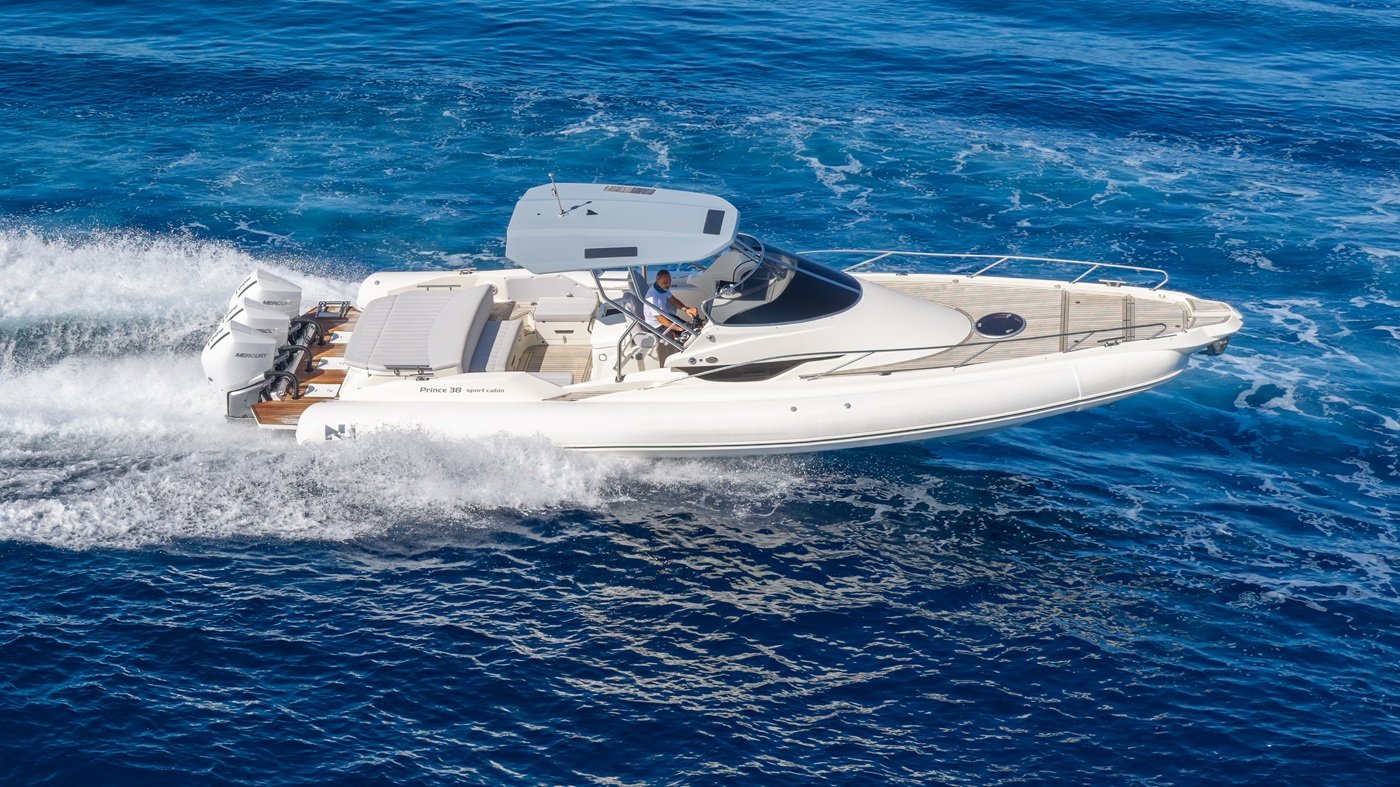
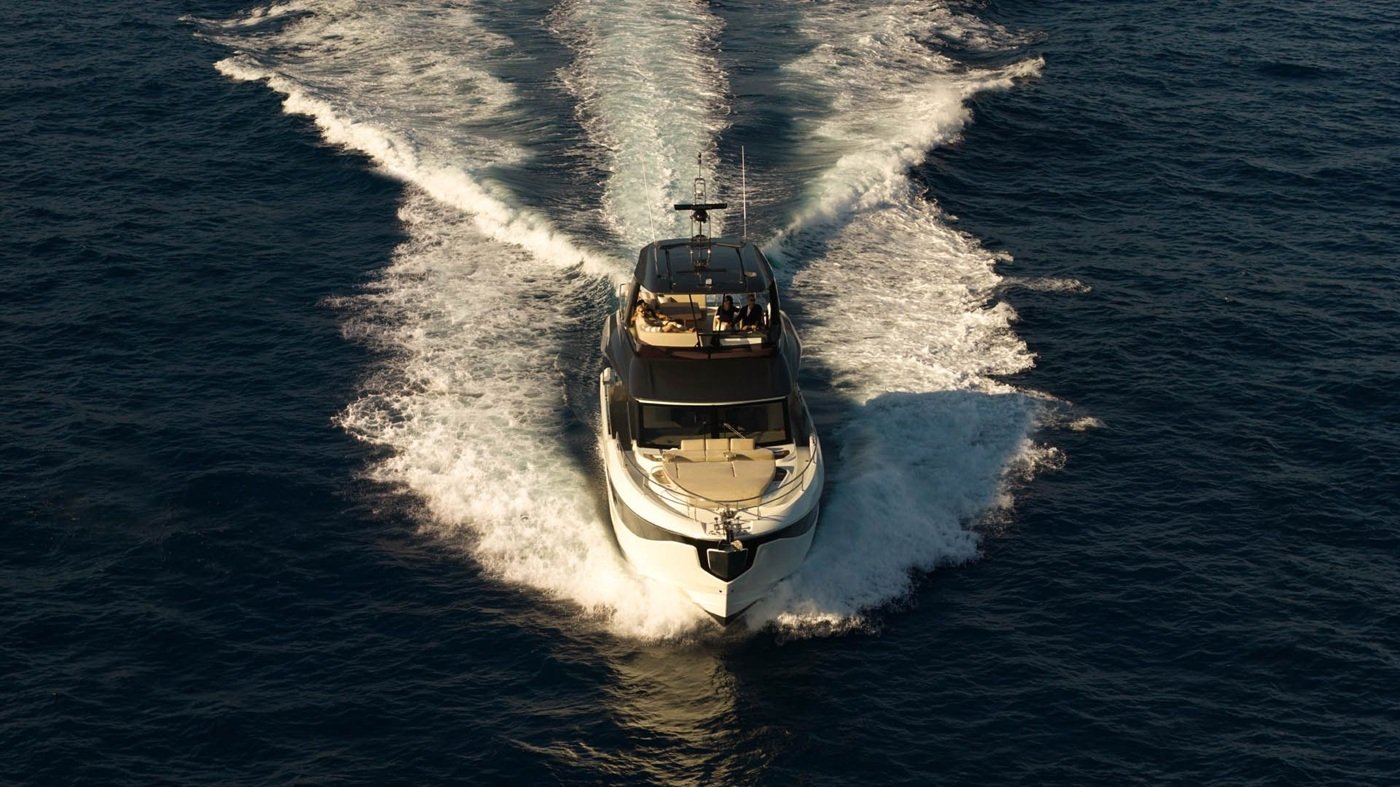
Let me tell you right away. Whenever I’m asked which stretch of Sardinia’s coastline I feel most attached to, what I might call “my route of the heart,” the answer is always the same: the coast of Northeast Sardinia. I’ve told its story dozens of times from many different angles while talking about the world of Italian excellence: Northeast Sardinia, even though the whole island is wonderful and unique, remains one of those natural settings that never stops giving me something new to share with you sea lovers, especially aboard a boat. So “come aboard,” get comfortable, all of you: today I’m taking you on this itinerary myself, stop by stop.
Northeast Sardinia, the coastal itinerary by sea
There’s a precise moment, I guarantee it, when you realize you’ve arrived. It’s not when you set foot on land, and it’s not even when you sight the coast from the deck or the bow, but that first breath of Mediterranean scrub mingling with the salt air, with the pink granite glowing in the last light of the afternoon. Northeast Sardinia has this effect on anyone arriving by sea and never ceases to amaze, even on your tenth cruise. Grab a coffee and make yourselves comfortable: today I’m taking you on an itinerary that smells of helichrysum and myrtle, one that tells of gin and tonics at sunset, barefoot dinners on the sand, and moorings that are, in themselves, a destination.
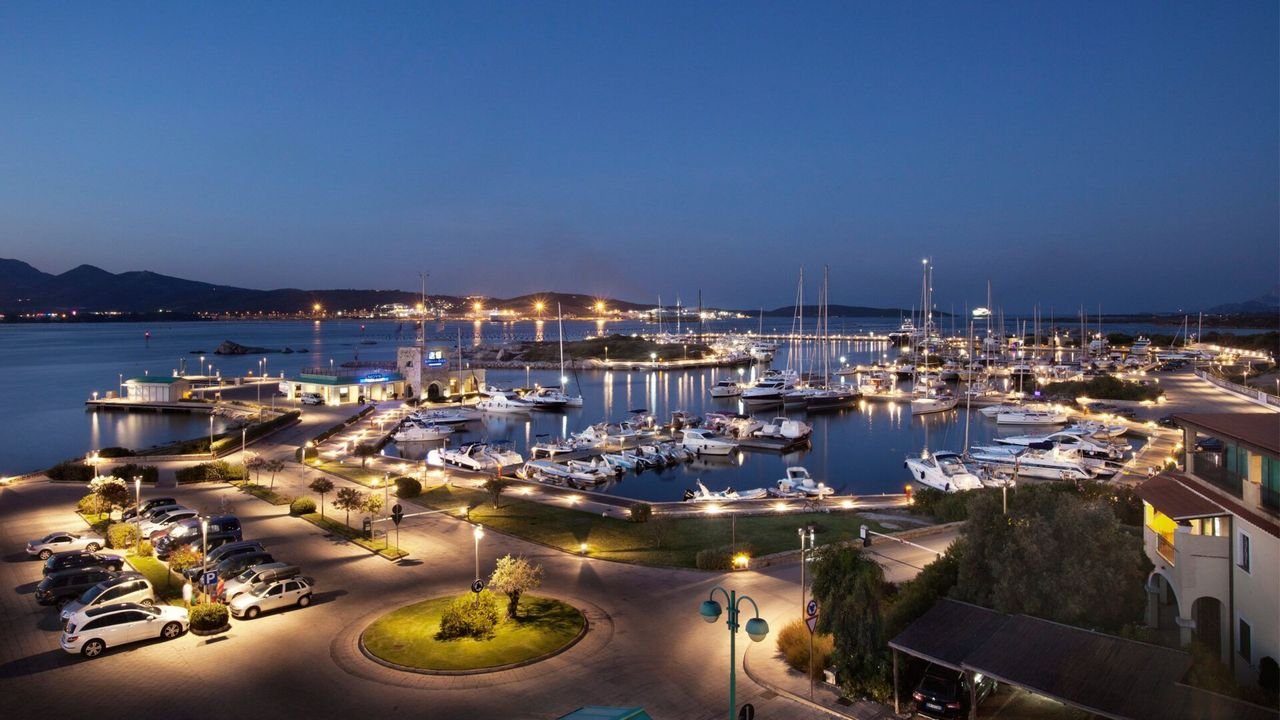
Stop one: Olbia, the gateway with more character than it seems
You almost always arrive here first, and anyone who sees it as just a transit port is mistaken. Olbia is the discreet queen of the Costa Smeralda: complete infrastructure, top-tier boatyards, and a historic center worth a stroll before you set sail. It’s the right place to fill up—literally, with fuel and provisions, and metaphorically, with that easygoing energy that defines the whole coast. A tip from a true enthusiast: stop for an aperitivo on one of the terraces overlooking the gulf before you cast off. The rest of the journey will feel even sweeter.
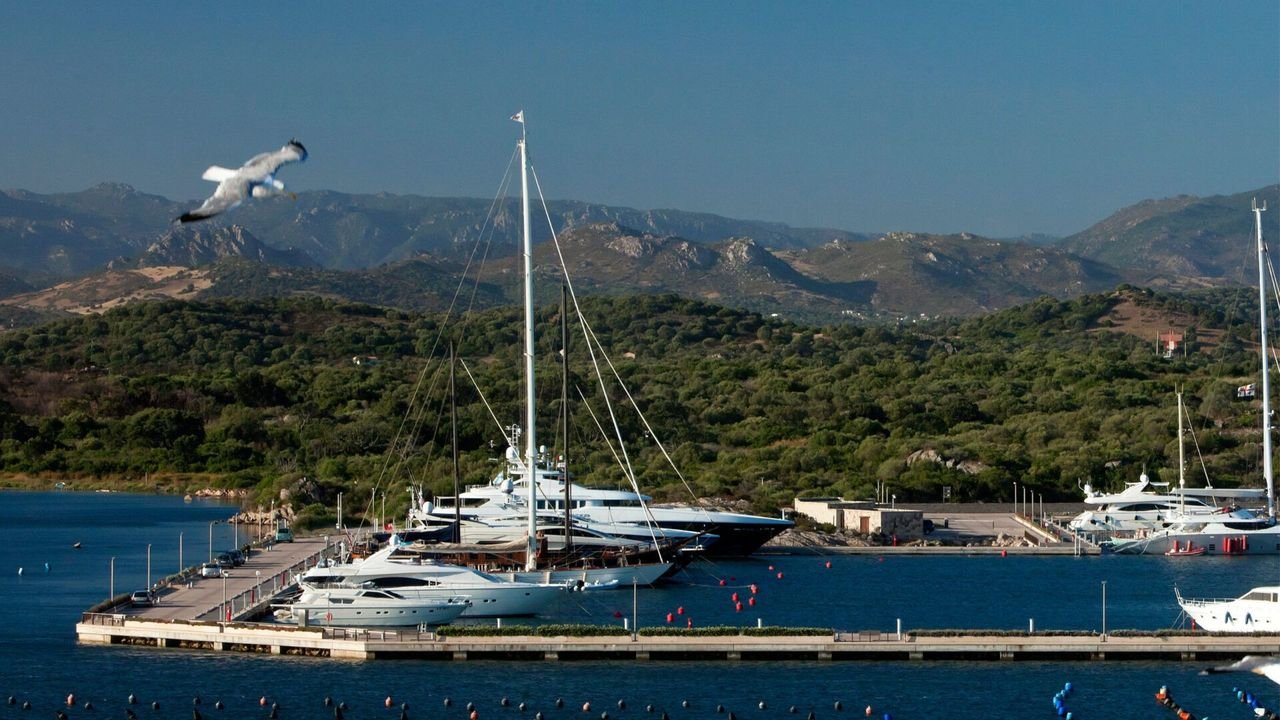
Technical specifications – Marina di Olbia
Feature | Detail |
|---|---|
Berths | 270 |
Maximum length | 80 m |
Maximum draft | 5.2 m |
VHF channel | 9 |
Open | Year-round |
Services | Airport shuttle |
Stop two: Porto Rotondo, elegance with a Venetian accent
Heading up the coast, the first real surprise is Porto Rotondo. Founded in the 1960s on an internationally minded vision, it holds, in its Piazzetta San Marco, a small homage to Venice that charmingly clashes with the granite landscape all around. The pace here is just right: refined venues that are never loud, boutiques that speak of craftsmanship, and a marina designed for those who truly live the yachting life rather than merely show it off. The “lifestyle” tip is simple: arrive in the late afternoon, tie up, and let yourself be won over by a dockside dinner, watching the lights come on one by one.
Technical specifications – Marina di Porto Rotondo
Feature | Detail |
|---|---|
Berths | 655 |
Maximum length | 120 m |
Maximum draft | 6 m |
VHF channel | 9 |
Services | Diver available dockside |
Stop three: the Gulf of Cugnana, between Marina di Portisco and Cala dei Sardi
Before we reach the heart of the Costa Smeralda, I’m taking you on a little detour I’m especially fond of: the Gulf of Cugnana, a stretch of water sheltered from every wind that is home to two very different marinas, both well worth knowing. Marina di Portisco is a modern harbor, a multiple-time Blue Flag winner, able to host even the largest superyachts. Here the atmosphere is international but never cold, with a hinterland of granite peaks and centuries-old cork oaks, all waiting to be explored on foot.
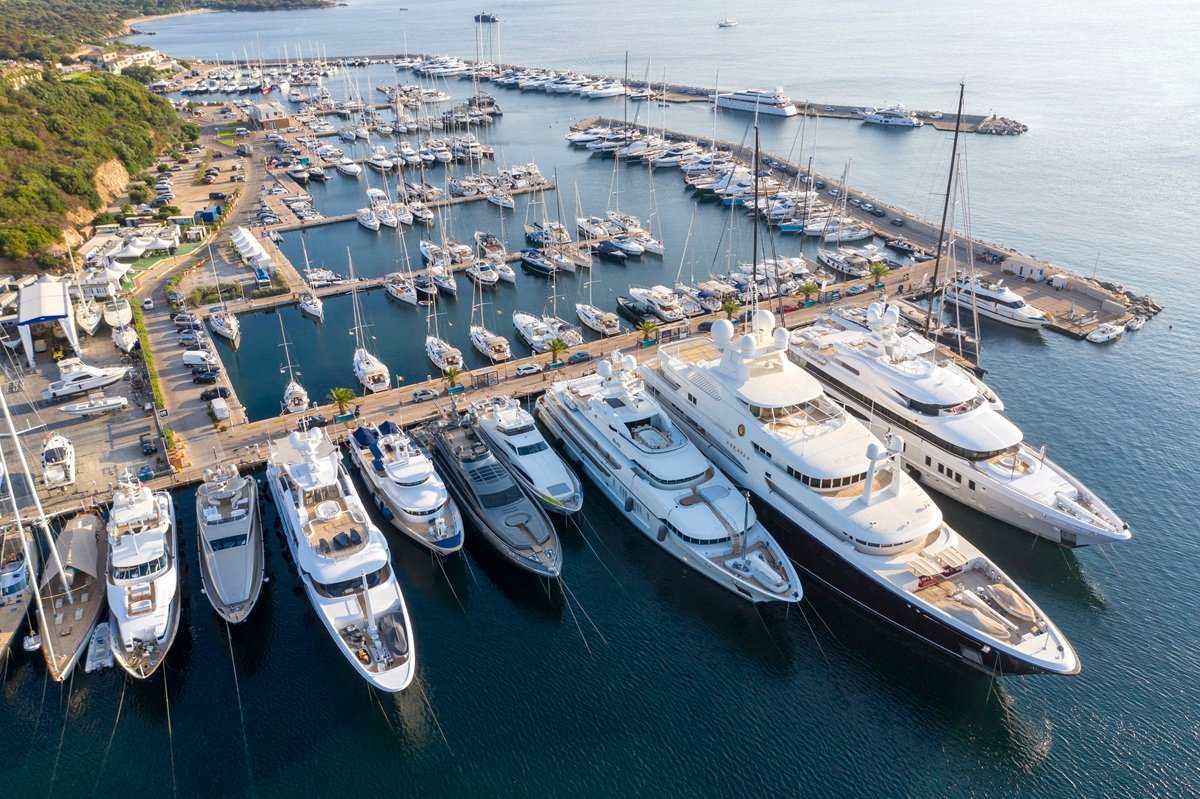
Just steps away, Cala dei Sardi is instead the newest and most “green” marina in the area: fully floating, eco-friendly docks, a large swimming platform (swimming in a marina is truly rare), and a restaurant overlooking the water. My advice? If you’re looking for big numbers and megayacht-level services, choose Portisco; if you want a cozier, “slow” atmosphere, stop at Cala dei Sardi. They’re a stone’s throw from each other, so it’s worth seeing both, even if only by tender.
Technical specifications – Marina di Portisco
Feature | Detail |
|---|---|
Berths | 589 (including 83 transient berths) |
Maximum length | 90 m |
Maximum draft | 10 m |
VHF channel | 69 |
Awards | Blue Flag of Europe |
Technical specifications – Marina Cala dei Sardi
Feature | Detail |
|---|---|
Berths | 320 |
Length | 6 to 70 m |
Maximum draft | 7 m |
VHF channel | 8 |
Features | Fully floating, eco-friendly marina |
Stop four: Porto Cervo, the beating heart of the Costa Smeralda
And then, there she is. Porto Cervo needs no introduction, but it’s worth telling its story with fresh eyes every time. It’s the most iconic marina in all of the Costa Smeralda, the meeting point for yachts of every flag and every size, where the Piazzetta becomes a stage as evening falls. Here, luxury isn’t ostentation for its own sake: it’s a way of experiencing the sea with style, among boutiques that look like small art galleries and restaurants where every dish tells a story of the local land. My advice? Don’t limit yourself to the Piazzetta: take the tender out to the coves of Pevero as well, where Piccolo Pevero offers a more intimate Sardinia, especially for those arriving from the sea.
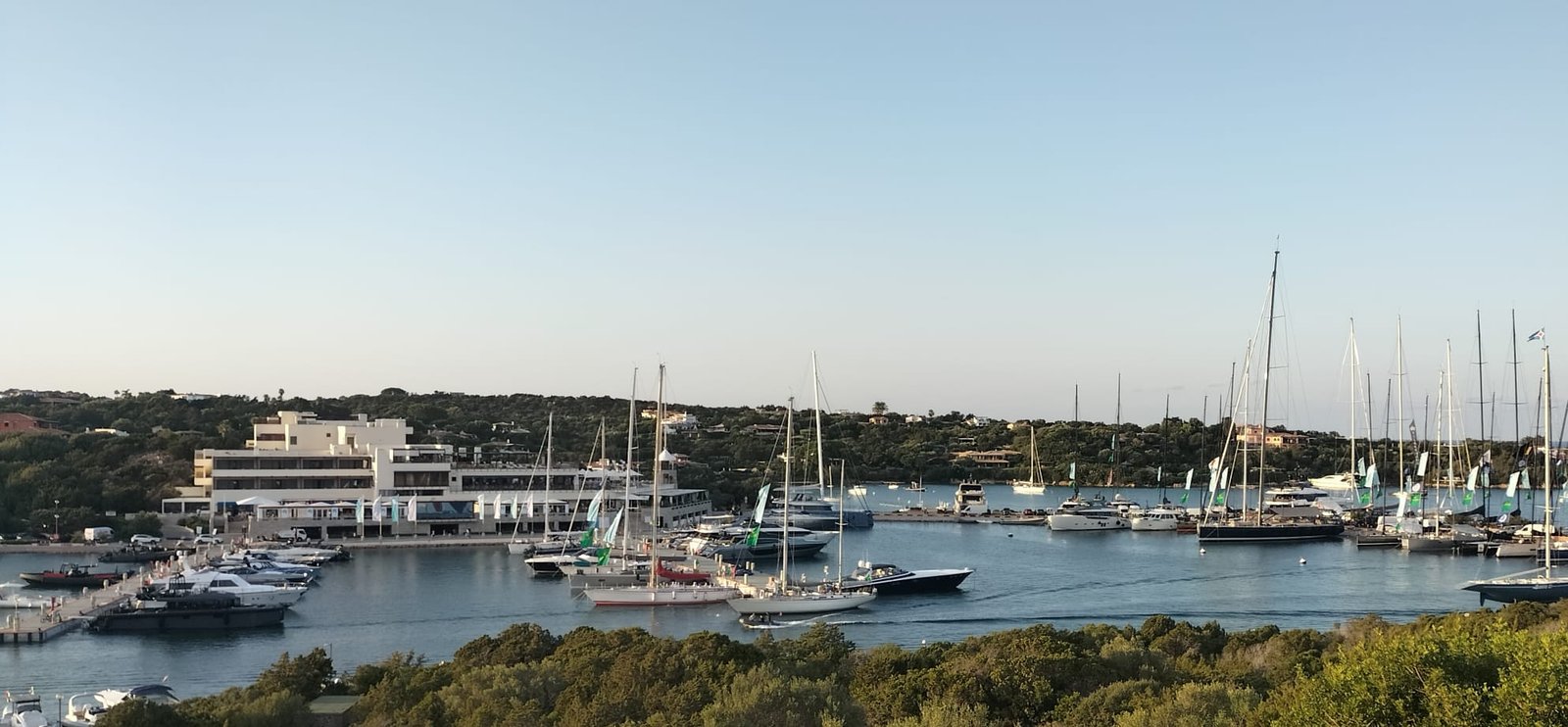
Technical specifications – Marina di Porto Cervo
Feature | Detail |
|---|---|
Berths | 720 (about 100 reserved for transient vessels) |
Draft | 1 to 8 m |
Yacht length | Over 150 m |
VHF channels | 9 – 16 – 11 |
Services | On-site boatyards for maintenance up to 250 t |
Stop five: Poltu Quatu, the secret fjord between Porto Cervo and Baja Sardinia
Halfway between the two most glamorous jewels of the coast lies a small miracle of geography: Poltu Quatu (in the Gallurese dialect it means “Hidden Port”) was built around a genuine natural fjord, with white villas reflected in the clear water. It’s the port I recommend to anyone seeking privacy without giving up services: a private marina, restaurants gathered around the little harbor, and the chance to set out on whale and dolphin watching excursions that have a very special charm here. If you love diving, this is your headquarters: the seabed around it is among the most striking in the area.
Technical specifications – Marina dell’Orso, Poltu Quatu
Feature | Detail |
|---|---|
Berths | 305 |
Maximum length | 35 m |
Dockside draft | 2-3 m |
VHF channel | 9 |
Entry | Entry under sail prohibited |
Maximum speed | 3 knots |
Stop six: Baja Sardinia, for those who don’t want to give up the nightlife
Just four kilometers from Porto Cervo is enough to change the atmosphere completely. Baja Sardinia is the perfect answer for anyone who, after a day at sea, wants to dance late into the night at one of the historic clubs that built the legend of the Sardinian nightlife scene (Il Ritual), but it’s also a fan-shaped bay with postcard-perfect beaches and an elegant little harbor from which excursions depart for the La Maddalena Archipelago. The mix of families and young people, of elegance and freedom, makes it a stop that adds a different rhythm to the itinerary.
Technical specifications – Baja Sardinia, Cala Bitta
Feature | Detail |
|---|---|
Berths | 183 |
Maximum length | 27 m |
Features | Natural cove with masonry pier |
Stop seven: Cannigione, the authentic soul of the Gulf of Arzachena
Here the tone of the story changes, and I love it for that. Cannigione is the Costa Smeralda that never makes the glossy magazines but that those who truly know Sardinia choose with conviction. An active marina, seafood restaurants where the catch of the day is still the absolute star, prices that are more down-to-earth than at the better-known destinations. A stop here is like kicking off your heels for an afternoon: restorative, genuine, necessary.
Technical specifications – Porto di Cannigione
Feature | Detail |
|---|---|
Berths | About 1,000 |
VHF channels | 9 – 11 – 16 |
Services | Ideal logistics base, also for refueling and light boatyard work |
Stop eight: Porto Rafael, the secret gem of Punta Sardegna
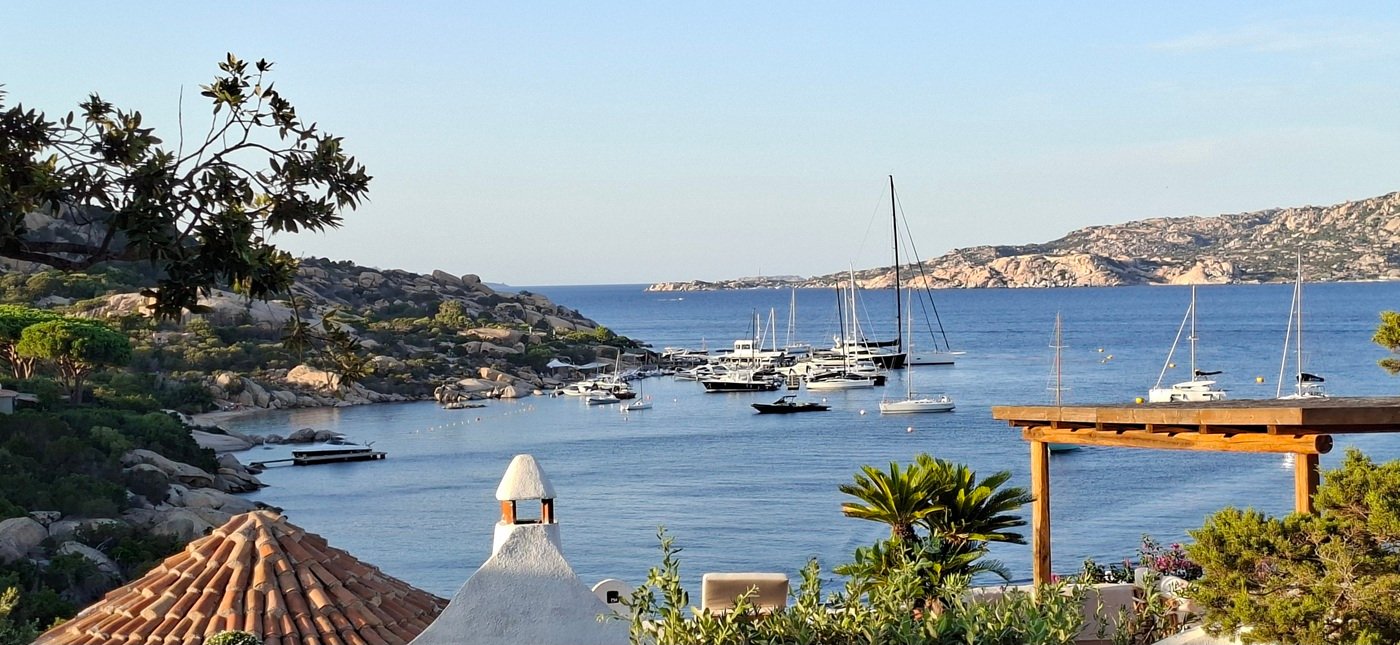
If Porto Cervo is the grand scene, Porto Rafael is the intimate stage that few people truly know. Born in the 1960s on the island’s northernmost promontory, in the Punta Sardegna area, this little harbor of rare beauty nestles among wind-sculpted granite rocks, myrtle, and strawberry trees, with its characteristic white domed cottages overlooking a small piazza in miniature—the same one that over the years has attracted an elite crowd in search of privacy. Here the pace slows even more: seafood dinners served dockside, a mooring field for those who prefer to stay at anchor, and the feeling of having discovered something that isn’t yet on everyone’s radar. My advice? Get there at midday, when the light sets the pink granite aglow, and stay at least for a lunch on the pier: it’s one of those places that stay in your heart longer than a visit lasts.
Technical specifications – Marina di Porto Rafael
Feature | Detail |
|---|---|
Berths | 80 (plus a mooring field with 11 buoys) |
Maximum length | Over 30 m |
Maximum draft | Up to 7 m |
VHF channels | 16 – 09 |
Services | Mooring assistance on water and ashore, 24/7 |
Stop nine: Palau and the La Maddalena Archipelago, the grand finale
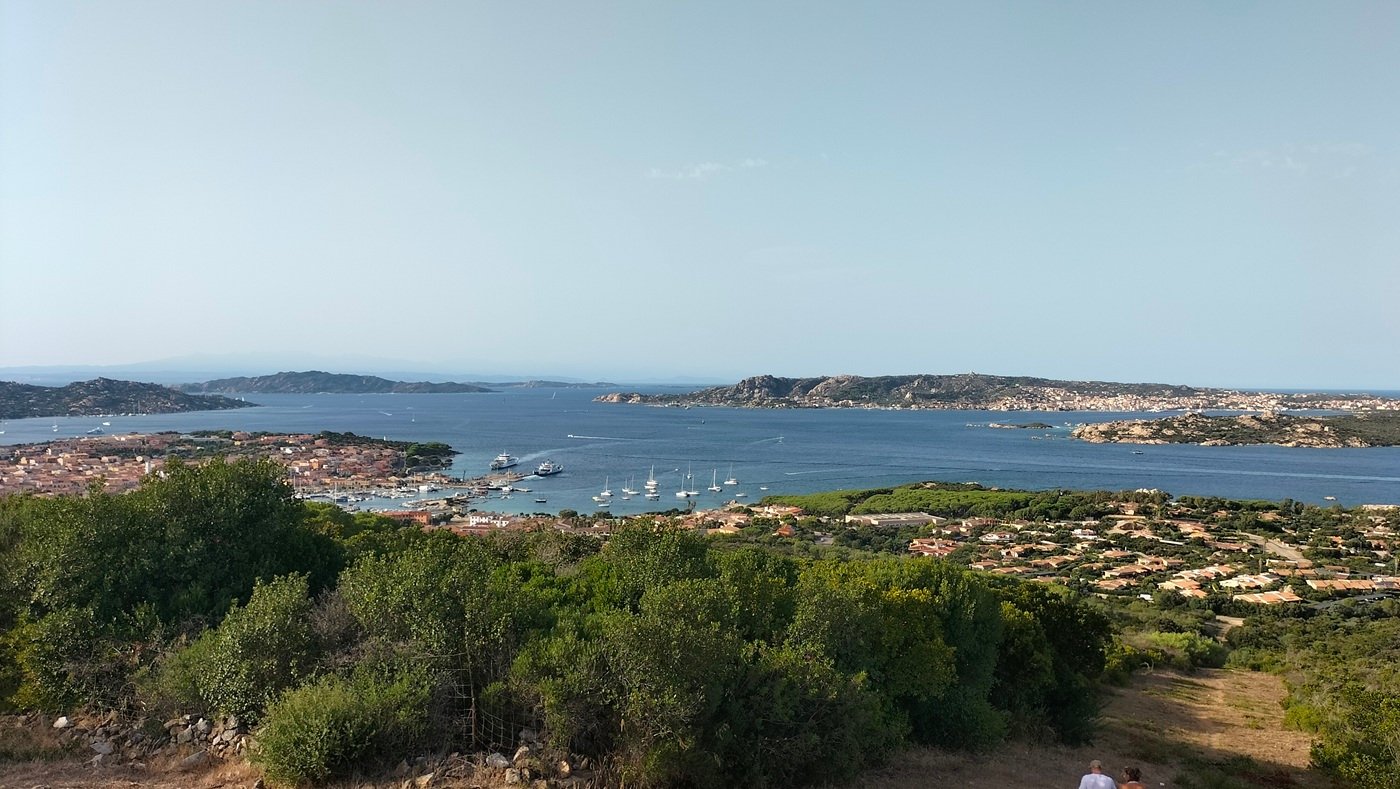
The last stop and, not by chance, the most thrilling one, in my opinion. Palau is the ideal launching point for the La Maddalena Archipelago, a mosaic of islands and pink granite that seems designed on purpose for those who love a sea that is both wild and elegant at once. From here, by boat or on a dedicated excursion, you can reach Spargi, Budelli, and Caprera: waters that shift from turquoise to emerald within a few meters, coves where you can anchor and stay silent, for once, in the face of so much beauty.
Technical specifications – Porto di Palau
Feature | Detail |
|---|---|
Berths | Up to 400 in the recreational boating section (part of the port is reserved for the Italian Navy) |
Location | The most convenient and fastest departure point for the La Maddalena Archipelago |
Northeast Sardinia, my advice as a true host of the sea
If I had to give you just one piece of advice for experiencing this itinerary the right way, it would be this: don’t rush. Northeast Sardinia isn’t a list of ports to check off but a story that unfolds day after day, from one mooring to the next, from a dockside dinner to a dip at dawn. Book your moorings in advance, especially in high season between July and August, but always leave room for the unexpected: that’s where, more often than not, the most beautiful memory is born.
Fair winds and… see you on the dock.
Northeast Sardinia itinerary – Sources and references
Source | Reference |
|---|---|
Marina di Porto Rotondo | |
Marina Cala dei Sardi | |
Marina di Porto Cervo | |
Barbara Kal, actress and host |