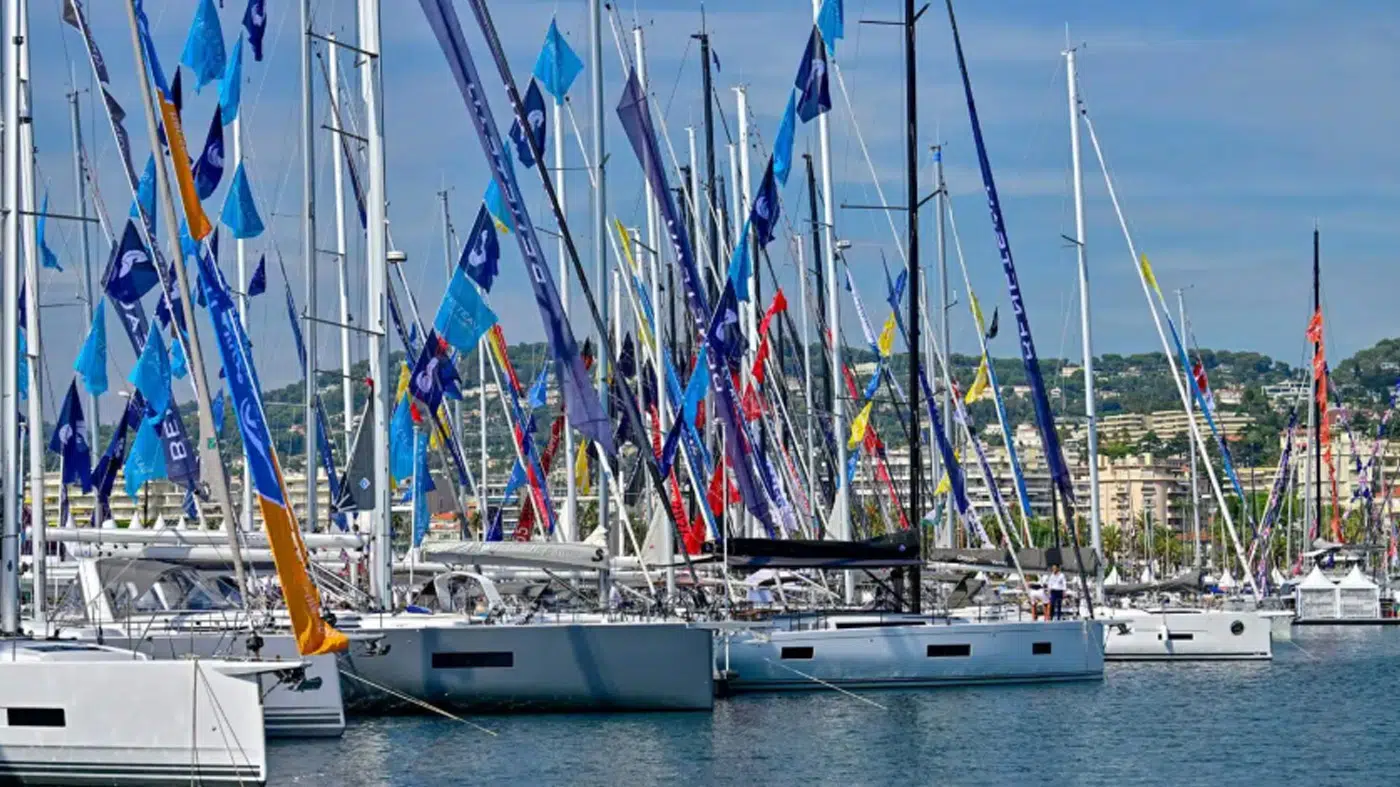
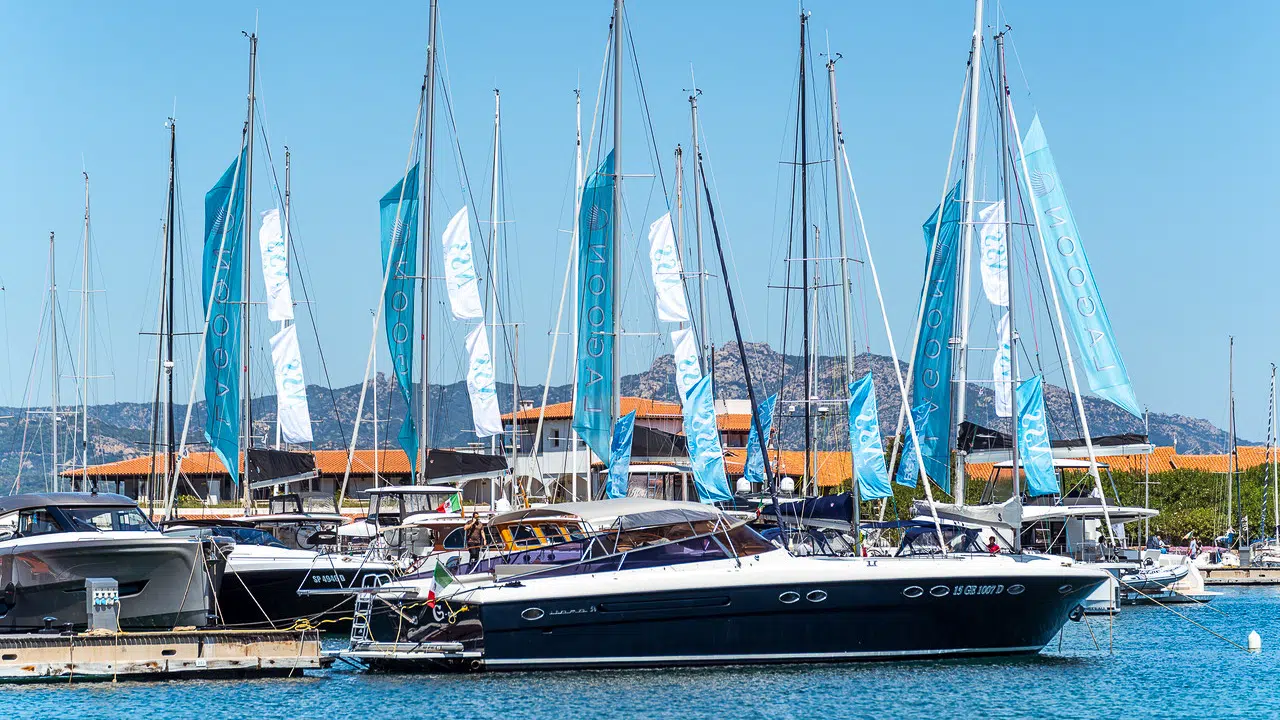
Italian marinas can become hubs for environmental innovation and opportunities to revitalize marginal coastal areas. This is highlighted in a study by Andrea Barbagelata, Vice President of Assomarinas, which was presented during the latest Venice Boat Show. The presentation took place at the Italy–China Sustainable Navigation Workshop, where Barbagelata illustrated his study on sustainable marinas titled “Environmental Technologies and Ecological Transition in Italian Marinas.” The study offers an overview of the main solutions currently available to reduce the environmental impact of recreational boating infrastructure, analyzing real-world cases already operating in Italy.

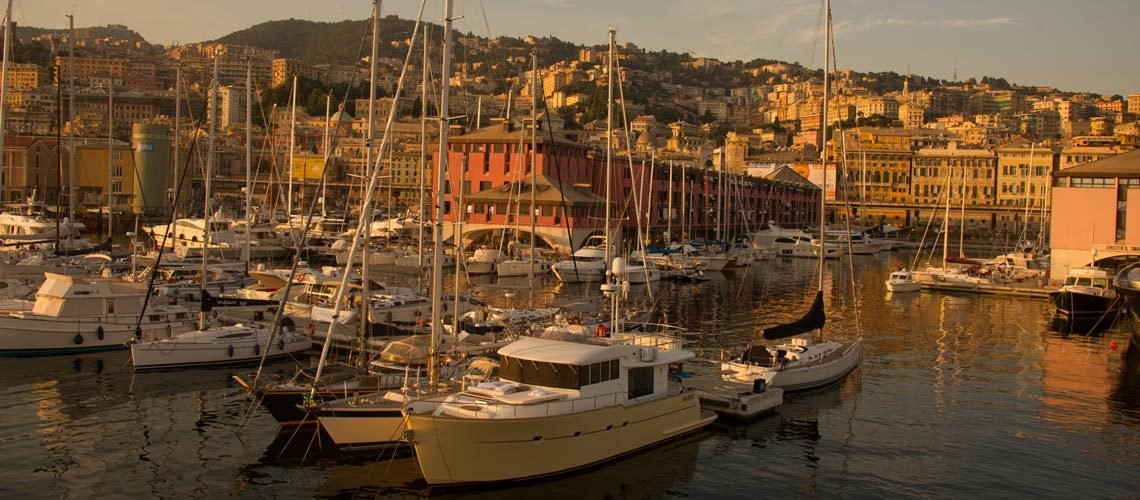
“When designing a new marina, it is easier to integrate new technologies because you are starting from scratch,” Barbagelata explained to Yacht Digest. “This allows you to study the best solution for that specific environment.” Additionally: “Marinas are an excellent opportunity for the urban renewal of depressed areas, as was the case with Marina Porto Antico in Liguria, which redeveloped an abandoned and dilapidated part of Genoa.”
The Vice President of Assomarinas continued: “If we install new technologies in marinas, which are already developed environments, there is no land consumption, and we bring innovation to the local area.” Leading the charge are solar panels, which according to Barbagelata “should be installed on all roofs of port buildings because it is now a mature and efficient technology,” along with generators and microgrids to provide power at night. “It is also fundamental to start developing energy communities, which are the direction of the future,” Barbagelata concluded.
Sustainability as a Design Element
The most significant takeaway from the study goes beyond individual technological aspects. In fact, ports and marinas are described as opportunities for local and urban regeneration, capable of transforming degraded or underutilized port areas into new hubs for economic, tourist, and environmental development. According to Barbagelata, the starting point is a simple but often overlooked methodological principle: “The zero-impact of an artificial structure does not exist.” For this reason, sustainability cannot be reduced to installing a single technology; instead, it must be integrated into an overall strategy that follows a precise hierarchy: reduce consumption, produce clean energy, mitigate residual impacts, and finally offset those that cannot be eliminated.
It is precisely in new projects where this approach finds its most effective application. When a marina stems from a redevelopment project or the reclamation of a brownfield site, designers have the chance to integrate the most suitable technologies for the site’s environmental features right from the beginning, avoiding the typical constraints of retrofitting. In other words, building a new marina means being able to study the optimal combination of energy systems, water systems, digital infrastructure, and environmental mitigation solutions based on local specificities: solar exposure, wind patterns, current dynamics, freshwater availability, and the sensitivity of surrounding ecosystems.
From Depressed Areas to New Waterfronts
The research highlights how many modern marinas are built in previously marginal or degraded contexts. Their construction does not just mean creating boat slips; it often triggers broader urban renewal processes, bringing new commercial functions, services, public spaces, and connections to the city fabric. In this scenario, the ecological transition becomes a core design element rather than an afterthought. Already developed surfaces—such as parking lots, roofs, technical buildings, and docks—can be used for energy production without further land consumption, while the design of maritime works can help reduce impacts on coastal ecosystems.
Renewable Energy: Photovoltaics Remain the Baseline Technology
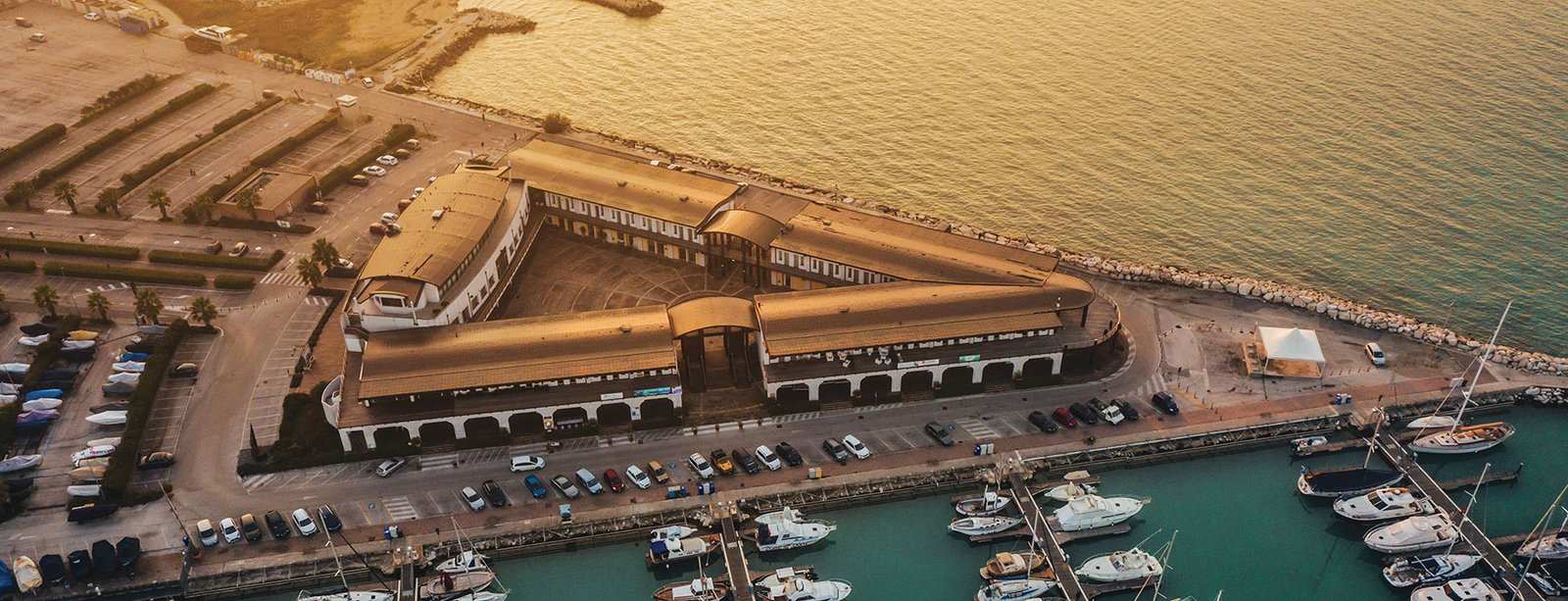
Among today’s most mature solutions, photovoltaics continue to represent the primary technology for Italian marinas. Port structures feature large exposed surfaces and consumption profiles that coincide with peak solar production hours. The benchmark case identified in the research is Marina Dorica in Ancona, where a 196 kWp system installed on parking lot carports produces over 230,000 kWh per year, avoiding more than 100 metric tons of CO₂ and covering about 25% of the port’s energy needs.
Alongside photovoltaics, energy storage systems and microgrids are gaining increasing importance. These allow the energy produced during the day to be stored and used in the evening hours when demand from onboard users increases.
Wave Energy Potential for Sustainable Marinas
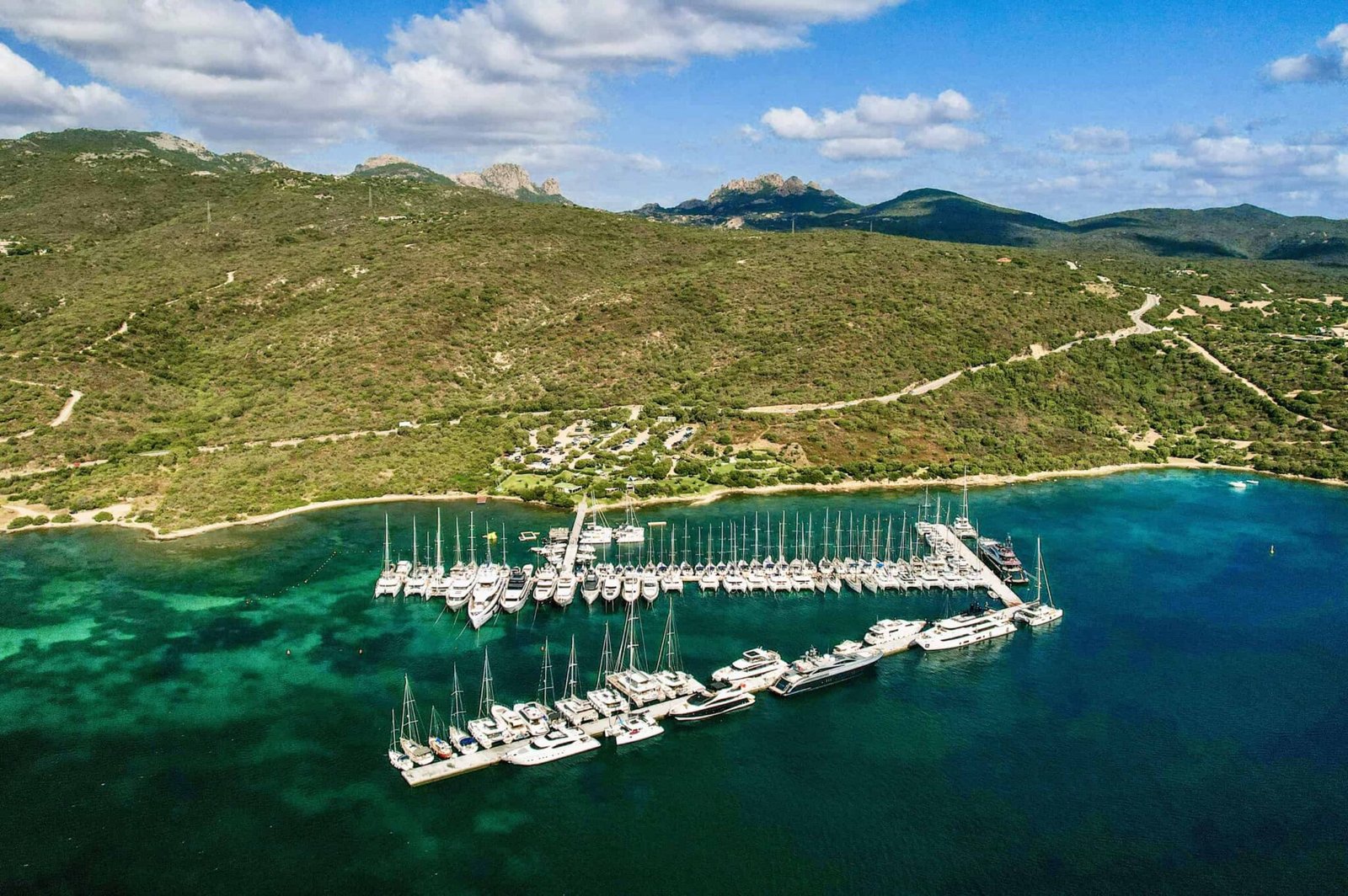
Among the most innovative aspects emerging from the research is wave energy recovery within port environments. The Seadamp technology, developed by the Tuscan company Seares and installed at Marina Cala dei Sardi in Sardinia, allows mechatronic devices to be integrated into the mooring lines of floating docks. The system serves a dual purpose: it reduces load peaks on the infrastructure during storm surges by up to 90% and converts part of the wave energy into usable electricity for dockside services. This example shows how sustainability can be engineered directly into the infrastructure rather than relying solely on secondary systems.
Water, Efficiency, and Digitalization in Sustainable Marinas
Barbagelata’s study also dedicates significant space to water resource management, defined as “the most precious and historically most wasted resource in a marina.” Common technologies include systems for treating and reusing hull-washing water, rainwater harvesting systems, and graywater treatment solutions. In contexts most exposed to water scarcity, reverse osmosis desalination is also utilized.
Digitalization is playing a growing role as well. Smart pedestals equipped with IoT systems allow for the monitoring and billing of actual water and energy consumption, while predictive algorithms make it possible to detect leaks in water networks before they become significant. In this regard, Marina Dorica represents a meaningful case study: the introduction of smart pedestals and the digitalization of utility connection points led to an overall 50% reduction in water and energy consumption.
Conclusions
The study’s conclusion is definitive: no single technology can make a port infrastructure sustainable on its own. True innovation lies in the ability to integrate multiple solutions within a cohesive project. For this reason, new marinas currently represent highly favorable ground for testing and adopting the most advanced environmental technologies. When a project arises from the reclamation of a degraded or underutilized coastal area, it becomes possible to design the most effective mix of energy efficiency, renewable production, water management, and ecosystem protection right from the start. This perspective transforms the marina from a simple recreational boating infrastructure into a platform for urban regeneration and a laboratory for the ecological transition along the Italian coast.