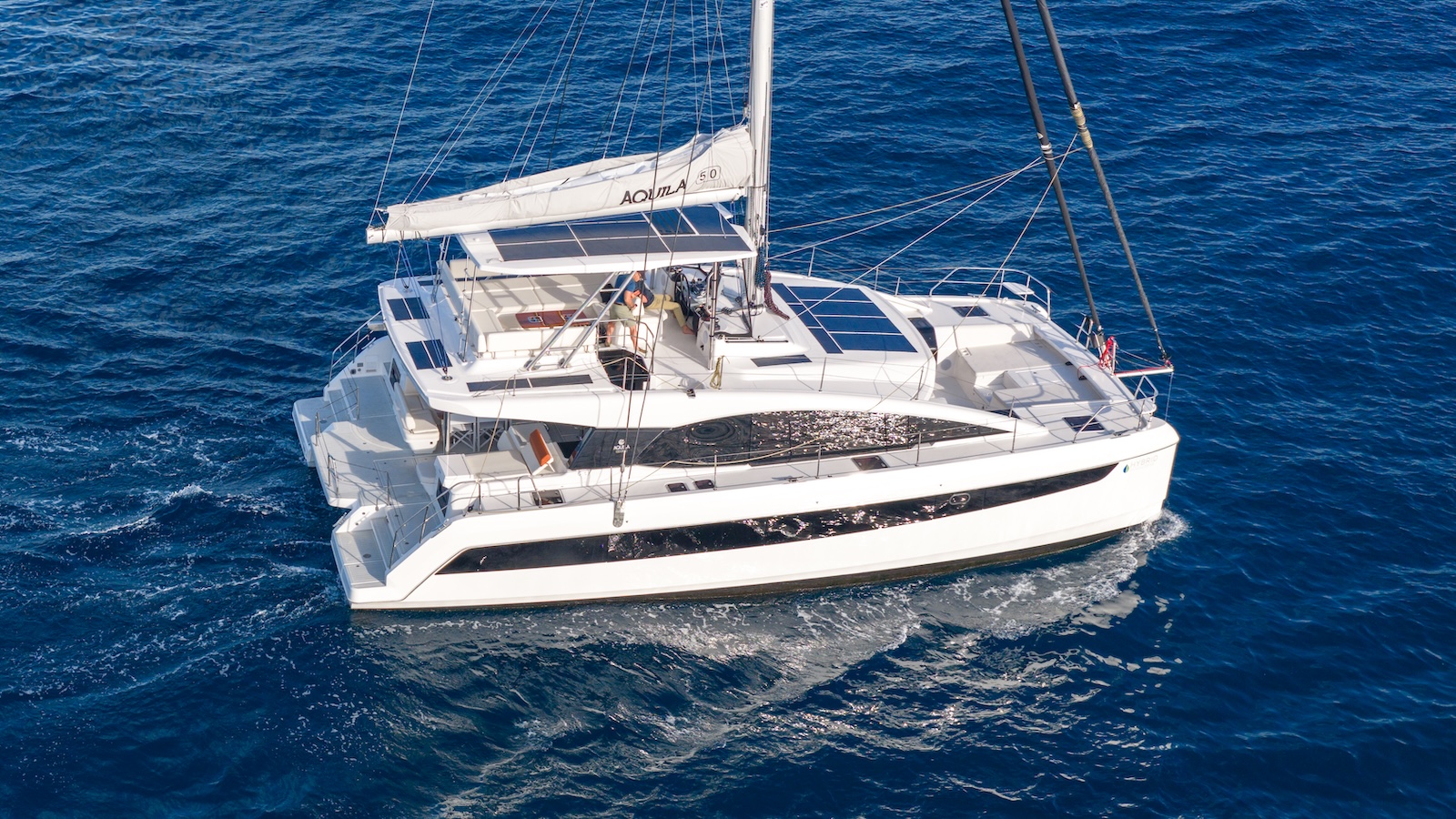
At the Genoa Boat Show, we met Federico Falchieri and Simone Pavan, the two at the helm of Teaknotek, an Italian company based in Bologna, to talk about the use of Flexiteek synthetic wood in the yachting sector. The interview takes place around a football table prominently positioned on the booth and rigorously covered with Flexiteek teak. It’s a “green revolution” that replaces the use of wood on board and, as a result, does not contribute to the deforestation of tropical forests, explains Simone Pavan, partner in charge of Teaknotek’s production. “Flextiteek is synthetic and flexible, as its name implies; moreover, it can be made into any shape for nautical use: from decks, to tables and interior furnishings”.
Impossible to distinguish from real wood
 Once installed, the challenge is to distinguish natural wood from Flexiteek, In fact, any of the site managers we met at the show were embarassed to distinguish synthetic teak from real wood. The widespread use of this innovative material, which does not heat up, requires less maintenance, is easier to process and “has a very good grip”. “The product’s advantages are its low weight – around four kilograms per square meter – and its excellent durability, since it does not need to be treated with specific products, nor does it need to be laminated or sanded, except, at the owner’s discretion, after a few years, simply to brighten up the colour. Unlike wood – continues Simone Pavan – “the colour does not tend to fade; on the contrary, it tends to “tan” slightly”.
Exclusive for Italy
Teaknotek has been “importer,  distributor and installer for over 20 years of the prestigious Swedish brand Flexiteek”, for which it has the exclusive rights on the Italian territory. It is the “best-selling synthetic teck in the world”. Moreover, Teaknotek boasts a record in Italy with 7,375 square meters of product sold in 2019, which confirms it as the third seller in the world, right after the United States (7,433 square meters) and Denmark (11497 square meters). This is further irrefutable proof of the ultra-positive trend of the Italian boating industry.
Many Italian shipyards use Teaknotek, including Cantiere del Pardo with its Grand Soleil and Pardo Yachts brands, Capelli and Zar Formenti. Abroad, Flexiteek is used by X-Yachts, Hanse, Moody, Dehler, Fjord, Saffier, Fedship and Southern Wind. The best of the boating industry is turning to a brand that boasts a “significant production capacity”. Not surprisingly, the company saw demand rise by 30% in 2018. Teaknotek also boasts the 2G patent which, they explain, “makes Flexiteek’s synthetic teak seem to transmit less heat if it comes into prolonged contact with your foot”.
Teaknotek: top shipyards and private customers
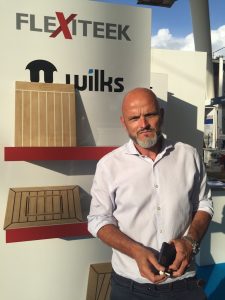 Teaknotek is also chosen by private customers, who “represent a significant proportion of our production“, as Simone Pavan explains. “We follow two routes with private customers: one is to send us the template and, on the basis of the template, we make the mat and then send it to the owner so that he can personally take care of the laying. Or we follow the work directly from A to Z, starting with the sizing of the boat and the production of the mats and then the installation in the marina where the boat is physically located”.
Today, Teaknotek employs “20 people”, is well-established in the area and aims to be increasingly widespread. But Simone Pavan returns to the subject of green between a shot on goal and a goal from midfields: “The ecological factor is fundamental because the material is recyclable at the end of its life and no trees are cut down to produce Flexiteek. What’s more, the company’s policy is to donate, for every ten meters of product purchased, five dollars to reforestation”.
In fact, Flexiteek has set a goal to provide funding for at least 8,000 trees through a total sales in 2020. A truly honourable choice. In detail, each five-dollar donation goes “towards the nurturing, planting and protection of a tree in an area lost to deforestation such as Borneo and Ecuador”. In addition, “ as part of the global maritime industry, we need to be aware of our impact on the environment”, said Flexiteek CEO Tomas Gustafsson. How many will follow him?