One of the main challenges facing the yachting industry today is environmental sustainability. The need to reduce polluting emissions without sacrificing performance is the issue shipyards are focusing on the most, sometimes achieving truly surprising and innovative results. This is the case with the MED Group, which specializes in the construction of high-performance custom aluminum chase boats and tenders, and has now launched its first hydrogen-powered model. Called TYKUN H1, it is the first day tender made in Italy to run on this clean energy source, delivering outstanding range, high speed, and levels of silence never seen before.
TYKUN H1 travels at 35 knots without making a sound
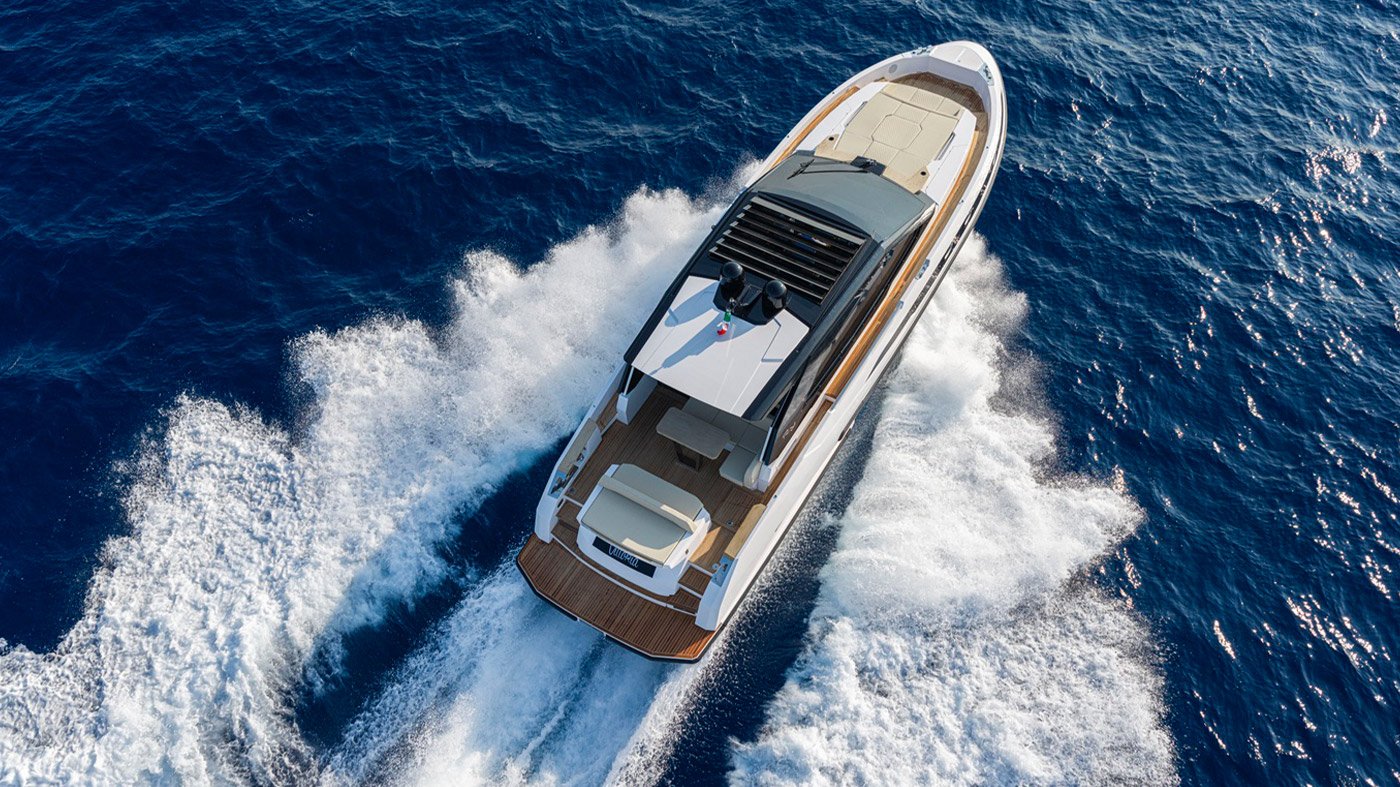
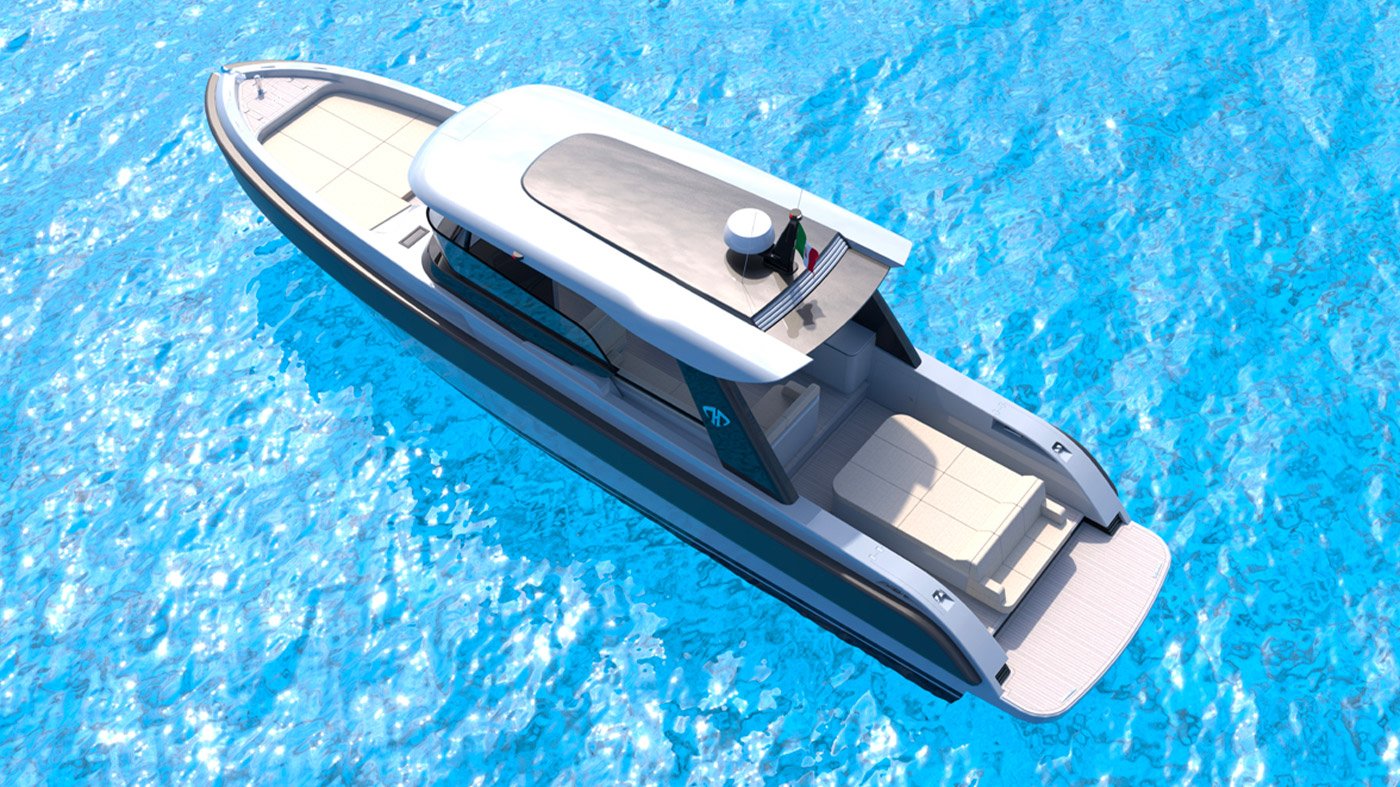
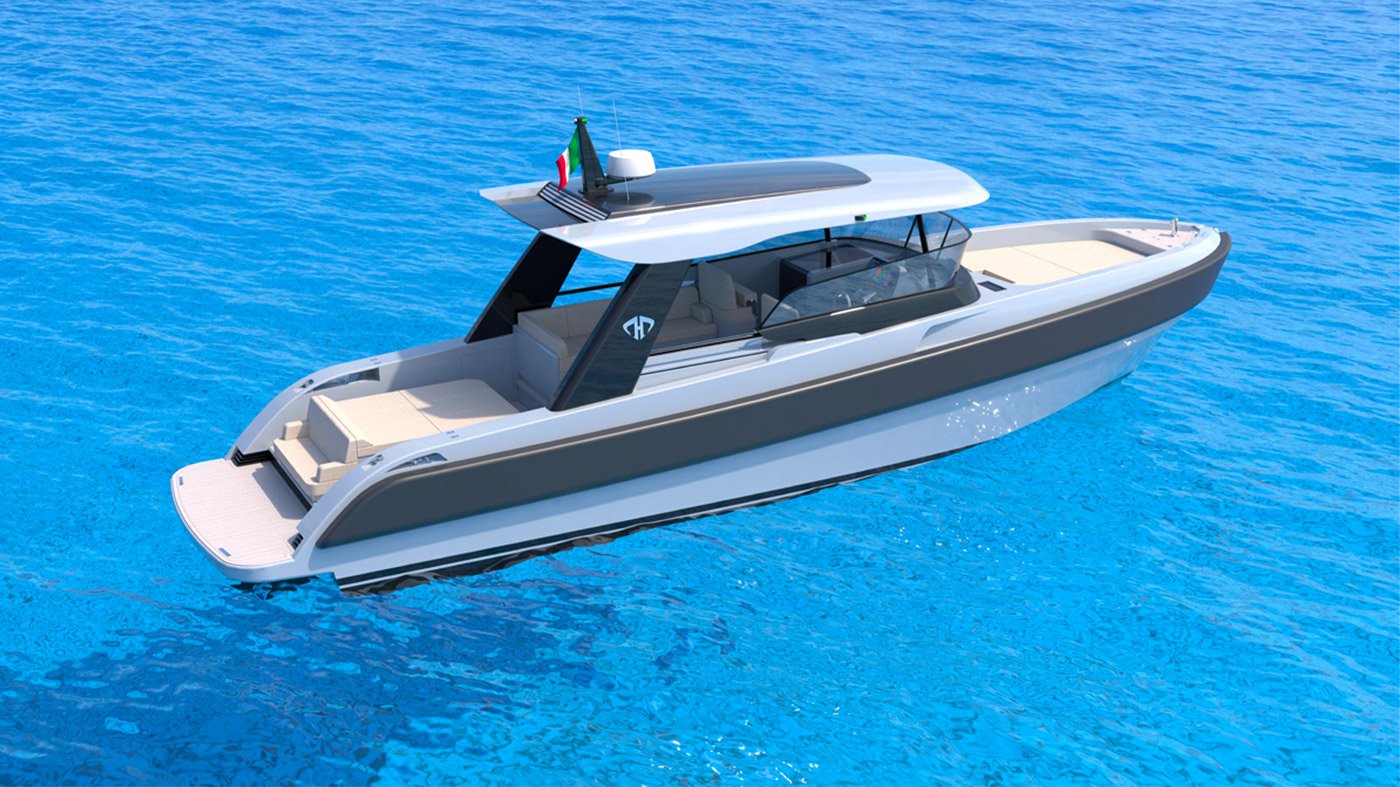
At 12 meters in length, TYKUN H1 is a model that is already fully engineered and available to owners seeking a clean, silent electric boating experience. The tender can reach speeds of up to 35 knots, offers extended range, and integrates redundant systems to ensure operational continuity. Behind its design are top-tier names: TYKUN H1 benefits from the expertise of the TESYA Group, the same group that developed the hydrogen propulsion system for the chase boats of the 37th America’s Cup in Barcelona, and it is also integrated into NatPower H’s expanding infrastructure network. Moreover, the MED Group team worked together with architect Tommaso Spadolini to integrate the hydrogen system into the 12-meter hull, combining the shipyard’s proven naval architecture with the flexibility of aluminum. The result is a boat with an advanced yet user-friendly propulsion system, optimal performance, and excellent seakeeping qualities—perfect as a high-end dayboat or as a superyacht tender, with no compromise on functionality.
“The TYKUN H1 project began with a key challenge: to produce a hydrogen tender that was usable and manageable for a customer – explains Ugo Casadio, Chief Technical Officer at MED Group – We were lucky enough to make the acquaintance of the TESYA Group team, who had just come from producing the chase boats used in the last America’s Cup. Key to the H1 project was to translate this experience into a boat that more mainstream customers could enjoy”.
The MED Group set out from a series of fundamental specifications: to design a tender that is easy to manage, with all-day autonomy (around 50–60 nautical miles), a top speed of up to 35 knots, and a cruising speed of around 20 knots. “The goal was to introduce a boat that was easy to operate and manage, while also delivering the style and customization of our TYKUN dayboats and superyacht tenders”, enthuses Casadio. This led to the creation of TYKUN H1, an electric boat with a battery pack that powers the motors, while a single hydrogen fuel cell acts as a range extender by recharging the batteries and extending the overall range up to 60 nautical miles. A standard shore power connection for fast charging is also included, allowing TYKUN H1 to be used as a high-performance electric tender even in the absence of hydrogen refueling points.
Simple and safe
A central element of the project was the simplification of the entire system, making the H1 not only easy to use but also extremely safe thanks to the adoption of very rigorous quality standards. The job of simplifying the hydrogen system fell to the TESYA team. “Building two hydrogen foiling vessels for the last America’s Cup was a good test for us because the boat performance requested was extremely high – explains Vittorio Maccone, Sales Engineer at TESYA Group – We gained a lot of experience, collected data and built knowledge that enabled us to re-engineer the system to create something much more user-friendly. The work we did with MED Group on the H1 was all about building a hydrogen boat that could be used by everyone”.
On board, four concealed tanks are integrated, holding around 32 kg of hydrogen at a maximum pressure of 350 bar. A streamlined piping system channels the gas to the fuel cell, which converts it into energy, producing pure water as its only emission. The electricity generated continuously recharges the battery pack.“It’s like having an electric boat with the charger always plugged in – explains Maccone – It means we can overcome the challenges that impact all electric boats – range and recharging time – as refueling the hydrogen tanks takes less than three minutes”.
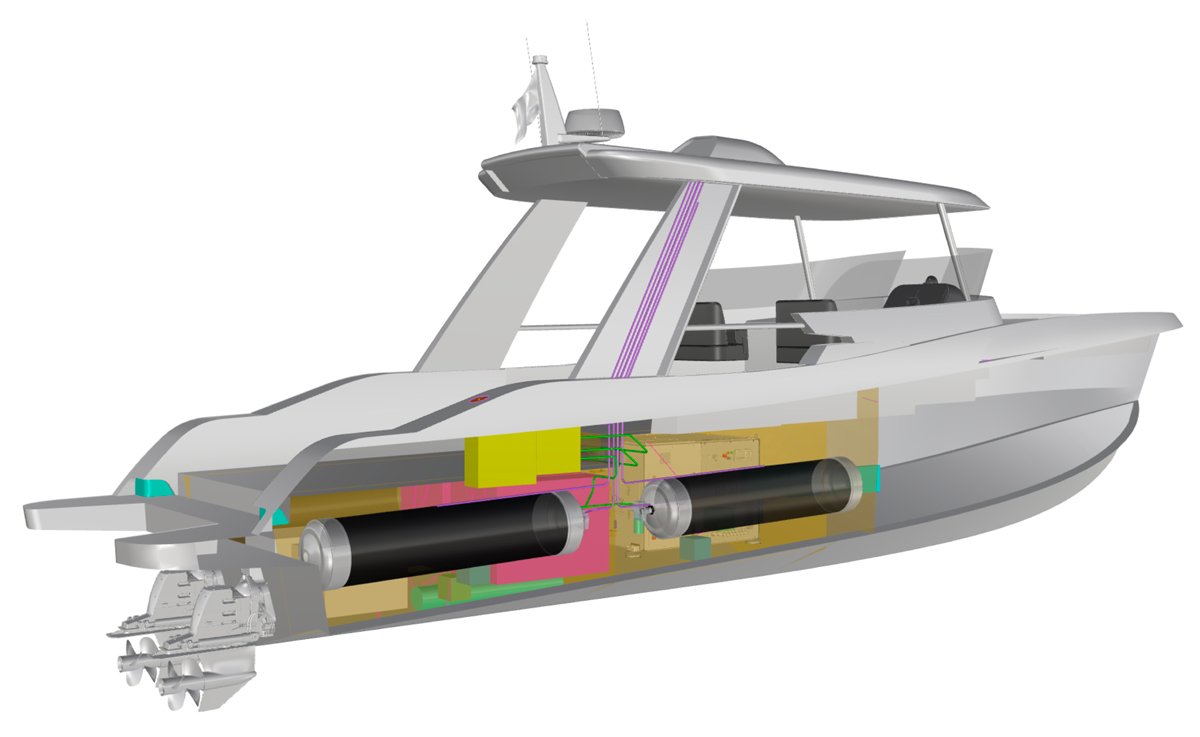
To ensure safety, all components of the TYKUN H1 uses equipment that has been Type Approved by leading classification societies. “Type Approval includes the tanks, the fuel cell, and the battery bank – Maccone confirms – We paid close attention to safety, including where the hydrogen is stored to enable both natural and forced ventilation, which means the H1 always has a safe operational profile”.
A strategic partner in the project is NatPower H, which provides hydrogen refueling in selected ports and marinas, including through mobile services. “We are creating the global network infrastructure for ports and marinas, with 40 refueling points already operational for hydrogen – says NatPower H’s Marco Vassallo – We work with hydrogen in gaseous form, and we have completed refueling operations in Monaco, France, Italy, and on the Italian lakes, for example”.
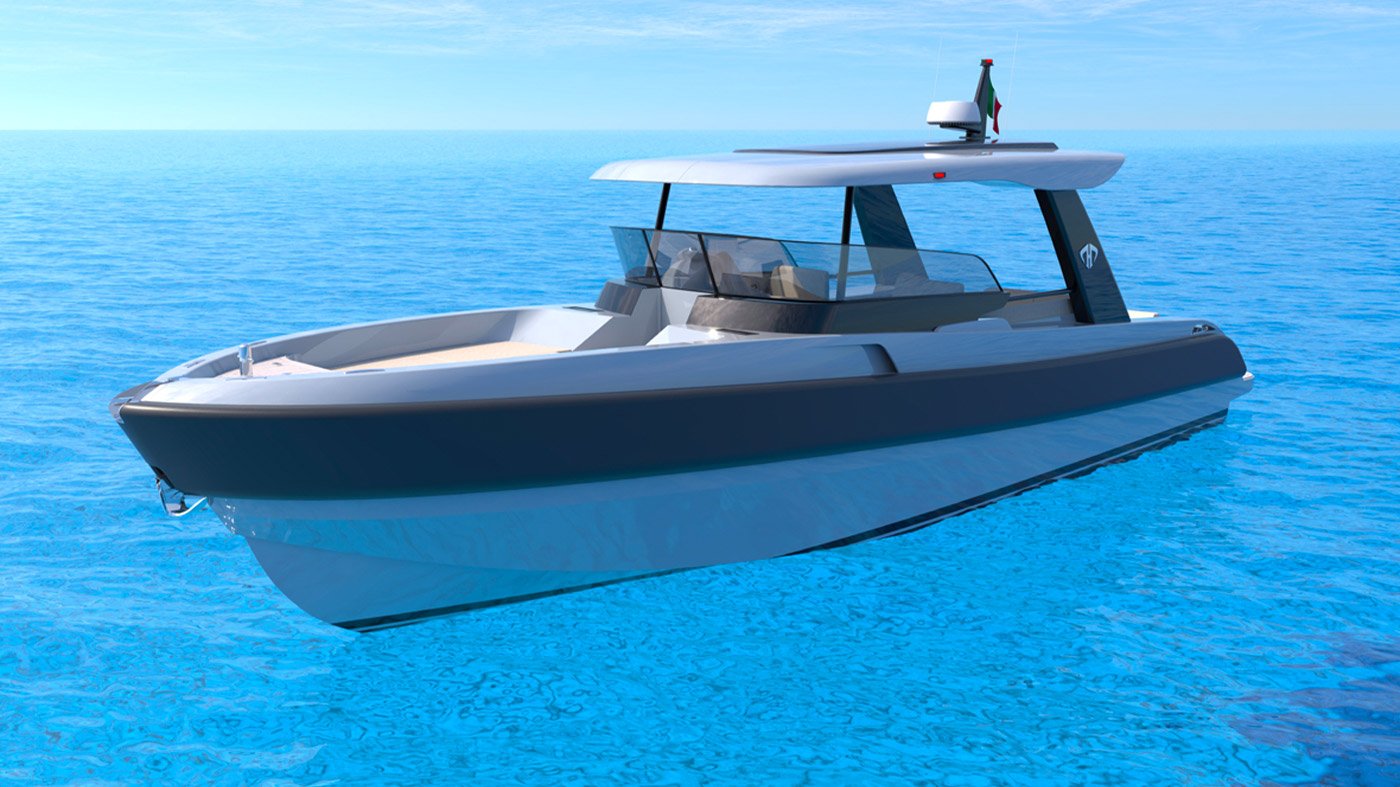
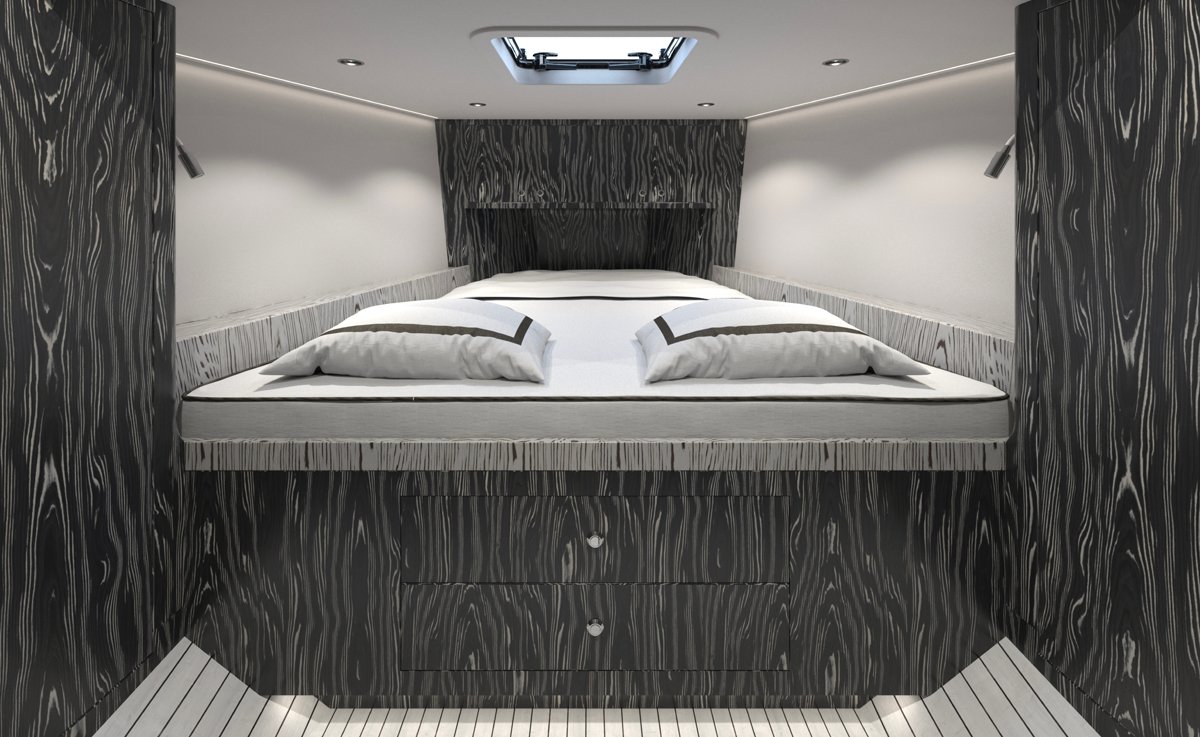
For the design of the TYKUN H1, the team worked hard to minimize the aesthetic impact of adding hydrogen tanks, and the result is a profile that carries TYKUN’s dynamic DNA in its lines with minimal compromise on either looks or practicality. “Aside from the ventilated tank spaces we also had to incorporate compartments for the battery bank and the fuel cell, but we achieved that while still, for example, being able to retain bow storage for the customer – confirms Casadio – The goal was to design a layout so that you can’t tell it’s a hydrogen boat. We retained the design cues of the TYKUN range with only a 10-centimetre raising of the deck, also allowing for the safety aspects by, for example, incorporating the ventilation intakes in the T-top supports. Tommaso Spadolini has created a very well laid-out boat that will work well both as a tender and as a standalone dayboat. The use of aluminium also means clients can customize their H1’s layout and features”.
The H1 is already garnering recognition, winning the Tenders/Water Toys category at the Monaco Yacht Show’s inaugural Blue Wake Awards in September 2025. Rigorously overseen by Water Revolution Foundation, the Blue Wake Awards recognize the most innovative and impactful solutions for environmental sustainability in yachting. “Winning the Blue Wake Award was a big result for the team – says Casadio – It recognizes our commitment to advancing sustainable maritime technology.”
The TYKUN H1 is fully engineered and the team is ready to begin construction with an estimated timeframe of 8 to 10 months for the build of the first prototype. Once series production begins, the delivery time for a new H1 vessel is estimated at between 6 and 8 months, with possible variations based on the level of customization required.