Grand Soleil Plus 80 Long Cruise: The Quintessence of Beauty is Fast
The Grand Soleil Plus 80 Long Cruise is not simply Cantiere del Pardo’s new flagship: it is a true superyacht that beautifully and flawlessly blends performance, volume, and design. With this project, the shipyard adds a fundamental milestone to its Plus line—dedicated to hulls over 60 feet—effectively setting the market benchmark for the blue water cruiser segment.
The first unit of this extraordinary series, named Bianca II, took center stage in an exclusive preview reserved for the press and owners during the 2026 Grand Soleil Cup. The event served as a prelude to her grand international public debut, which will take place at the upcoming Cannes Yachting Festival.
Behind the scenes of this masterpiece is a partnership of excellence that ensures the brand’s signature family feeling: the concept comes directly from Cantiere del Pardo, the naval architecture bears the prestigious signature of Matteo Polli, while the interior and exterior styling was drawn by the always-superlative hands of Nauta Design.
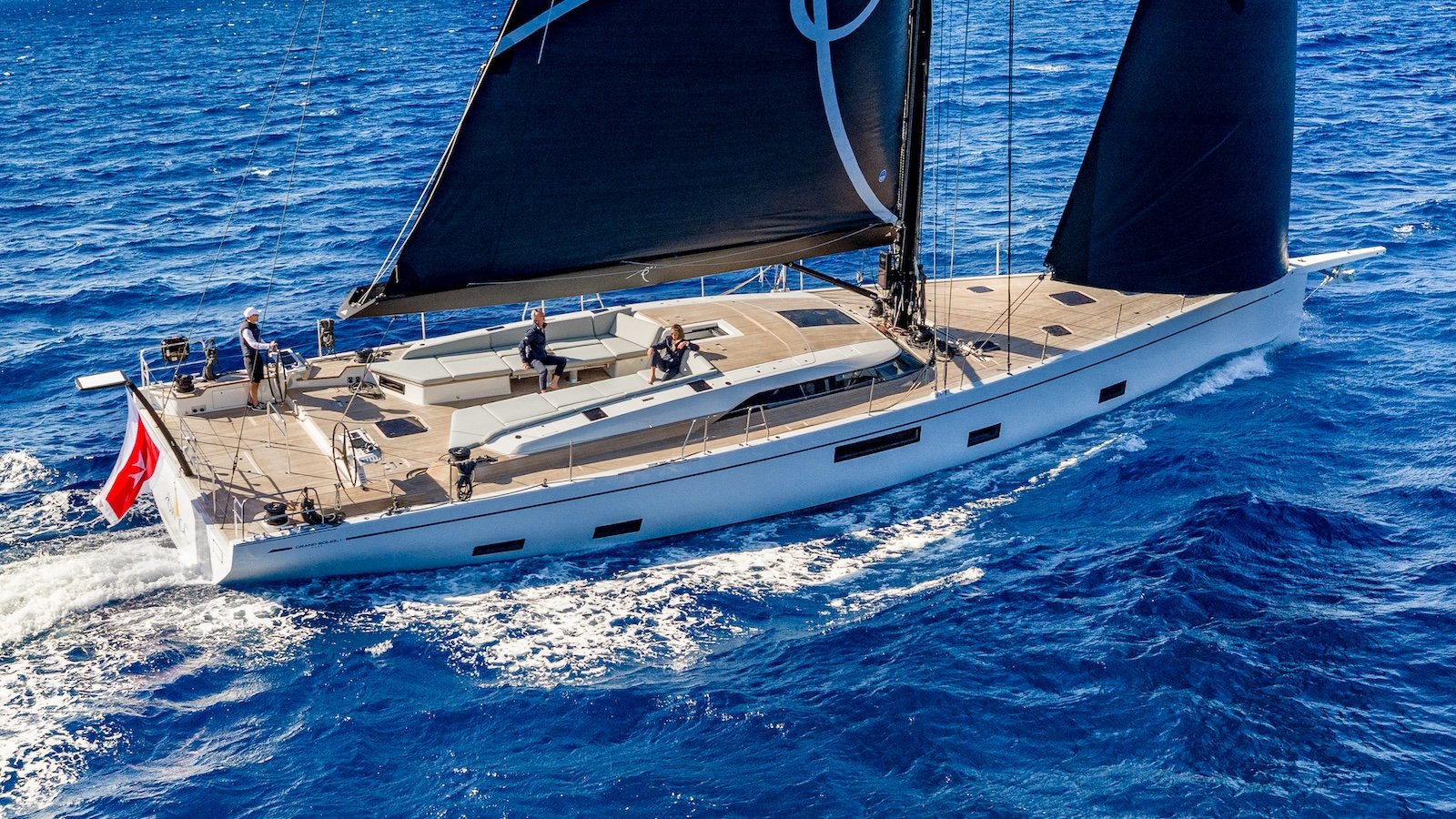
Grand Soleil Plus 80 LC Sea Trial
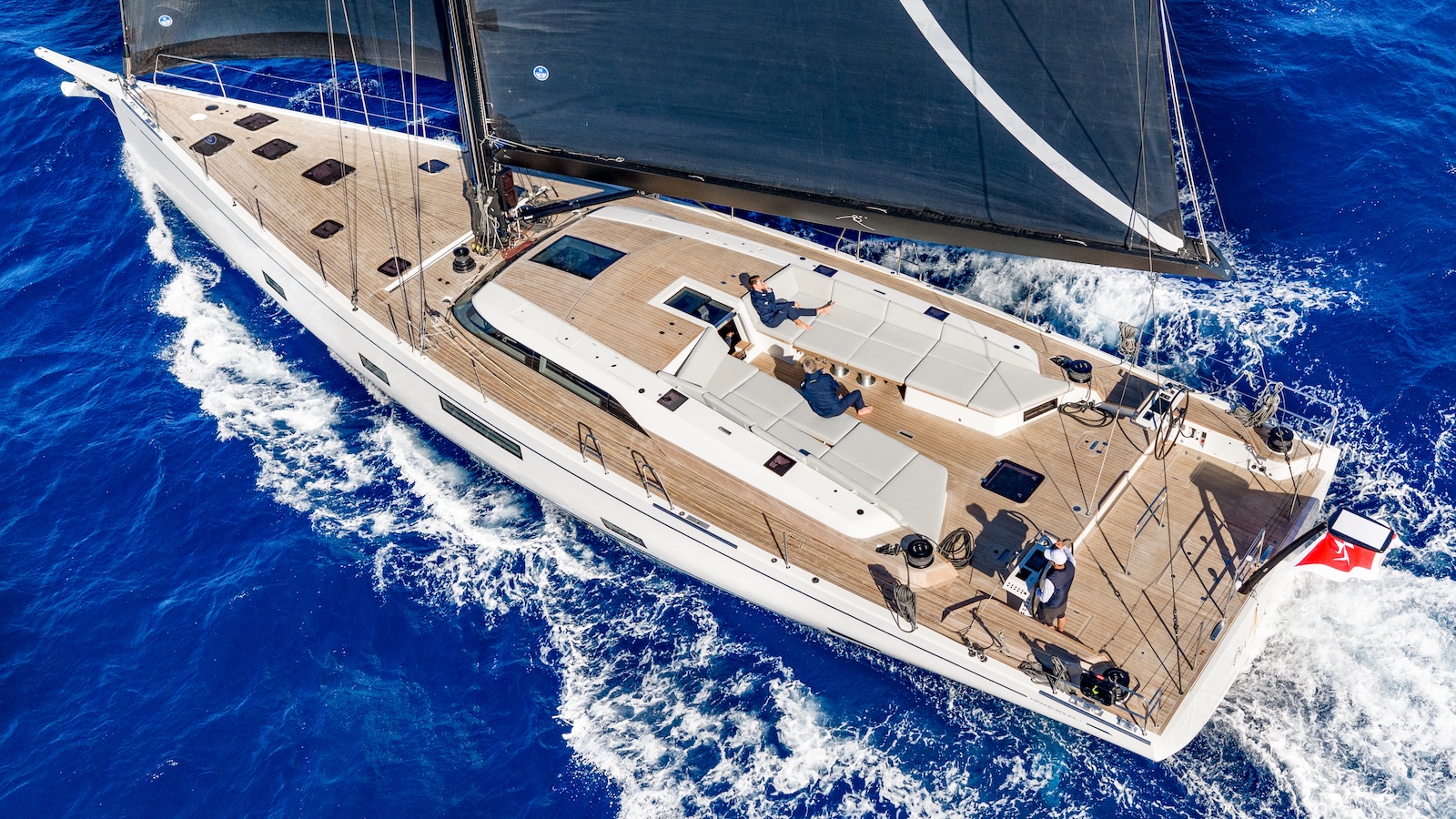
It is hard not to be ecstatic about the sensations transmitted through the wheels of the Grand Soleil Plus 80. Despite the weight and volume of this 26-meter (85-foot) yacht, the boat moves with surprising agility. All lines and controls are smartly led back near the helm stations, making the handling of this giant surprisingly simple and manageable even for a shorthanded crew. This is indisputably proven by the crew of three (including the chef) who are preparing to manage her for the upcoming charter season.
Our day out began with light air, with winds fluctuating between 6 and 7 knots and only briefly exceeding 10. Yet, we consistently sailed upwind at speeds close to or exceeding the true wind speed. Helm response is astonishing; the twin rudders guarantee an impeccable grip on the water, even as the heel angle increases. The Grand Soleil Plus 80 moves through the waves beautifully—the hull of this sailing superyacht cuts through the sea naturally, delivering absolute comfort.
As we cracked off, our speed rose. Even in these light wind conditions and without hoisting the Gennaker, the GPS frequently hit double digits—truly impressive for a sailing yacht weighing over 41 tons.
Ecco la traduzione in perfetto inglese americano, fluida, professionale e accurata nell’uso della terminologia marina e ingegneristica del settore:
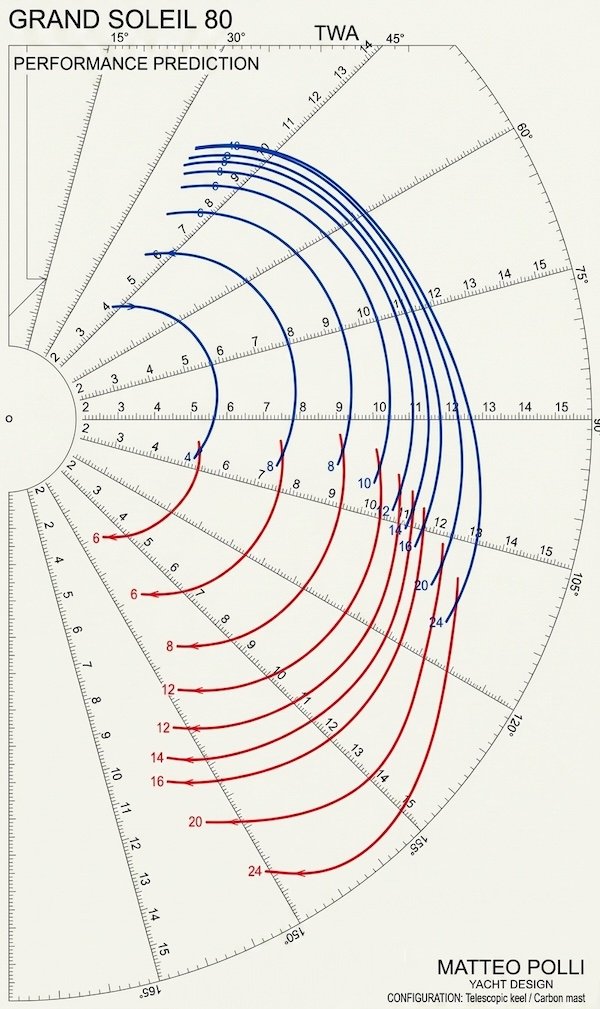
However, to fully grasp the potential of this flagship, it is essential to analyze the polar curve data, calculated specifically for the test boat, which features a carbon mast and a telescopic keel.
As you can easily see, when the true wind hits 12 knots, the Grand Soleil Plus 80 LC develops significant speed, both upwind and, naturally, when cracking off to a beam reach or a broad reach. The diagram also highlights how hoisting the Gennaker coaxes even more speed out of the boat.
Returning to our sea trial, it is important to note that despite the high speeds, the feeling in the cockpit remains one of total safety. The reactions of this sailing yacht are always progressive and measured—a behavior that confirms Cantiere del Pardo and Matteo Polli have hit the bullseye. They have created a mile-munching machine capable of sailing fast (very fast) anywhere in the world, in grand comfort and absolute safety.
There were 12 of us on board, but thanks to the layout of the central guest cockpit—a true open-air lounge—the sheer amount of available space made it feel like there were only four. Even when the boat heels, this space remains completely free of running rigging, meaning there is always a spot to sit or lie down comfortably. The ergonomics engineered into this sailing superyacht are remarkable, a testament to the extensive research by Nauta Design.
Finally, the performance of the hybrid platform developed by Torqeedo is well worth noting. Generating an impressive 100 kW of power, it allowed us to motor at cruising speeds of 10 knots and beyond. This electric motor draws power from two 40 kWh battery packs, which also act as the energy reserve for all onboard hotel loads. For long-range cruising, two 45 kW generators ensure rapid recharging and virtually unlimited range.
Deck and Sail Plan: Power and Easy Handling
The GS Plus 80 LC boasts a sail plan designed to dominate any weather conditions, with a standard sail area of 400 m². The technological heart of the rig lies in the carbon mast, complemented by a V-boom that dramatically simplifies managing the large 228 m² mainsail. Forward, the setup features a 172 m² jib (with a 143 m² self-tacking option) and a massive 290 m² Code 0. The bowsprit—another masterpiece—also allows for rigging two gennakers, one of which reaches 600 m². A radical innovation on board is the centralized hydraulic system that manages all deck maneuvers, from the winches to the mast functions. This eliminates individual dedicated electric motors, saving weight and keeping the deck extremely clean. The operational areas are relegated aft. Here, the Nauta-designed “wing islands” stand out: ergonomic side seats near the steering stations that offer an unparalleled view of the jib telltails, allowing for comfortable steering during long crossings.
Naval Architecture: A Perfect Balance of Volume and Performance
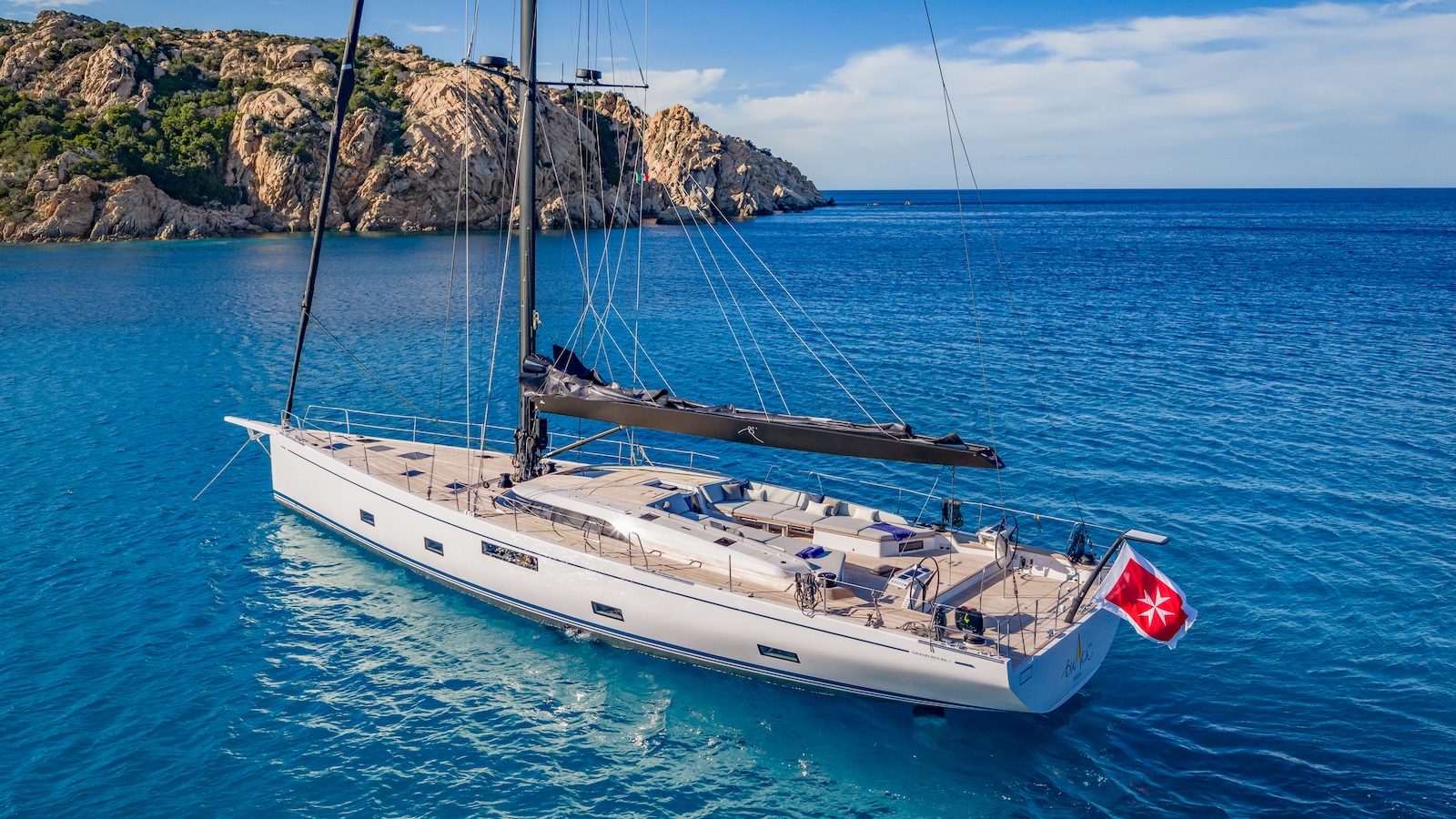
Matteo Polli has designed a hull that is an ode to hydrodynamic efficiency. The bow sections are fine, designed to cut through waves softly even in rough seas, before progressively widening toward the transom to maximize interior volume.
To manage a light displacement estimated between 41 and 42.5 tons, the architecture offers cutting-edge solutions. Most notably, the twin rudder configuration is paired with a revolutionary telescopic keel. This setup allows the draft to vary from 4.80 meters to just 2.80 meters, simplifying entry into shallower harbors and anchorages with the clearest water. To keep the center of gravity low, Polli also optimized the layout of the onboard systems, ensuring stability both under full load and in lightship configurations.
The result is an incredibly stable sailing yacht that is virtually roll-free even at anchor—a massive plus for onboard comfort.
How the Grand Soleil Plus 80 LC is Built
Let’s start by saying she is exceptionally well-built, and I am not just talking about the beauty of the interior or the level of the finishes. The actual construction is top-tier. Whether under sail or power, you won’t hear a single squeak or creak inside, even when running the engine at wide-open throttle or coming down a steep wave.
“In keeping with true Grand Soleil tradition, we built everything in-house for the GS Plus 80 LC, from lamination to launching the boat,” emphasizes Franco Corazza, project manager for the PLUS line. “This approach allows for tighter quality control and seamless integration between construction and systems layout, ensuring we fully satisfy the custom needs of our owners.”
The construction accepts zero structural compromises: the hull is built using a composite sandwich with an epoxy-based vinyl ester resin, laminated via a sophisticated vacuum infusion process. Carbon fiber was used extensively in areas subjected to the highest torsional and mechanical stress. A detail that showcases this building excellence is the “built-in-place” approach adopted for Bianca II, where the bulkheads integrate carbon conduits to route electrical cables. It is an innovative system that ensures excellent accessibility while allowing for slim, elegant finishes.
Interior: The Brightness of the Raised Saloon
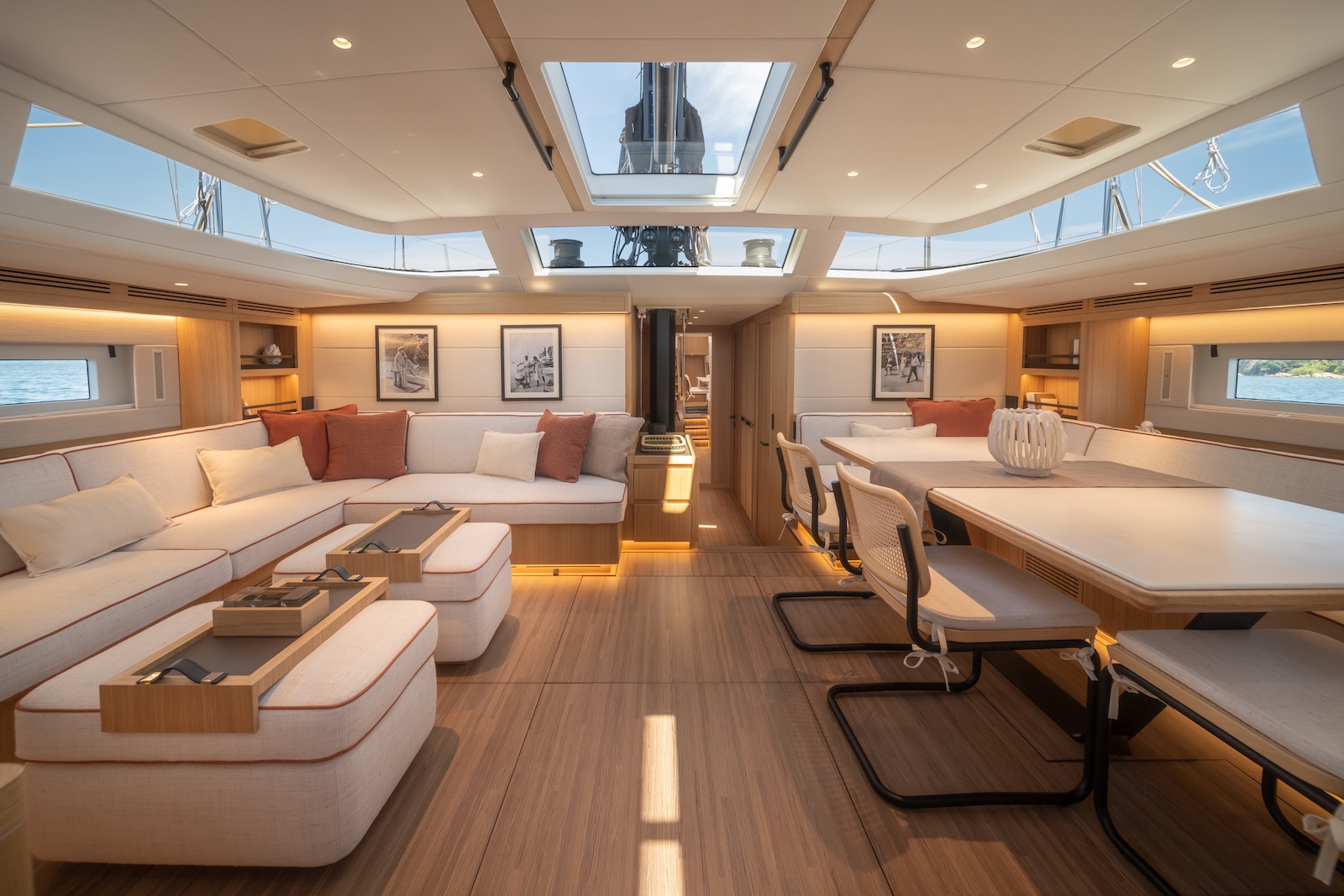
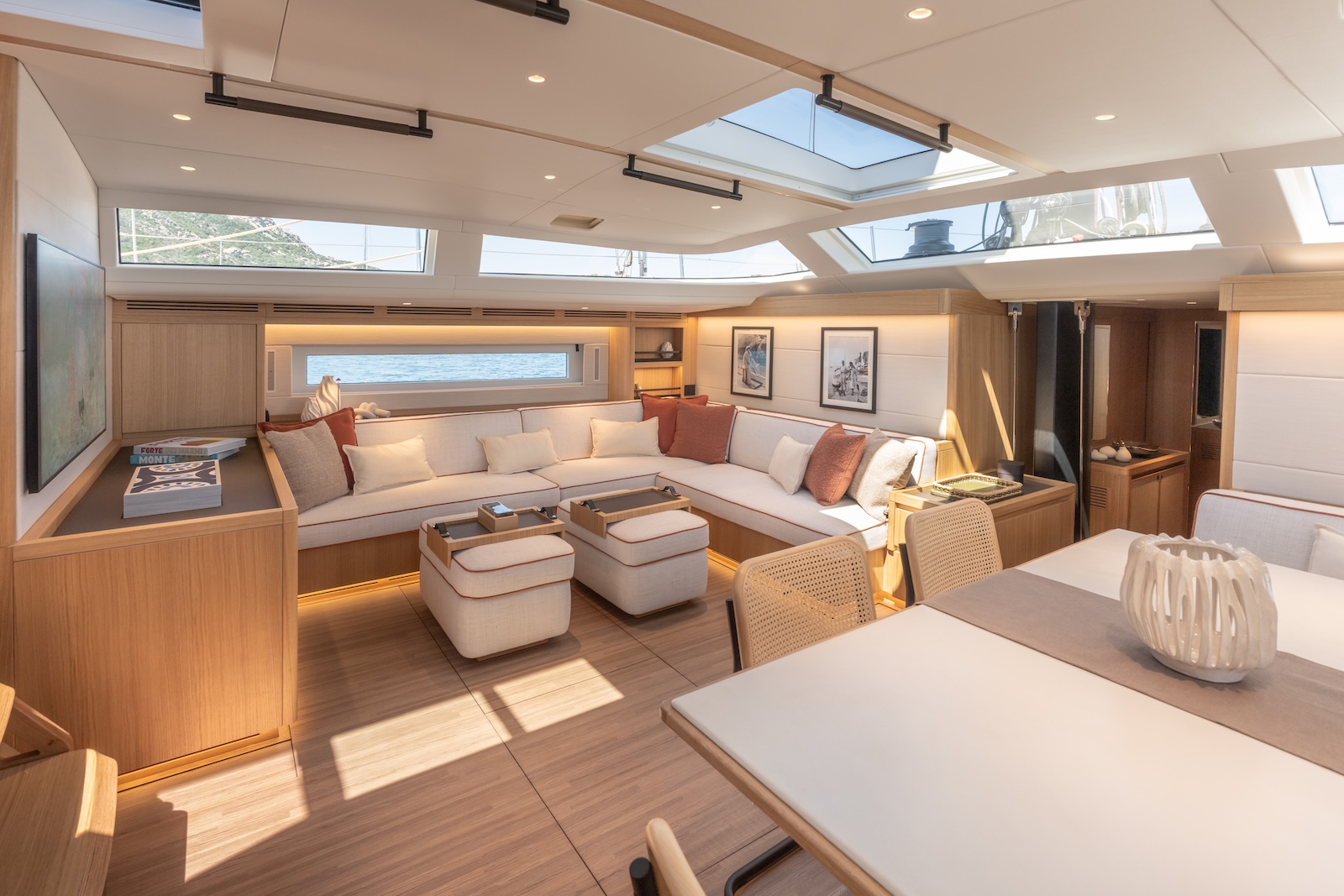
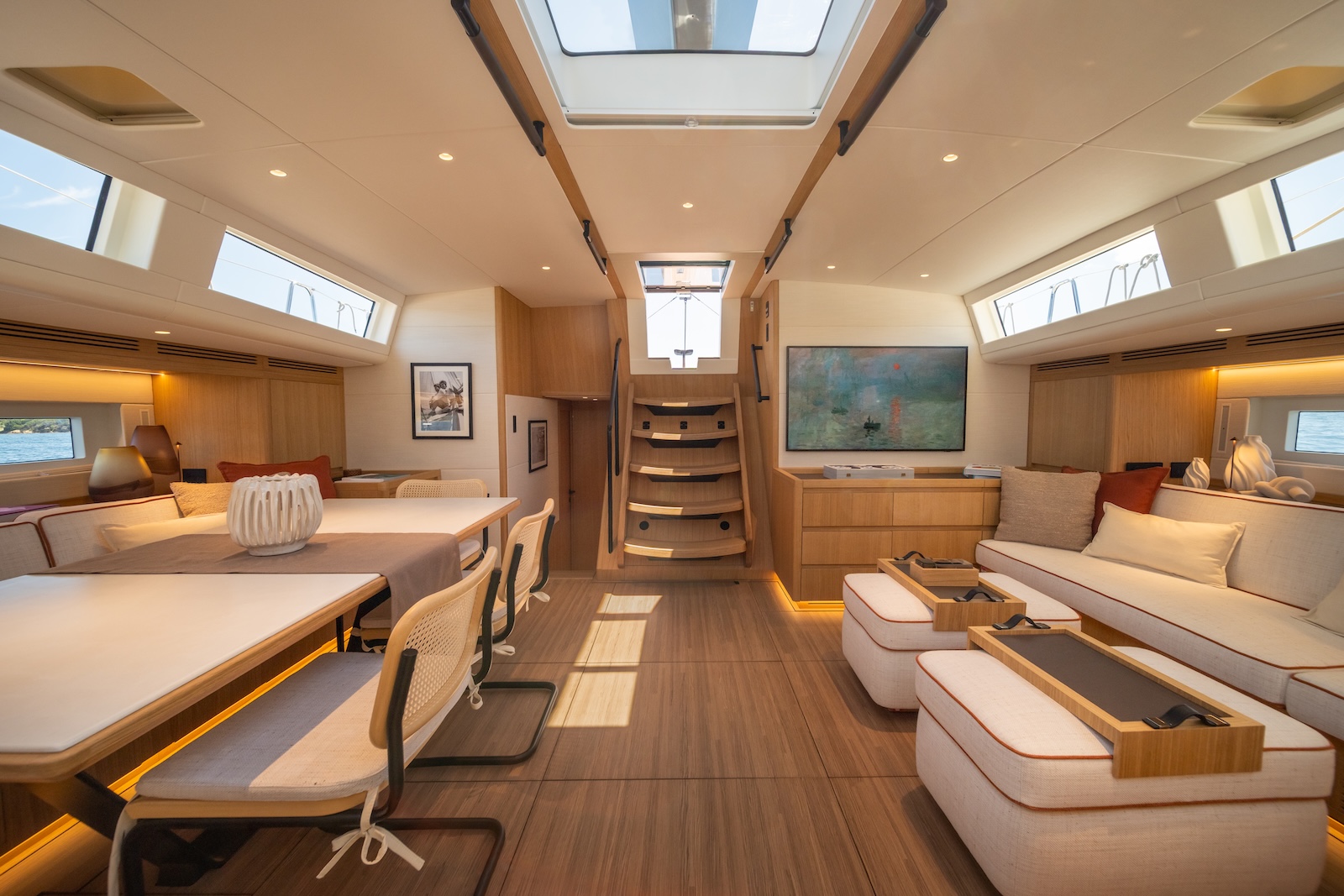
The exterior elegance translates beautifully below deck into a low-profile deckhouse configured as a raised saloon. This choice is far from a mere styling exercise: the massive windows offer a 270-degree panoramic view from the salon, flooding it with natural light. Raising the cabin sole also allowed for a dedicated technical room underneath to house the main systems, further lowering the center of gravity and maximizing living space.
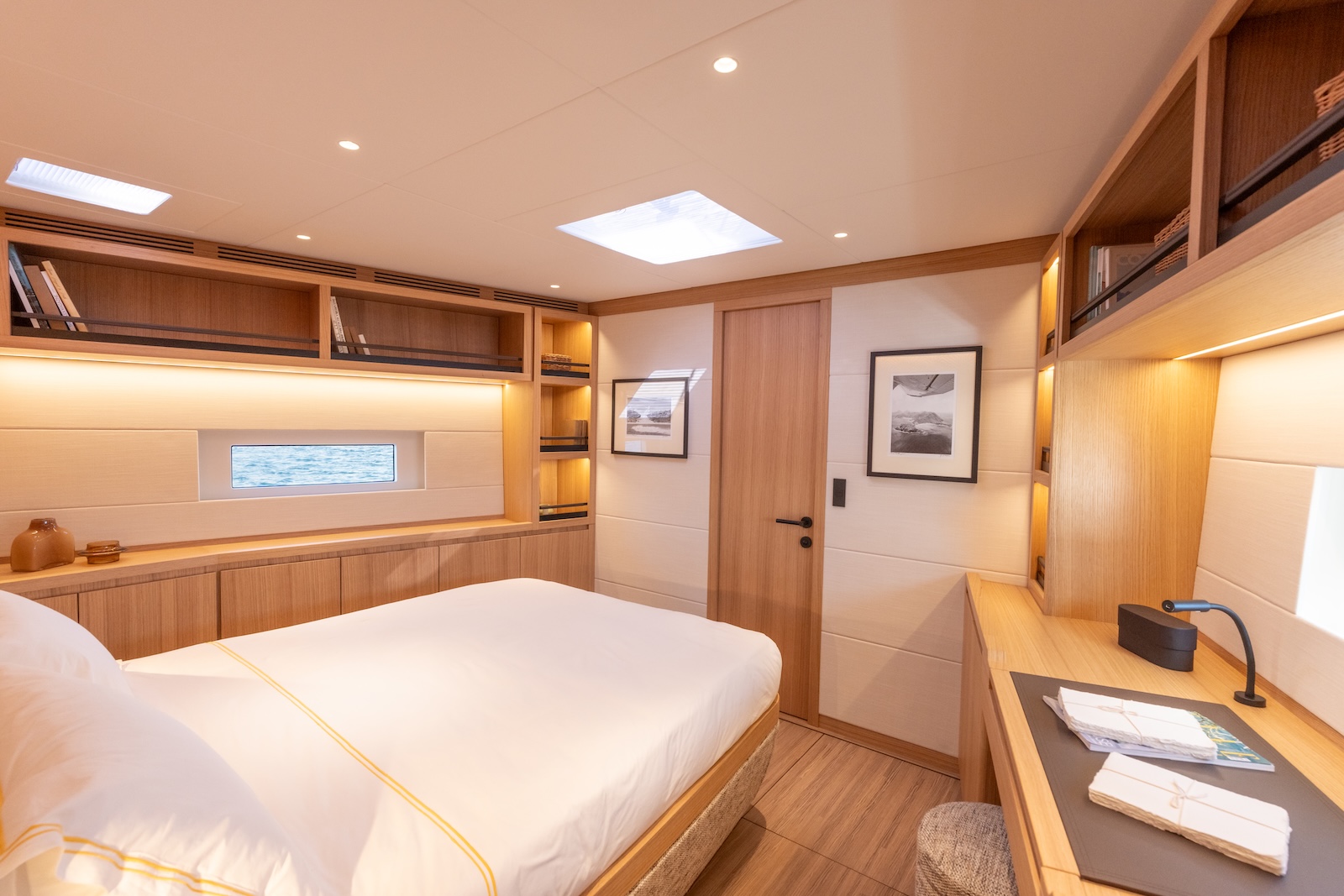
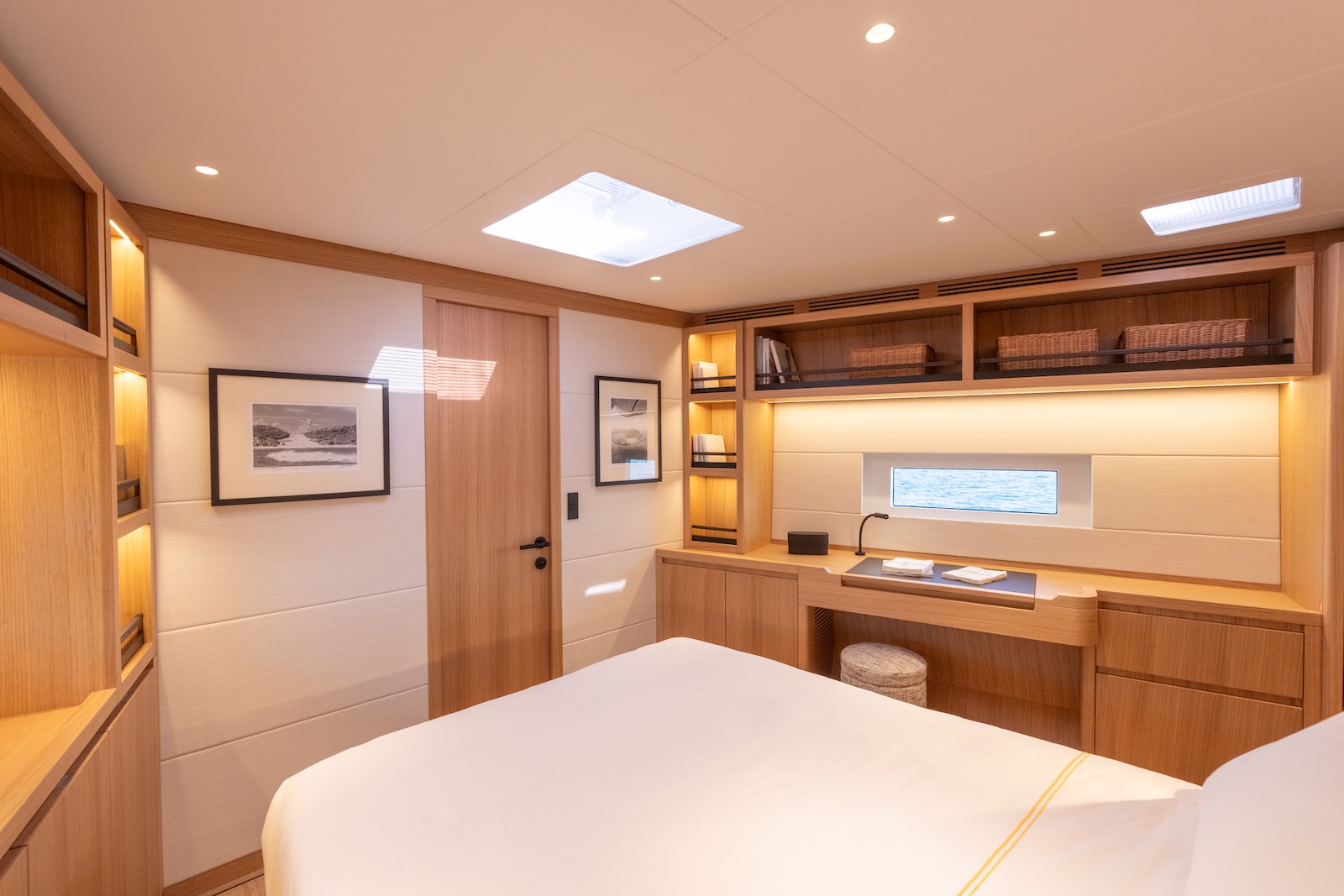
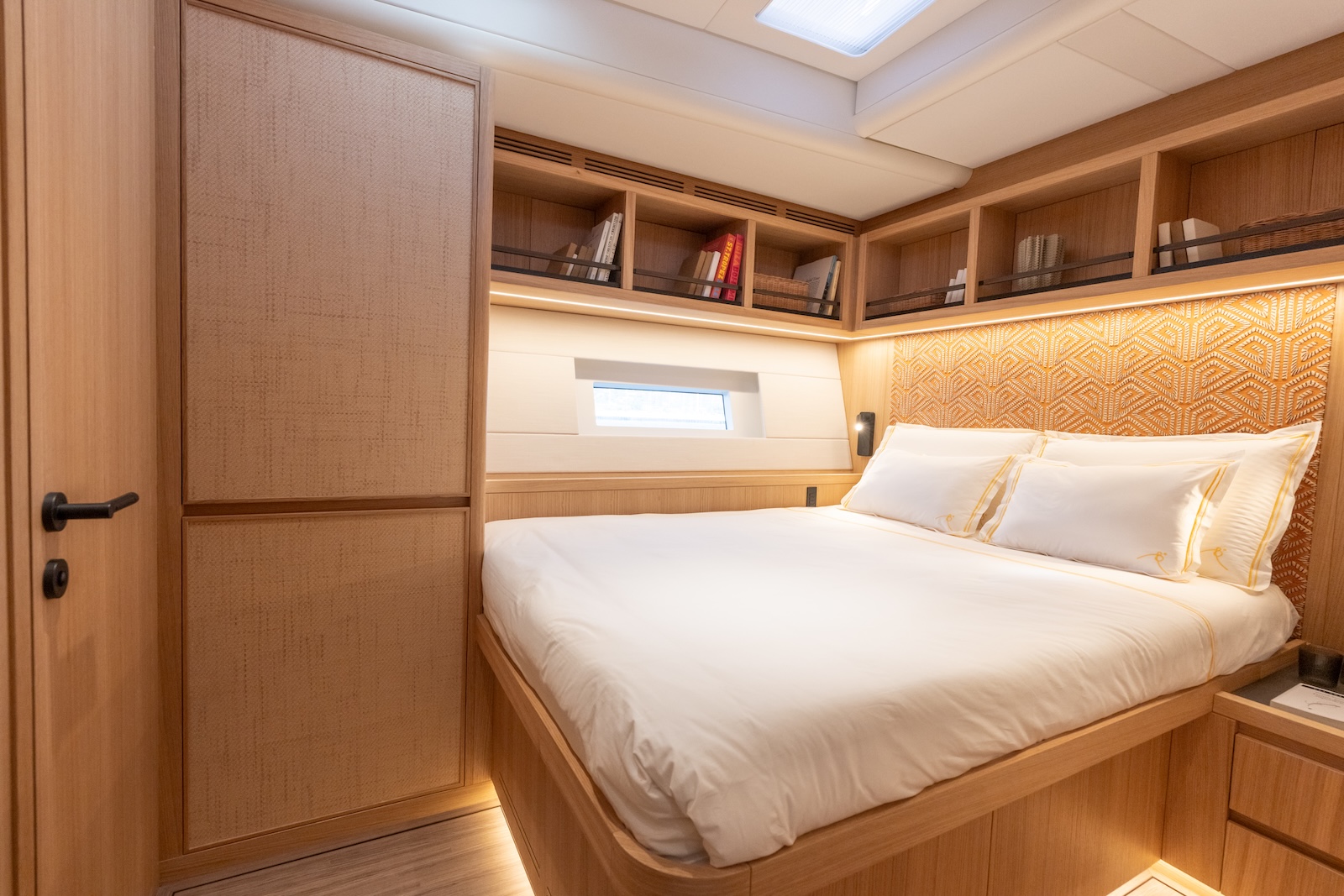
Optimizing the volume of an 80-footer to make it feel like a 100-foot superyacht was the great challenge won by Massimo Gino and the Nauta team. Bianca II boasts exceptional compartmentation: four luxurious guest cabins and two crew cabins.
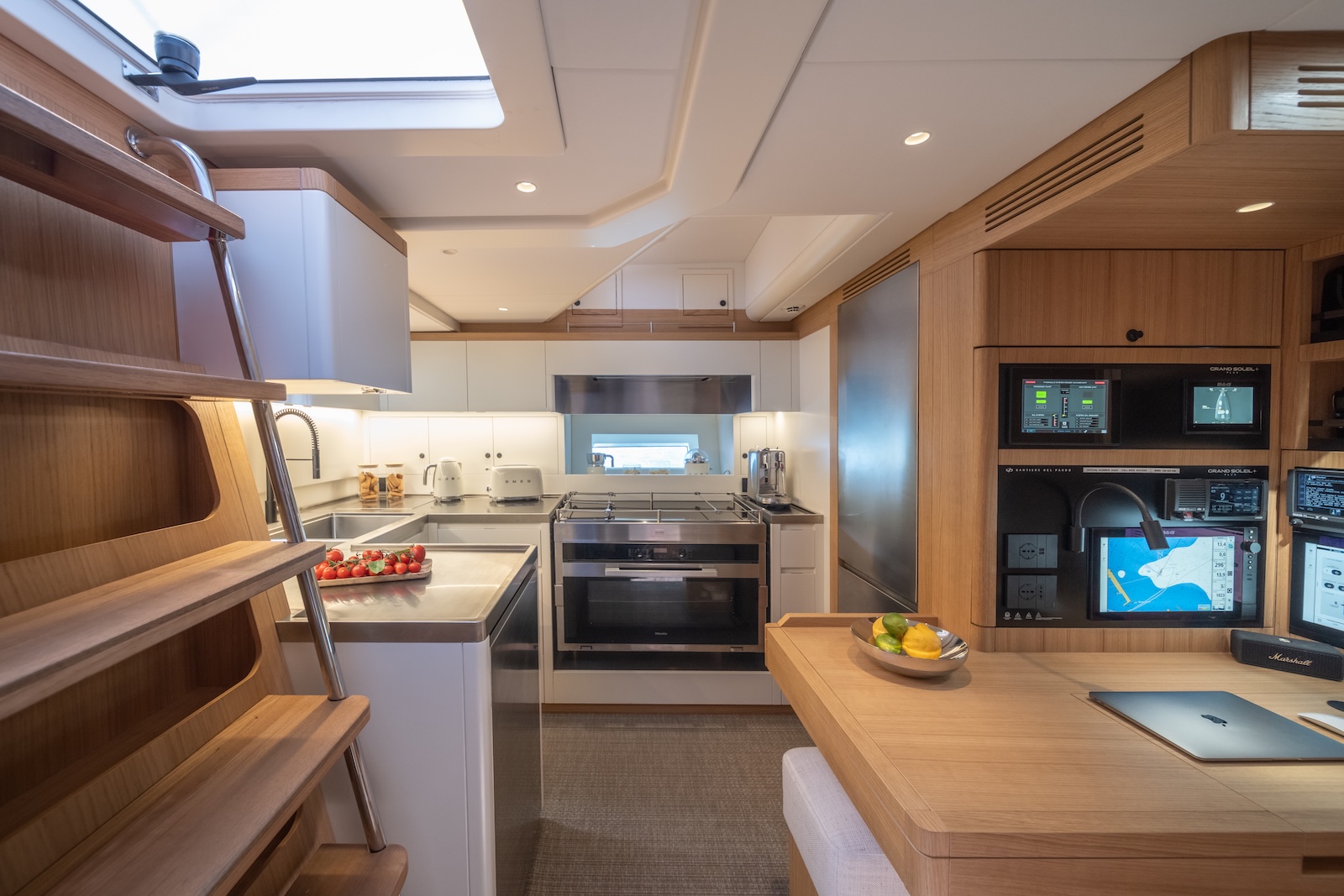
The forward master suite welcomes you with a large walk-around island double bed. Aft, the crew quarters enjoy completely independent access and house a spacious galley and navigation station, guaranteeing absolute privacy for the owners.
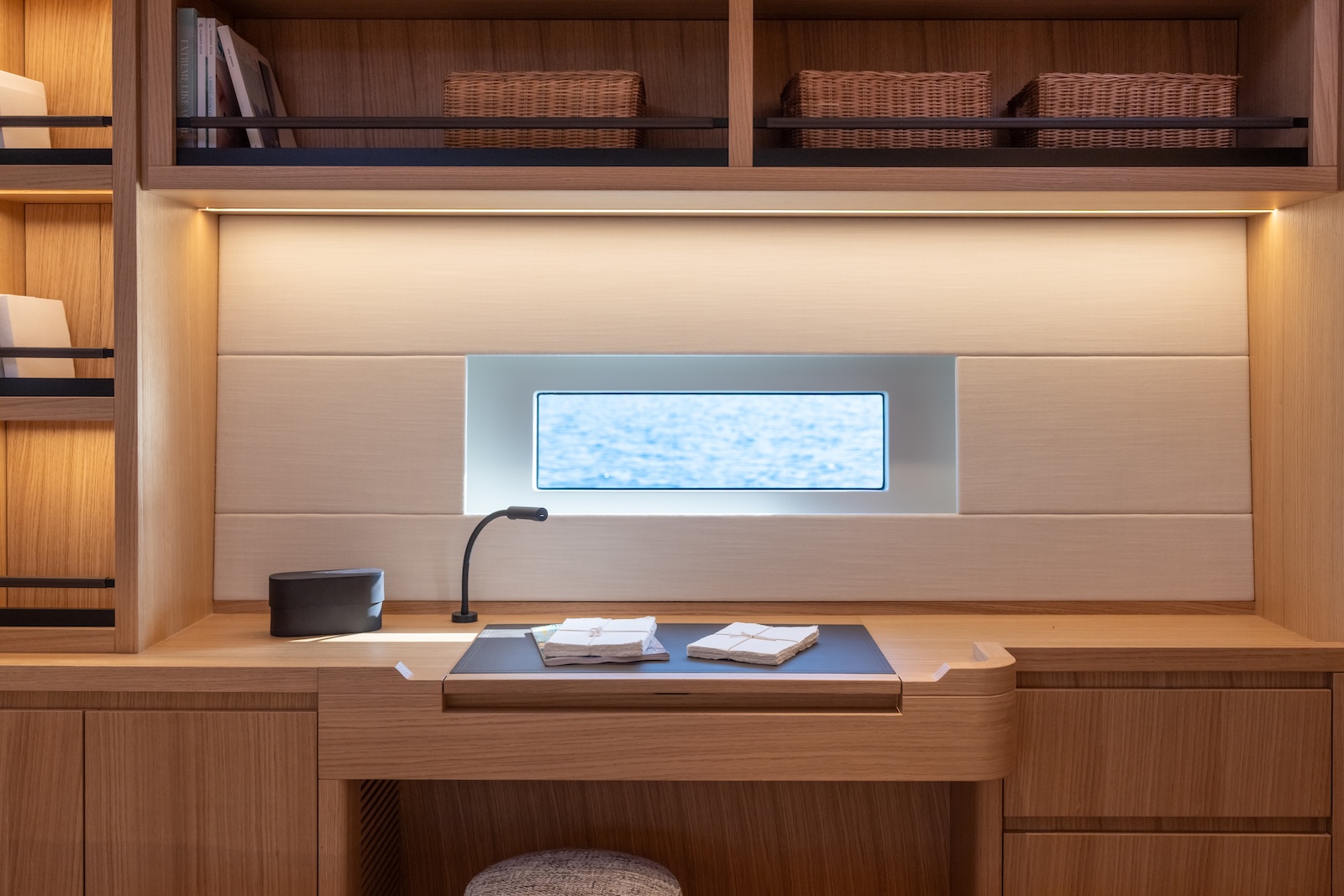
The essence of luxury breathes through the finishes of Bianca II, where warm oak cabinetry blends with elegant fabric panels on the bulkheads, creating a contemporary, welcoming atmosphere.
Grand Soleil Plus 80 LC: Technical Specifications
| Shipyard | Cantiere del Pardo |
| Naval Architecture | Matteo Polli |
| Exterior/Interior Design | Nauta Design |
| Length Overall (LOA) | 26.20 m |
| Hull Length | 23.99 m |
| Waterline Length (LWL) | 22.00 m |
| Max Beam | 6.60 m |
| Draft | 3.95 m (Standard) / 2.80 – 4.80 m (Telescopic) |
| Displacement (Light Ship) | 41,000 kg – 42.5 t |
| Standard Sail Area | 400 m² |
| Mainsail (Max) | 228 m² |
| Genoa | 172 m² |
| Self-Tacking Jib | 143 m² |
| Staysail | 87 m² |
| Code 0 | 228 m² |
| Gennaker | 228 m² |
| Main Propulsion | Torqeedo Hybrid (80 kWh batteries) |
| Alternative Diesel Engine | YANMAR 250 HP @ 3800 rpm |
| Fuel Capacity | 2,000 l |
| Water Capacity | 1,300 l |
Grand Soleil Plus 80 LC: FAQ – Frequently Asked Questions
Who are the naval architects and designers behind the Grand Soleil Plus 80 LC?
The project is the result of an exceptional collaboration: the main concept was developed directly by Cantiere del Pardo, the naval architecture (hull lines) is the work of Matteo Polli, while the elegant interior and exterior styling was handled by Nauta Design.
Is the Grand Soleil Plus 80 LC suitable for shorthanded sailing?
Absolutely. Despite its 26-meter length and weight of over 41 tons, this superyacht was designed to be managed by a very small crew. All lines and controls are centralized and smartly led back near the helm stations. This allows for safe, simple steering and sail handling.
What does the acronym LC stand for?
The acronym LC stands for Long Cruise. Across all Grand Soleil models, this designation indicates that the sailing yacht is designed for long, comfortable, and fast passage-making.
What propulsion systems and energy independence solutions does this flagship offer?
The yacht boasts a cutting-edge propulsion system. The tested model is equipped with a 100 kW Torqeedo hybrid platform, powered by two 40 kWh battery banks. To ensure long-range independence, two 45 kW generators are on board to recharge the batteries. Alternatively, a traditional 250 HP Yanmar diesel engine is available.
What advantages does the telescopic keel offer?
The telescopic keel is a technical solution engineered to blend high sailing performance with the practical needs of cruising. It allows the boat's draft to be reduced from 4.80 meters to just 2.80 meters, making it much easier to enter shallow harbors or anchor in shallow bays while actually enhancing stability.
How is the interior layout structured, and what is meant by "Raised Saloon"?
The interior stands out for its "raised saloon" deckhouse configuration. This engineering solution not only creates a living space flooded with natural light and a 270-degree panoramic view, but it also allows for a large technical room beneath the cabin sole to house the yacht's systems. The layout of the tested boat features four guest cabins (including a large master suite forward) and two crew cabins. Furthermore, the interior layout is specifically designed to guarantee maximum privacy for the owners and their guests.
Sources and References
| Source | Document Type and Content |
| Grand Soleil | Official technical specifications and measurements |
| Luca D’Ambrosio | Notes and on-water observations by the specialized marine journalist |
| Matteo Polli | Polar speed diagrams and sail area charts |
| Franco Corazza | Statements regarding construction and yacht description |