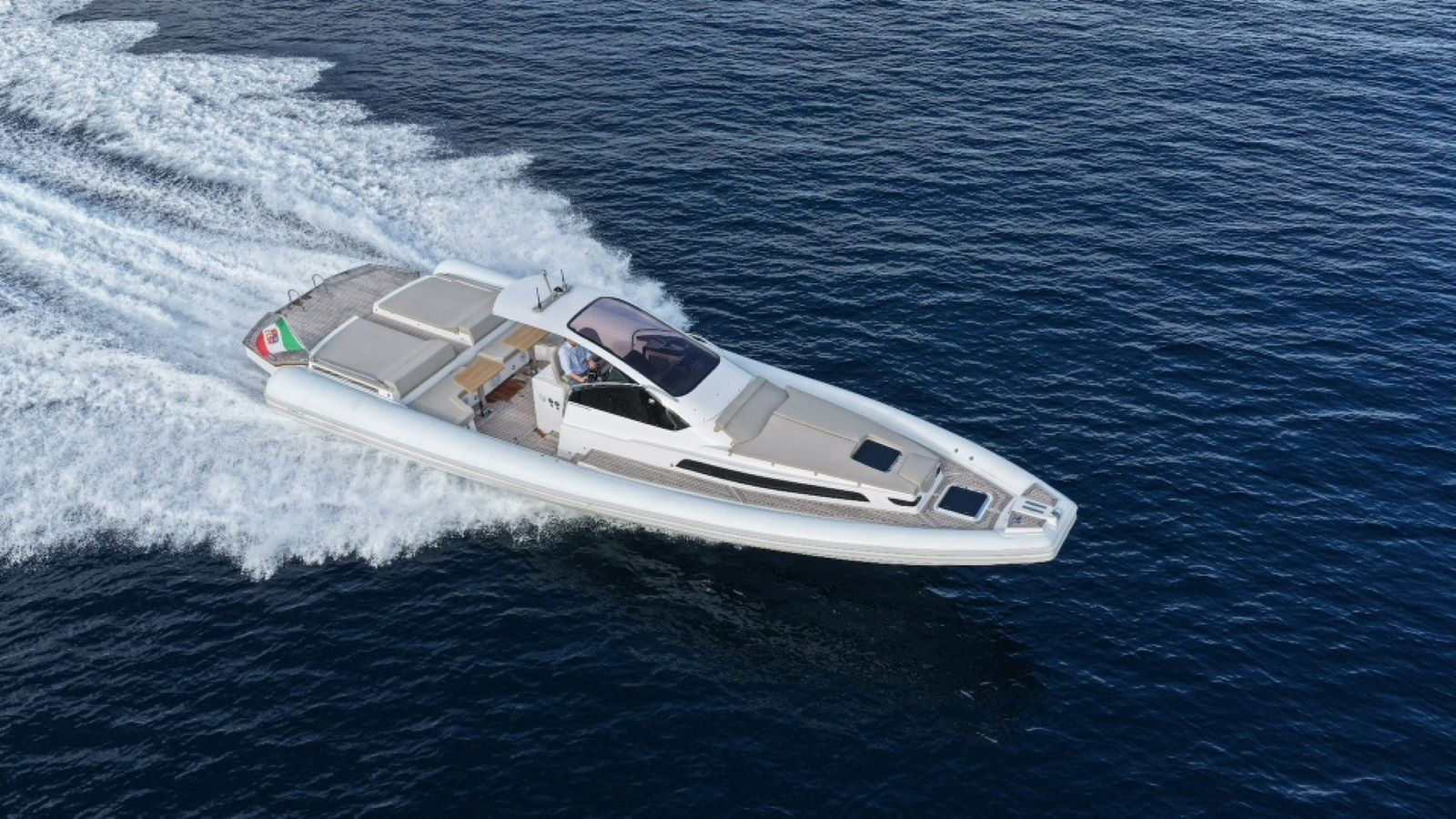
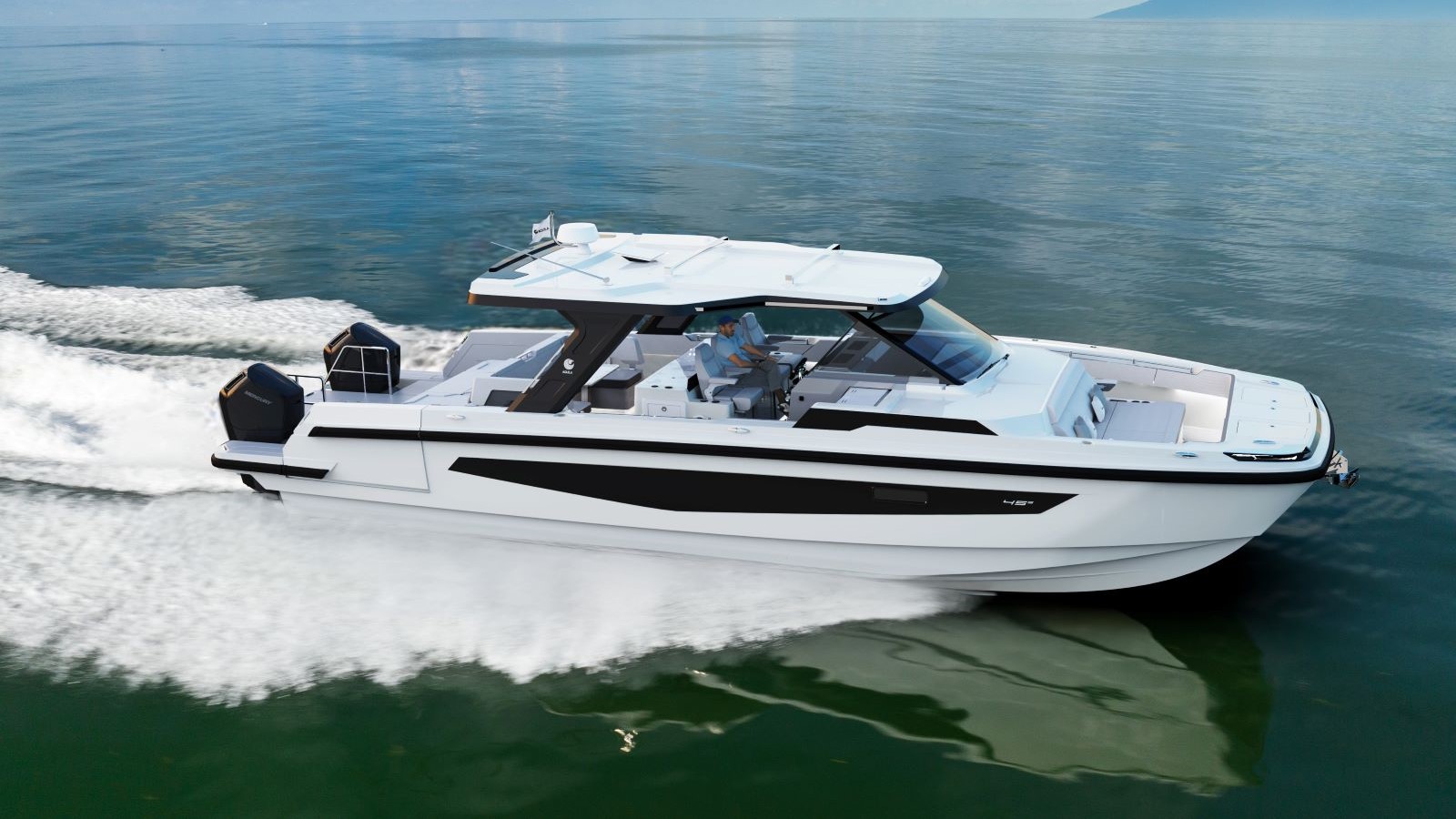
Boat blowers, also known as fans or ventilators, are an essential component for any boat. These devices are particularly important for the engine room, as they not only provide the necessary air for combustion in internal combustion engines but also allow for air circulation to maintain an adequate temperature within the space. Moreover, they are commonly used for air extraction in other enclosed onboard areas, such as galleys and bathrooms.
There is a vast range of fans and boat blowers, depending on the size of the hull and the needs of shipyards and boat owners. Therefore, it is important to know how to choose the right blower and understand its most important features. We asked Andrea Corradi, owner of CEM, an Italian company that is a world leader in the production of boat fans and blowers, for some advice.
Types of boat fans and blowers
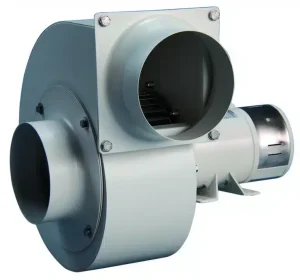
Boat blowers are primarily divided into two types: centrifugal fans and axial fans. These two types have completely different construction and performance characteristics. CEM models are available in both direct current (DC) and alternating current (AC) versions and are made with materials particularly suitable for marine environments, such as painted carbon steel and stainless steel.
- Centrifugal fans are typically used on small to medium-sized boats, usually up to 50 feet.
- Axial fans are generally used on boats over 50 feet and are widely applied on superyachts.
 “Each blower application is customized according to the client’s requests and needs and must consider several factors to be optimal, but it’s still possible to provide some general information – explains Mr. Corradi – When talking about engine room ventilation, we must always consider two fundamental elements for correctly sizing the blowers to use: the volume of the engine room and the amount of heat to dissipate, which is produced by the various components inside the engine room (engines, generators, stabilizers, etc.). Once these factors are considered, the fans selected for introducing fresh air must be able to provide sufficient airflow for both the combustion of internal combustion engines and the air exchange within the engine room. At the same time, the blowers installed to extract ‘dirty’ air (the hot air generated inside the space) must ensure the extraction of a sufficient volume of air to guarantee proper thermal dissipation of the heat inside the engine room”.
How to choose the best model
At this point, the calculation for selecting the most suitable model of boat fan or blower becomes complex. CEM’s CEO explains: “The volume of the engine room must be related to the thermal dissipation required, which derives from the amount of heat produced by the engine room. Based on these two factors, a certain value is calculated with respect to the outside temperature, with a variable ranging from 5°C to 10°C, and this is used to identify the most suitable boat blower model for a given hull”. In practice: given a certain engine room size in cubic meters, and aiming to ensure a minimum standard of at least thirty air exchanges per hour and an internal temperature not exceeding 35°C, the total thermal kilowatts produced by the components within the engine room must be calculated.
 “Obviously, these are quite complex mathematical and engineering formulas – continues Corradi – Generally, it is considered that each kilowatt of an internal combustion engine requires 6 cubic meters of air per hour, but much depends on the size of the engine room: the smaller this space, the more heat needs to be expelled. In any case, the airflow rate of the blower is always indicated in its technical datasheet”.
Since most of the air introduced into the engine room is necessary for combustion and excess heat extraction, the calculation for proper engine room ventilation must consider the air circulation and combustion requirements for the incoming air. On the other hand, the extraction air amount must be sufficient to dissipate the thermal kilowatts produced.
“Obviously, it’s generally better to ensure a bit more air rather than less, so as not to strain the engines – Corradi points out – In any case, we at CEM always assist shipyards in selecting the product that best meets their needs, guiding them through every step of the design process to achieve the correct ventilation sizing. This is a very important aspect of our work that often makes the difference, as not all our competitors can offer this engineering service, which requires specific know-how and substantial field experience. This is why our support and collaboration are highly appreciated by the technical departments of shipyards worldwide”.
Maintenance and Precautions
As far as the maintenance of boat blowers is concerned, Corradi emphasizes that “our products are designed, calibrated, tested, and certified in-house, so they require almost no maintenance. The only maintenance we always recommend concerns the fans equipped with direct current (DC) motors, which is to check the wear of the brushes”. For those unfamiliar, brushes are the components in a DC motor that transmit current from the onboard network to the motor’s rotor.
 There is also another important feature of CEM boat blowers: “Along with the fan, we can provide accessories such as anti-vibration rings, square-to-round adapters, silencers, smoke dampers, and fire dampers approved for A60 fire class. We also supply complete kits, ready to be installed on board. Additionally, we have the capability to manage our fans through control panels according to the specific requirements of the shipyard. These range from the simplest models for 24-volt fans, managed with a regular potentiometer to adjust the speed, to much more complex control panels with inverters, PLCs, touch screens, temperature sensors, pressure sensors, and every other necessary element for automatic regulation of the fan speed depending on the volume of air needed in the engine room”.
CEM blowers come with a two-year warranty, and for axial fans, the company offers RINA Type Approval certification for the marine sector, which will soon be available for centrifugal fans as well. Furthermore, CEM produces fans certified to ISO 8846 (Ignition Protection) and Explosion Proof standards, suitable for use in environments where there is a risk of explosion (such as battery compartments, tenders, etc.).